Temperature23 – 27 °C
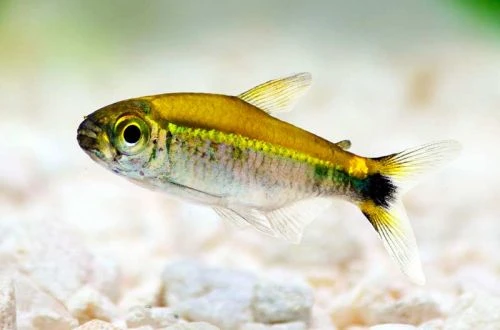
Hemigrammus hyanuary, known as the Green Neon Tetra or Green Neon, belongs to the family Acestrorhamphidae. Its homeland is South America, where its habitat covers vast areas of the upper and middle Amazon River basin. This fish prefers sections of rivers and streams with slow currents, and is also found in floodplain lakes.
Adults of this fish reach a length of up to 4 cm. Outwardly, they resemble the Glowlight Tetra, but differ in a more slender body shape and the presence of greenish iridescence in their coloration. These green hues are especially noticeable and contrasting along the lateral line. The fish's body is uniformly colored, with the exception of a prominent black spot on the caudal fin, which is bordered by thin white strokes. A similar light stroke sometimes appears on the edge of the anal fin.
The species' range covers the Amazon River basin, including Lake January in Brazil. The fish inhabit sections of rivers and streams with slow currents, as well as floodplain bodies of water. In nature, they prefer places with dense vegetation, which provides shelter, and soft, acidic water.
This peaceful fish prefers to live in shoals. It is important to note that in small aquariums, the Green Neon Tetra may struggle to compete for food with larger and more active neighbors. Therefore, it is recommended to choose species of similar size and temperament as companions. Excellent compatibility is observed with Rummy-nose Tetras, most other Tetra species, Apistogrammas, Kribensis, Corydoras, as well as small armored catfish, such as Otocinclus and others.
For keeping a shoal of 6–8 individuals, the optimal aquarium volume starts from 70 liters. Simplicity is preferred in the decor: it is recommended to use a sandy substrate, on which natural snags and a layer of fallen leaves from some trees can be placed. Aquatic plants are not an obligatory element. Given the fish's preference for subdued lighting, shade-loving species are preferred when choosing flora. It is extremely important to maintain a soft, acidic aquatic environment; there is evidence that in alkaline conditions, the Green Neon Tetra may lose the intensity of its coloration, and also potentially face negative health consequences. Aquarium maintenance should be carried out regularly and according to the standard scheme: this includes weekly partial water changes with fresh water, timely removal of organic waste, and preventive equipment checks. These fish are not demanding about food. They readily accept most popular foods of appropriate size, offered in dry, frozen, and live forms.
The fish are not particularly demanding regarding their diet: they readily accept most common foods of suitable size — be it dry, frozen, or live. If conditions in the community tank are favorable, offspring may appear. However, given the lack of parental instincts, breeding should ideally be carried out in a separate tank.
In a community tank, given favorable conditions, offspring may appear. Nevertheless, due to the parents' lack of care for their young, it is preferable to organize the breeding process in a separate tank. For the spawning aquarium, a simple air-driven filter is necessary to ensure there is no strong current and to prevent accidental suction of eggs or fry into the filtration system. Lighting should be dim. A layer of fine-leaved, low-growing plants or a special substrate is placed on the bottom, which helps protect the eggs from being eaten by adult fish. A protein-enriched diet serves as a stimulus for spawning. As a rule, spawning occurs in the morning, when the fish chaotically scatter eggs across the bottom. Upon discovering the eggs, the adult fish are immediately moved back to the main aquarium. The incubation period lasts 24–36 hours. The hatched fry initially remain in place, feeding on the contents of the yolk sac. After 3–4 days, they begin to swim freely. Fry are fed using specialized foods (such as powders and suspensions), as well as live foods, for example, infusoria and Artemia nauplii.
The species is susceptible to typical characin infections, such as bacterial skin and fin lesions, including columnaris, as well as fungal diseases when water quality deteriorates. There is a risk of parasitic infection if quarantine is not observed. Prevention includes maintaining stable environmental parameters, regular water changes, and providing a varied diet to strengthen immunity.
When choosing, pay attention to the activity of the individuals and the integrity of their fins. A healthy fish should have clear eyes, even coloration without spots, and no visible damage or growths on its body. It is recommended to avoid purchasing fish from aquariums where dead individuals or fish with signs of emaciation are observed, as this may indicate hidden infections.
The essentials: size, tank volume, water parameters and care
An adult reaches 4 cm in length. Plan the tank around the maximum size: the fish quickly outgrows a cramped setup.
The recommended volume is 70 L. A smaller tank speeds up nitrate build-up and raises stress levels.
Temperature 23–27 °C, pH 6–7.5, hardness 5–15 dGH. Stability matters more than exact values: sudden swings are harder on the fish than a small deviation from the ideal.
Around 4 years when kept properly. Lifespan depends directly on tank volume, water quality and a varied diet.
Temperament: peaceful, active/mobile. Keep this in mind when choosing tank mates.
Recommended setup: schooling (usually from 5–6 individuals and more). Ignoring this is a common cause of stress and disease.
Diet type: meat with plant additives (omnivores). Feed small portions that are finished within a couple of minutes — overfeeding does more harm than underfeeding.
The scientific name of the species is Hemigrammus hyanuary, family Acestrorhamphidae.
The water suits 197 of 208 plants in the catalogue — the easiest ones are shown first.
Afzelius's AnubiasAnacharisAnubiasBrazilian PennywortDwarf CloverDwarf CloverDwarf HygrophilaDwarf SagittariaDwarf ValGuppy GrassHornwortJava FernJava MossMoneywortMud SwordNair's LagenandraNarrow Leaf AnacharisNarrow-leaf CloverStringy MossSüsswassertangTaiwan MossTape GrassTemple PlantUssuri Watermilfoil
Matched by family, categories and overlapping keeping conditions
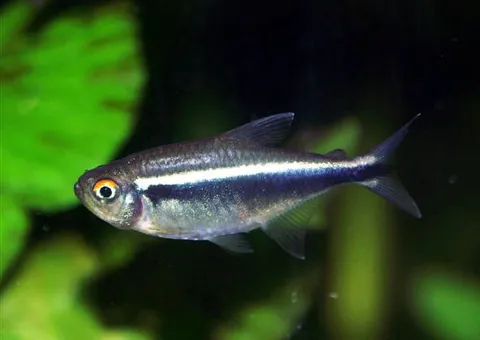
Hyphessobrycon herbertaxelrodi
Hyphessobrycon herbertaxelrodi, also known as the Black Neon Tetra, belongs to the family Acestrorhamphidae. This fish is characterized by its energetic nature and attractive appearance, especially due to the bright,…
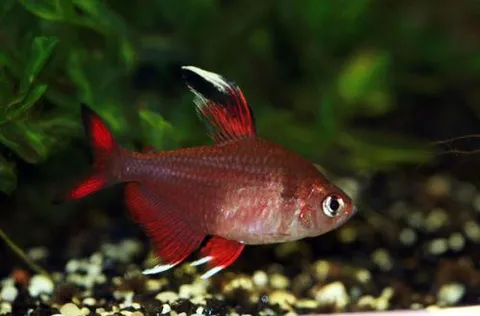
Megalamphodus rosaceus
The Rosy Tetra, also known as the Rosaceus Tetra (Megalamphodus rosaceus), belongs to the family Acestrorhamphidae and makes an excellent addition to a community of peaceful aquarium inhabitants. This fish shows…
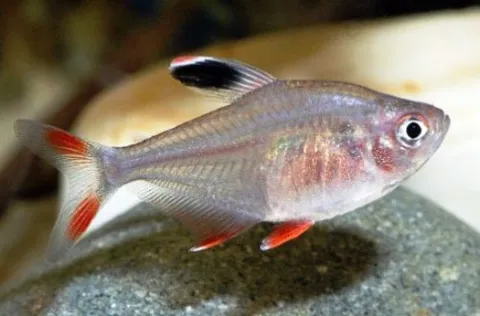
Megalamphodus bentosi
The Ornate Tetra, also known as the Common Ornate Tetra or by its scientific name Megalamphodus bentosi, belongs to the family Acestrorhamphidae. This species is a classic representative of the extensive group of…
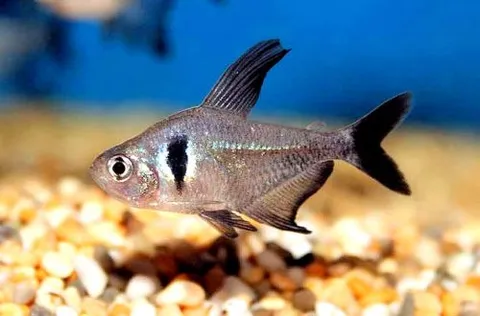
Megalamphodus megalopterus
The Phantom Tetra, also known as the Black Phantom Tetra (Megalamphodus megalopterus), belongs to the family Acestrorhamphidae. For many years, this fish has maintained its popularity among aquarists, becoming one of…