Temperature22 – 25 °C
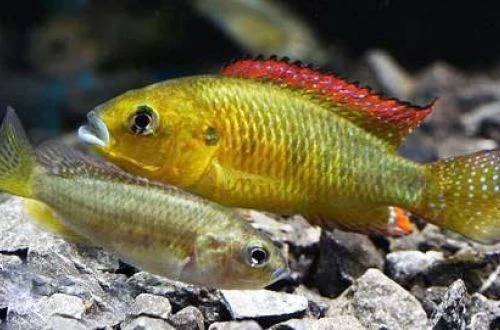
Haplochromis philander, known to scientists as Pseudocrenilabrus philander, belongs to the Cichlidae family. This fish is outwardly attractive but has a wayward character; males show belligerence towards each other and towards representatives of other bottom-dwelling species. For this reason, selecting suitable tank mates for them can be associated with certain difficulties. As for the keeping itself, this species demonstrates surprising unpretentiousness and hardiness.
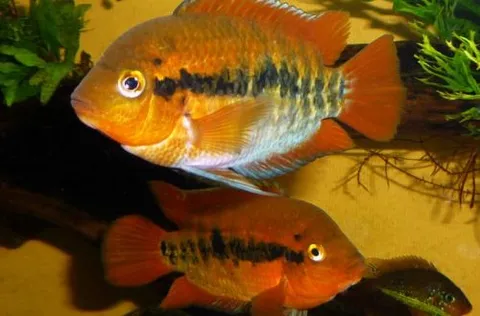
Adults of this fish typically reach a length of 7 to 13 cm. Males differ from females not only in their larger size but also in their significantly brighter coloration, where yellowish tones predominate, and the dorsal fin is adorned with a reddish hue. A characteristic red spot is noticeable on their anal fin. One of the most remarkable features of this species is the expressive blue outline around the lips, creating the impression that they are specially made up.
This species is widespread across a significant part of the African continent, having colonized territories south of the equator and extending to its southernmost tip. It can be found in modern states such as the Democratic Republic of Congo, Malawi, Zimbabwe, Angola, Namibia, Zambia, Tanzania, Botswana, Mozambique, Eswatini (Swaziland), and also in South Africa. These fish inhabit a wide variety of biotopes, including streams, rivers, lakes, ponds, and karst water bodies. Some populations have successfully adapted to life in brackish conditions.
Haplochromis philander can show aggression towards other species inhabiting the lower layers of the aquarium, especially during the spawning period. If cohabitation with other dwarf cichlids, catfish, or loaches is planned, a significantly larger aquarium will be required — from 400–500 liters. In smaller aquariums, it is advisable to choose tank mates that prefer to swim in the water column or near the surface. Intraspecific relationships in these fish are based on the dominance of an alpha male in a certain territory, so keeping two males in a small volume is unacceptable. The optimal option is a group of one male and one or more females.
For keeping a pair of these fish, an aquarium of 110 liters or more will be sufficient. The aquarium setup can be anything, but it is important to observe the following conditions: provide numerous shelters, such as caves or snags, use sandy or fine gravel substrate, and ensure the presence of dense plant thickets. When using live plants, it is recommended to plant them in pots, as Haplochromis philander, by digging up the substrate, will most likely uproot them. Despite the wide range of natural habitats, the optimal water parameters for these fish are within fairly narrow limits: the pH level should be slightly acidic or neutral, with soft or medium water hardness (dGH). Aquarium care involves regular cleaning of the substrate from organic debris and weekly partial water changes (15–20% of the total volume) with fresh water.
These fish readily accept most common foods, be they dry, frozen, or live. A varied diet, as well as quality foods from trusted manufacturers, not only helps maintain vibrant coloration but also has a beneficial effect on the overall health and activity of the fish.
Breeding Haplochromis philander in a home aquarium does not present any particular difficulties. To stimulate the onset of the breeding period, neutral water pH values and a temperature of about 24°C are required. Adding live foods to the diet contributes to the rapid transition of the fish into spawning condition. The male occupies a fairly large territory on the bottom, about 90 cm in diameter, where he digs a depression intended for future clutch, after which he actively invites females. His actions are sometimes very decisive, so it is recommended to keep several females so that the attention of the ardent male is evenly distributed among them. When the partners are ready, they begin a peculiar courtship dance around the pre-prepared depression in the substrate. The female lays the first portion of eggs, and after fertilization, takes them into her mouth; this process is repeated several times. In some cases, fertilization occurs directly in the female's mouth. This evolutionarily established mechanism provides protection for future offspring in a highly competitive environment. It is advisable to move the female to a separate aquarium with identical conditions to protect her from the male. The eggs remain in the female's mouth throughout the incubation period, which lasts about 10 days, after which the fry begin to swim freely. The female can then be returned to the main aquarium. It is worth noting that after spawning, the females' coloration changes, becoming less noticeable. In their natural environment, they form small shoals in shallow water, keeping away from aggressive males.
The main cause of most diseases in these fish is unsuitable keeping conditions and poor-quality nutrition. If initial symptoms are observed, it is first necessary to check water parameters and the concentration of dangerous substances such as ammonia, nitrites, and nitrates. If the indicators deviate from the norm, they should be brought back into order, and only then should treatment begin.
When purchasing, active individuals with clean fins and no visible damage or sores on the body should be chosen. Fish of this species often tolerate transportation poorly, so it is important to ensure that they are kept in proper conditions in the store and do not show signs of exhaustion or apathy. It is recommended to acquire a group of young individuals to allow a natural hierarchy to form, or to select a harem of one male and several females. Due to the high territoriality and aggressiveness of the species, intimidated individuals who hide in shelters can often be found in stores, which is normal defensive behavior but requires careful assessment of the overall health before purchase.
The essentials: size, tank volume, water parameters and care
An adult reaches 7–13 cm in length. Plan the tank around the maximum size: the fish quickly outgrows a cramped setup.
The recommended volume is 110 L. A smaller tank speeds up nitrate build-up and raises stress levels.
Temperature 22–25 °C, pH 6.5–7.5, hardness 5–12 dGH. Stability matters more than exact values: sudden swings are harder on the fish than a small deviation from the ideal.
Around 5 years when kept properly. Lifespan depends directly on tank volume, water quality and a varied diet.
Temperament: semi-peaceful (including aggression during spawning / intraspecific conflicts). Keep this in mind when choosing tank mates.
Recommended setup: harem (1 male and several females). Ignoring this is a common cause of stress and disease.
Diet type: any (universal). Feed small portions that are finished within a couple of minutes — overfeeding does more harm than underfeeding.
The scientific name of the species is Pseudocrenilabrus philander, family Cichlids (Cichlidae). It also appears in the literature as: Chromis philander, Haplochromis moffati, Haplochromis philander.
The water suits 32 of 208 plants in the catalogue — the easiest ones are shown first.
African Water FernAmazon FrogbitAnubiasAsian WatermossBlue BuceBuceChristmas MossDwarf African FernFloating CrystalwortFloating Water SpriteGiant VallisneriaGlobefruit LudwigiaGreater DuckweedJapanese RushJava FernJava MossJungle ValLittle StarPelliaSchismatoglottisStringy MossSüsswassertangTaiwan MossWater Spangles
This fish digs through the substrate and pulls rooted plants out.
African Onion PlantAfzelius's AnubiasAmazon SwordAnacharisArrowhead CryptBalansa Water TrumpetBanana PlantBarth's SwordBeckett's Water TrumpetBladderwort CarpetBog MossBoivin's AponogetonBolivian Chain SwordBrazilian PennywortBroad-leaf Water SpriteBrookweedBrown's LimnophilaCardinal PlantCaribbean MintCarolina Micro SwordCognac AmmanniaCongo AnubiasCreeping JennyCreeping RushCreeping SpotflowerCreeping StaurogyneCrinkled AponogetonCupheaCutleaf WatermilfoilCylindricfruit LudwigiaDark SwordDelta ArrowheadDense MayacaDitch StonecropDwarf AmbuliaDwarf Baby TearsDwarf CloverDwarf CloverDwarf HairgrassDwarf Hygrophila
Matched by family, categories and overlapping keeping conditions
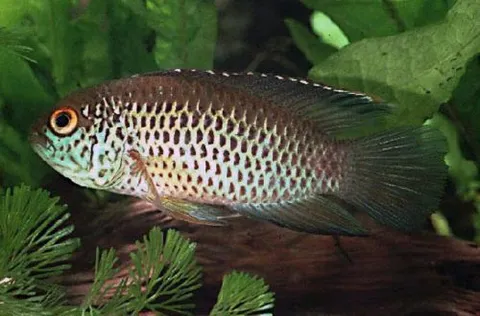
Nannacara anomala
Nannacara anomala, also known as the Yellow-Eyed Cichlid or Golden Dwarf Cichlid, belongs to the family Cichlidae. This fish attracts attention with its vibrant coloration, and its unpretentious and friendly nature…
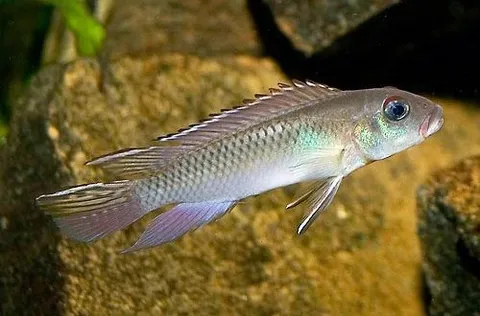
Nanochromis parilus
Nanochromis parilus, also known as Nanochromis transvestitus, belongs to the Cichlidae family. This fish is not the most vibrant, unlike other cichlids, and its poor compatibility with conspecifics, as well as its need…
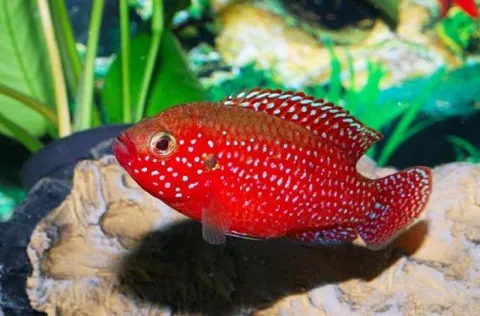
Rubricatochromis lifalili
The Red Chromide, or "Red Jewel Cichlid," scientifically known as Rubricatochromis lifalili, is a member of the Cichlidae family. This is a beautiful and vibrant fish, whose keeping and breeding do not present…
Herotilapia multispinosa
The Yellow Herotilapia, also known as the Rainbow Cichlid (scientific name Herotilapia multispinosa), belongs to the family Cichlidae. Previously, this species was named Archocentrus multispinosus. It is easy to keep…