Temperature22 – 25 °C
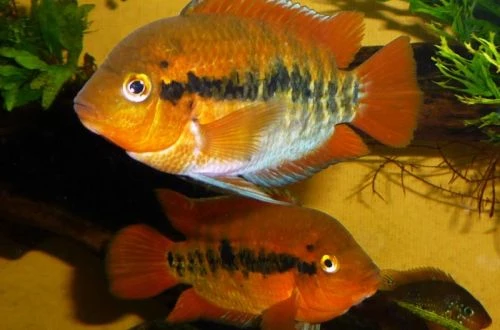
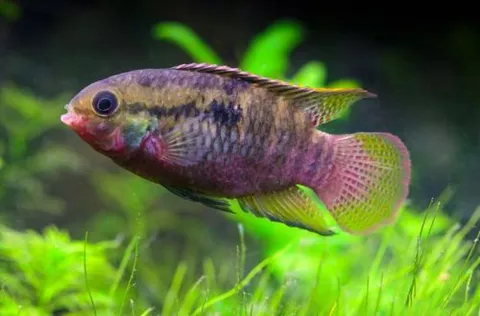
The Yellow Herotilapia, also known as the Rainbow Cichlid (scientific name Herotilapia multispinosa), belongs to the family Cichlidae. Previously, this species was named Archocentrus multispinosus. It is easy to keep and breed, does not have high dietary requirements, and gets along well with other fish species. The combination of these qualities makes it an excellent choice for beginner aquarists.
Adults are usually around 7 cm long, although the maximum recorded length for the species reaches 15 cm. Males are generally slightly larger, but in other aspects, sexual dimorphism is weakly expressed. This fish has a dense, oval body with pointed dorsal and anal fins. The coloration varies from golden to orange tones. The fins, with the exception of the pelvic fins (which have a blue tint), are colored in these same hues. An uneven black horizontal stripe runs along the body, starting from the head and extending to the tail.
The natural habitats of these fish are in Central America, extending from Honduras to Costa Rica. They can be found in numerous rivers flowing into the Atlantic Ocean, as well as in small lakes and marshy areas. These bodies of water are characterized by calm water, a sandy-silty bottom, an abundance of fallen leaves and snags. In addition, these bodies of water are subject to seasonal fluctuations in water level and significant temperature changes.
The Rainbow Cichlid is known for its peaceful and calm disposition. The only exception is during the spawning period, when Herotilapia becomes territorial and aggressive in its efforts to protect its offspring. It can be kept either individually or in a group. The species is compatible with other non-aggressive fish, such as Tetras, Danios, and small catfishes. In spacious aquariums with sufficient hiding places, cohabitation with some Central American cichlids, such as cichlasomas, is possible.
For keeping a single pair of Rainbow Cichlids, an aquarium of at least 80 L is recommended; if there are more fish, the aquarium volume should be increased accordingly. For decoration, fine gravel substrate, stones, as well as roots or snags can be used to create hiding places. Live plants, both floating and rooted, are welcome; they should be planted in dense groups, leaving open areas for swimming. The fish prefer weak to moderate current and an effective filtration system. The lighting level should be medium, so light-loving plant species should not be chosen. Aquarium care includes weekly water changes of approximately 20% of the volume with fresh water, regular cleaning of the substrate from organic deposits, and removal of film from decor elements and glass.
This species is undemanding regarding its diet, readily accepting dry, frozen, and live foods. It is crucial that their diet includes vegetable supplements, such as spirulina flakes or pieces of nori.
Due to their specific mating behavior, it is advisable to organize spawning in a separate aquarium. It is important to note that not all fish of the opposite sex may form a breeding pair. Cichlids usually choose a partner themselves during maturation, and this pair remains together for a long period. Therefore, simply buying a new male or female and adding them to the aquarium does not guarantee pair formation. Spawning is stimulated by establishing and maintaining specific water parameters: pH 7.0, dGH 5–10, temperature around 28°C, and regular feeding with live foods. When the fish are ready to spawn, their coloration darkens. The female can lay over 1000 eggs at a time on the surface of a stone or other decor element. The incubation period is about 3 days. Parents actively protect the clutch and hatched fry for several weeks until they reach a certain size.
Most fish diseases are caused by unsuitable keeping conditions, which weakens their immunity and makes them vulnerable. Upon detecting the first signs of illness or unusual behavior, it is necessary to first check the basic water parameters and the concentration of nitrogenous compounds. As a rule, improving conditions favorably affects the fish's state, and their body can cope with the ailment on its own. However, in advanced cases, this may not be enough, and medication will be required.
When choosing a healthy specimen, pay attention to the fish's activity and the cleanliness of its skin: there should be no white spots, ulcers, or fin damage on the body. A healthy fish shows curiosity, does not constantly hide in corners, and actively reacts to movement near the glass. Avoid specimens with sunken bellies or signs of emaciation, as this may indicate internal parasites or chronic stress. If there are dead fish in the store's aquarium or the water looks cloudy, it is best to refrain from purchasing due to the high risk of infections.
The essentials: size, tank volume, water parameters and care
An adult reaches 7–15 cm in length. Plan the tank around the maximum size: the fish quickly outgrows a cramped setup.
The recommended volume is 80 L. A smaller tank speeds up nitrate build-up and raises stress levels.
Temperature 22–25 °C, pH 6.5–8, hardness 5–20 dGH. Stability matters more than exact values: sudden swings are harder on the fish than a small deviation from the ideal.
Around 9 years when kept properly. Lifespan depends directly on tank volume, water quality and a varied diet.
Temperament: peaceful (regular). Keep this in mind when choosing tank mates.
Recommended setup: mixed (solitary / pair / group). Ignoring this is a common cause of stress and disease.
Diet type: any (universal). Feed small portions that are finished within a couple of minutes — overfeeding does more harm than underfeeding.
The scientific name of the species is Herotilapia multispinosa, family Cichlids (Cichlidae). It also appears in the literature as: Archocentrus multispinosus, Heros multispinosus.
The water suits 196 of 208 plants in the catalogue — the easiest ones are shown first.
Afzelius's AnubiasAnacharisAnubiasBrazilian PennywortDwarf CloverDwarf CloverDwarf HygrophilaDwarf SagittariaDwarf ValGuppy GrassHornwortJava FernJava MossMoneywortMud SwordNarrow Leaf AnacharisNarrow-leaf CloverStringy MossSüsswassertangTaiwan MossTape GrassTemple PlantUssuri WatermilfoilWater Wisteria
Matched by family, categories and overlapping keeping conditions
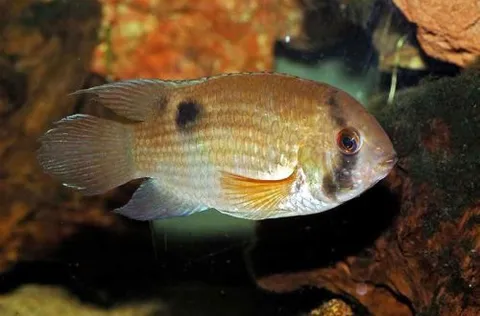
Cleithracara maronii
The Keyhole Cichlid, scientifically known as Cleithracara maronii, belongs to the Cichlidae family and is often referred to as the “Keyhole” cichlid. Despite its subdued coloration, this species is valued for its…
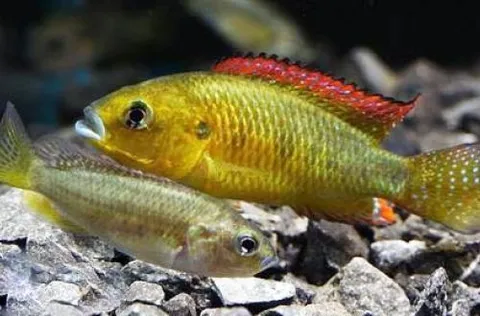
Pseudocrenilabrus philander
Haplochromis philander, known to scientists as Pseudocrenilabrus philander, belongs to the Cichlidae family. This fish is outwardly attractive but has a wayward character; males show belligerence towards each other and…
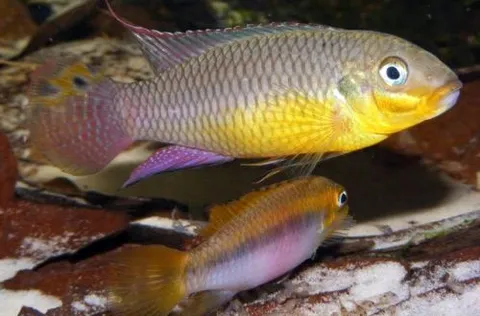
Pelvicachromis taeniatus
A representative of the Cichlidae family, Kribensis taeniatus, also known by its scientific name Pelvicachromis taeniatus, is an attractive and rather undemanding fish. This fish readily coexists with many other…
Laetacara dorsigera
The Laetacara dorsigera, otherwise known as the Red-breasted Acara (scientific name Laetacara dorsigera), belongs to the family Cichlidae. This American cichlid is characterized by its peaceful disposition. It does not…