Temperature23 – 28 °C
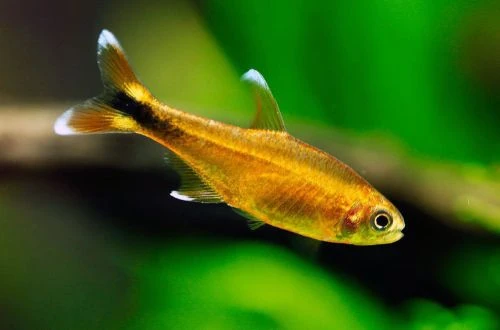
The Copper Tetra, also known as Hasemania (scientific name — Hasemania nana), belongs to the family Acestrorhamphidae. This fish is considered an excellent choice for a community tank. Its popularity is due to its vibrant coloration, excellent compatibility with other common species, and high hardiness and low maintenance.
Adults of this fish reach a length of approximately 5 cm. Their coloration is a silvery background with a pronounced copper hue. The caudal peduncle is predominantly dark, and the tips of the fins and tail have a white edging. The coloration of females is usually less intense and more modest compared to males.
Its origin is associated with the São Francisco River basin in Brazil (Portuguese: Rio São Francisco). Hasemania inhabits shallow streams, small rivers, and tributaries of the main channel. The territory of its natural habitat is characterized by hilly, sometimes mountainous terrain, and the water level is subject to seasonal changes.
This is a peaceful schooling fish that should be kept in groups of at least 8–10 individuals. With fewer numbers, their behavior may become somewhat aggressive, although, given their small size, they are unlikely to cause serious inconvenience to their tank mates. They get along well with many well-known aquarium inhabitants, including livebearers, danios, rasboras, Corydoras catfish, some gouramis, as well as South American cichlids and other species.
For comfortable keeping of a group of 8–10 individuals, an aquarium of at least 70 liters will be required. Hasemania demonstrates high adaptability to various water conditions and does not have special requirements for tank decoration. The only important recommendation is to provide subdued lighting, as under bright light, the fish's coloration may noticeably fade and become less vibrant.
This species is completely undemanding in terms of food and readily accepts all kinds of popular feeds, whether dry, frozen, or live. However, it is worth remembering that the quality and composition of the diet can significantly affect the intensity of the fish's coloration. Therefore, it is recommended to prefer feeds from trusted and well-known manufacturers.
The appearance of fry is possible even in a community tank, but their number, as a rule, will be insignificant, and it will begin to decrease daily if they are not promptly moved to a separate tank. The reason for this is adult fish, for whom fry are an excellent addition to their main diet. To increase the chances of offspring survival and a more systematic breeding process (so that spawning is not accidental), it is recommended to use a spawning tank. Sexually mature fish are placed in it during the breeding season. Usually, a small tank of about 20 liters is suitable for this purpose. The decoration can be arbitrary, but the main emphasis is on the choice of substrate. To protect the eggs from being eaten (Copper Tetra tends to eat its own offspring), the bottom should be covered with a fine-mesh net, small plant leaves, or mosses (for example, Java moss). Alternatively, a layer of glass marbles with a diameter of at least 1 cm can be used. Lighting should be subdued, and the equipment only needs a heater and a simple air-driven filter. The stimulus for the start of the breeding period is a gradual change in water parameters in the community tank to the following values: pH 6.0–6.5, dH 5–10 at a temperature of about 28–30°C. The basis of the diet at this time should be frozen or live foods. Careful observation of the fish will allow you to notice how some females become rounded with eggs. Males will begin to make croaking sounds, which is a characteristic feature of this species during courtship. Prepare and fill the spawning tank with water from the community tank. First, place the females there, and the next day, a pair of the brightest and largest males. Await spawning; its completion can be determined by the appearance of the females, who will be significantly “thinner,” and by the appearance of eggs among the vegetation (or under the fine-mesh net). After this, the fish should be returned to the community tank. Fry will hatch within 24–36 hours and after a few more days will actively start swimming in search of food. They need to be fed specialized micro-food.
The best guarantee of fish health from any disease is a balanced aquarium biosystem with optimal keeping conditions. Therefore, if you notice changes in behavior, fish coloration, the appearance of uncharacteristic spots, or other symptoms, you should first check the water parameters, and only after that proceed with treatment measures.
When choosing Hasemania, pay attention to their activity and coloration: healthy individuals should be active, stay in a school, and have a rich copper hue. Avoid fish with signs of fin damage, film on the body, or an unnaturally swollen abdomen, which may indicate infectious diseases. Since this species is schooling, it is recommended to acquire a group of 8–10 individuals at once, as solitary keeping causes severe stress and dull coloration in the fish. Before purchasing, make sure that the conditions in the seller's aquarium meet the basic requirements and that the fish do not show signs of emaciation.
The essentials: size, tank volume, water parameters and care
An adult reaches 5 cm in length. Plan the tank around the maximum size: the fish quickly outgrows a cramped setup.
The recommended volume is 70 L. A smaller tank speeds up nitrate build-up and raises stress levels.
Temperature 23–28 °C, pH 6–8, hardness 5–20 dGH. Stability matters more than exact values: sudden swings are harder on the fish than a small deviation from the ideal.
Around 4 years when kept properly. Lifespan depends directly on tank volume, water quality and a varied diet.
Temperament: peaceful (regular). Keep this in mind when choosing tank mates.
Recommended setup: group (8–10 individuals). Ignoring this is a common cause of stress and disease.
Diet type: any (universal). Feed small portions that are finished within a couple of minutes — overfeeding does more harm than underfeeding.
The scientific name of the species is Hasemania nana, family Acestrorhamphidae. It also appears in the literature as: Hasemania marginata, Hemigrammus nanus, Tetragonopterus nanus.
The water suits 197 of 208 plants in the catalogue — the easiest ones are shown first.
Afzelius's AnubiasAnacharisAnubiasBrazilian PennywortDwarf CloverDwarf CloverDwarf HygrophilaDwarf SagittariaDwarf ValGuppy GrassHornwortJava FernJava MossMoneywortMud SwordNair's LagenandraNarrow Leaf AnacharisNarrow-leaf CloverStringy MossSüsswassertangTaiwan MossTape GrassTemple PlantUssuri Watermilfoil
Matched by family, categories and overlapping keeping conditions
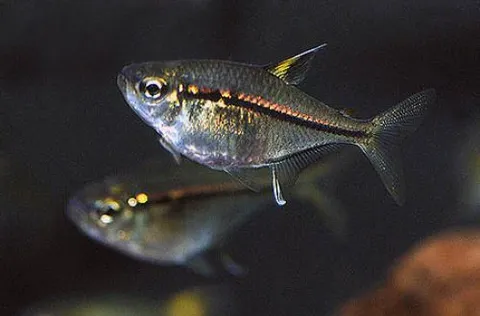
Hemigrammus ulreyi
Hemigrammus ulreyi, known as Ulrey's Tetra, belongs to the family Acestrorhamphidae. This species is an unpretentious and peaceful fish that easily adapts to a community of other aquarium inhabitants of similar size and…
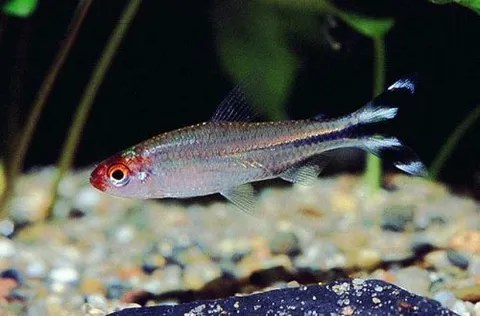
Petitella georgiae
A member of the Acestrorhamphidae family, Petitella georgiae, is scientifically known as the “False Rummy-Nose Tetra” or “False Rummy-Nose.” As its name suggests, this fish bears a striking resemblance to two closely…
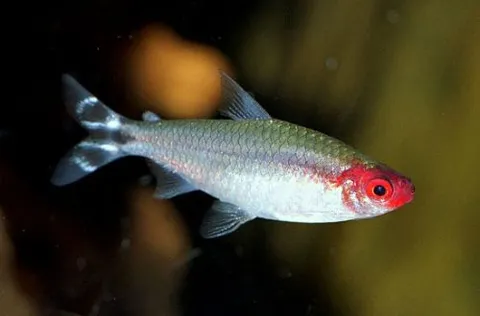
Petitella bleheri
The Bleeding Heart Tetra, also known as the Rummy-nose Tetra (Petitella bleheri), belongs to the family Acestrorhamphidae. Its peaceful nature and availability have made it extremely popular among aquarists worldwide.…
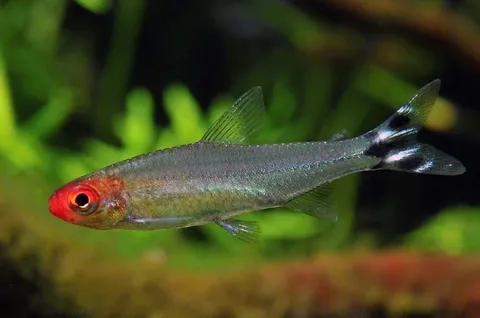
Petitella rhodostoma
The Rummy-nose Tetra, also known by its scientific name Petitella rhodostoma, belongs to the family Acestrorhamphidae. This fish deservedly enjoys popularity because it is quite undemanding, easily coexists with many…