Temperature24 – 28 °C
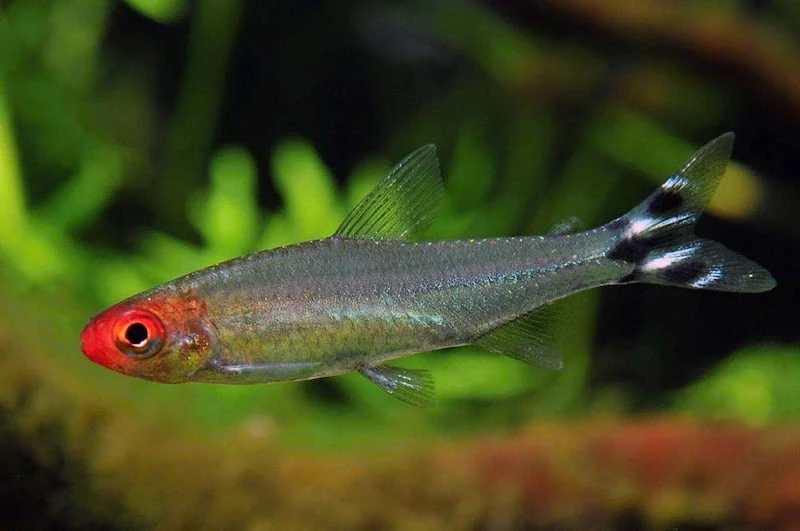
The Rummy-nose Tetra, also known by its scientific name Petitella rhodostoma, belongs to the family Acestrorhamphidae. This fish deservedly enjoys popularity because it is quite undemanding, easily coexists with many other aquarium species, and its keeping and breeding do not present particular difficulties.
Adult specimens reach a length of about 5 cm. Their body has a silvery or translucent coloration, and the caudal fin is adorned with a characteristic black and white marking. The fish's head is bright red. It is important to note that the Brilliant Rummy-nose Tetra, a close relative of the Rummy-nose Tetra, looks very similar, and distinguishing these two species can sometimes be difficult even for an experienced aquarist. Experts point out that in the Rummy-nose Tetra, the red coloration of the head ends at the gill covers, whereas in the Brilliant Rummy-nose Tetra, it continues further along the body. The identification situation is complicated by the presence of another species on the aquarium market, the False Rummy-nose Tetra, which has almost identical coloration. It can be distinguished by an elongated black stripe on the caudal peduncle.
Originally, this species is found in the lower Amazon basin and the Orinoco River basin, in the territories of modern-day Venezuela and Brazil. Their natural habitat consists of numerous tributaries of larger water arteries. The water in such bodies of water acquires a characteristic light brown tint, which is due to the high concentration of tannins formed as a result of the decomposition of organic material: fallen leaves, branches, tree roots, and other plant debris.
This is a peaceful, schooling, and very active species. Due to their activity, Rummy-nose Tetras can sometimes bother slower tank mates. They get along perfectly with fish of similar size and temperament, such as Red-nosed Tetras, Pulcher Tetras, Peruvian Tetras, Discus, and many other South American inhabitants. They should be kept in a school of at least 10 individuals. With fewer fish, they become timid, show less activity, and lose their vibrant coloration.
For a small group of Rummy-nose Tetras, an aquarium of at least 70 L is required. Coarse river sand is recommended as substrate. Decorations can include several snags and dense thickets of aquatic plants, preferably shade-loving species, arranged in groups. Lighting should be subdued; floating plants can be added for additional shading. To recreate the characteristic brownish tint of water found in their natural environment, dried tree leaves, pre-soaked until they sink, can be added to the aquarium, and a filter with an alder cone filler should be installed. Leaves should be replaced every few weeks. Another effective method is to use a bag of alder cones. Such peat should only be purchased from pet stores, avoiding collection from natural bodies of water or swamps. Water conditions should be slightly acidic in pH, with low to medium hardness (GH). The ideal temperature range is between 24–28°C. It is important to maintain a minimal level of organic pollutants, such as uneaten food particles and excrement. Prolonged exposure of fish to unsuitable conditions negatively affects their well-being, which will first be indicated by a dulling of their coloration. Regular monitoring of all water parameters and weekly water changes of 15–20% of the total volume are mandatory.
In aquarium conditions, Rummy Nose Tetras readily accept all types of food suitable for aquarium fish of their size. An optimal and balanced diet includes a combination of various products: for example, dry flakes and granules, supplemented with live or frozen bloodworms or daphnia. For those who do not wish to prepare various larvae and crustaceans, specialized foods from well-known manufacturers can be recommended, as they already contain freeze-dried protein additives.
Rummy-nose tetras are egg-laying fish, but their parental instincts are poorly developed, so eggs and fry can be eaten by their own parents. For breeding, a separate spawning tank must be set up. Usually, a tank of about 20 liters is used for this purpose. The decor of the spawning tank is not critical. To protect future offspring, the bottom can be covered with a fine mesh, a layer of glass marbles 1–2 cm in diameter, or dense thickets of low-growing fine-leaved plants or mosses. Before placing the fish, the aquarium is filled with water from the main tank. A simple sponge air-lift filter and a heater are sufficient for equipment. A lighting system is not required, as Rummy-nose tetras prefer subdued light during spawning. The stimulus for spawning is establishing water parameters: pH within 5.5–6.5 and GH 1–5, at a temperature of about 26–28°C. Protein-rich foods, such as bloodworms, daphnia, and artemia, should make up a significant portion of the breeders' diet. After some time, the females will noticeably round out, filled with eggs. Then, the females, along with the largest and most brightly colored males, are placed in the spawning tank. After spawning, the newly-fledged parents are returned. Fry appear after 24–36 hours, and on the 3rd–4th day, they begin to swim freely, and it is from this moment that they need food. The young should be fed with special food for aquarium fish fry.
The best guarantee of fish health from any disease is a balanced aquarium biosystem with optimal keeping conditions. Therefore, if you notice changes in behavior, fish coloration, the appearance of uncharacteristic spots, or other symptoms, you should first check the water parameters, and only after that proceed with treatment measures.
When purchasing Rummy-nose tetras, it is important to assess their general condition and coloration. Healthy individuals should be active, swim in a school, and have a bright red head coloration. A pale or dull head color often indicates severe stress, improper keeping conditions in the store, or illness. Avoid purchasing fish with damaged fins, signs of emaciation, white spots, or film on the body. Since the species is sensitive to sudden changes in water parameters, inquire how long the fish have been in the store before purchasing. It is not recommended to acquire individuals that appear lethargic, lie on the bottom, or show signs of apathy, as Rummy-nose tetras tolerate transportation and adaptation after stressful situations extremely poorly.
The essentials: size, tank volume, water parameters and care
An adult reaches 5 cm in length. Plan the tank around the maximum size: the fish quickly outgrows a cramped setup.
The recommended volume is 70 L. A smaller tank speeds up nitrate build-up and raises stress levels.
Temperature 24–28 °C, pH 5–7, hardness 1–12 dGH. Stability matters more than exact values: sudden swings are harder on the fish than a small deviation from the ideal.
Around 6 years when kept properly. Lifespan depends directly on tank volume, water quality and a varied diet.
Temperament: peaceful (regular). Keep this in mind when choosing tank mates.
Recommended setup: group (8–10 individuals). Ignoring this is a common cause of stress and disease.
Diet type: any (universal). Feed small portions that are finished within a couple of minutes — overfeeding does more harm than underfeeding.
The scientific name of the species is Petitella rhodostoma, family Acestrorhamphidae. It also appears in the literature as: Petitella rhodostoma.
The water suits 197 of 208 plants in the catalogue — the easiest ones are shown first.
Afzelius's AnubiasAnacharisAnubiasBrazilian PennywortDwarf CloverDwarf CloverDwarf HygrophilaDwarf SagittariaDwarf ValGuppy GrassHornwortJava FernJava MossMoneywortMud SwordNair's LagenandraNarrow Leaf AnacharisNarrow-leaf CloverStringy MossSüsswassertangTaiwan MossTape GrassTemple PlantUssuri Watermilfoil
Matched by family, categories and overlapping keeping conditions
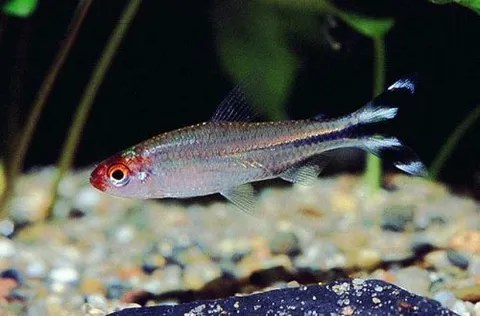
Petitella georgiae
A member of the Acestrorhamphidae family, Petitella georgiae, is scientifically known as the “False Rummy-Nose Tetra” or “False Rummy-Nose.” As its name suggests, this fish bears a striking resemblance to two closely…
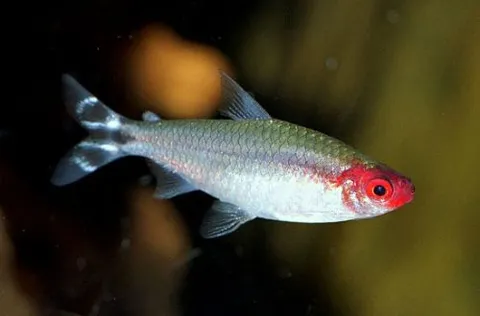
Petitella bleheri
The Bleeding Heart Tetra, also known as the Rummy-nose Tetra (Petitella bleheri), belongs to the family Acestrorhamphidae. Its peaceful nature and availability have made it extremely popular among aquarists worldwide.…
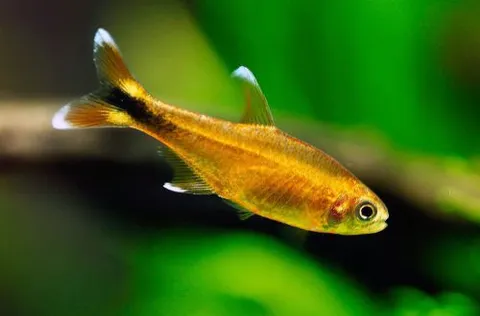
Hasemania nana
The Copper Tetra, also known as Hasemania (scientific name — Hasemania nana), belongs to the family Acestrorhamphidae. This fish is considered an excellent choice for a community tank. Its popularity is due to its…
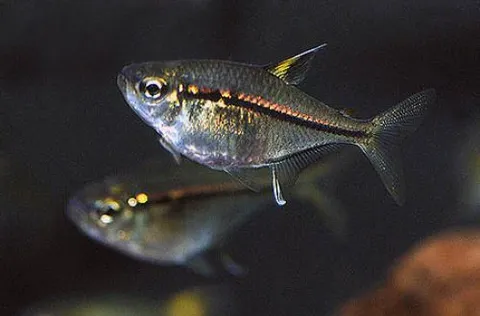
Hemigrammus ulreyi
Hemigrammus ulreyi, known as Ulrey's Tetra, belongs to the family Acestrorhamphidae. This species is an unpretentious and peaceful fish that easily adapts to a community of other aquarium inhabitants of similar size and…