Temperature23 – 27 °C
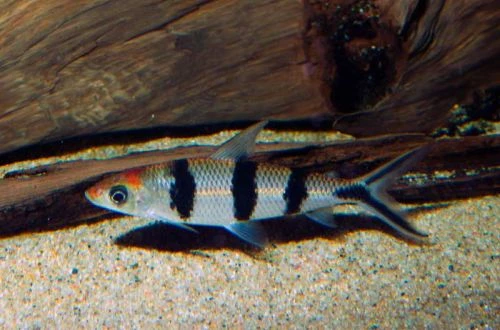
Hemiodus quadrimaculatus, known as the Four-spotted Hemiodus, belongs to the family Hemiodontidae. This fish species originates from South America, where it is widely distributed in the Amazon basins – such as the Rio Negro and Trombetas, as well as in other river systems on the continent. Examples include the Nickerie and Coppename rivers in Suriname, the Oyapock in French Guiana, and the Araguari in southern Brazil.
Adults of this fish reach a length of up to 13 cm. Their body is characterized by a light coloration with noticeable yellow hues. A distinctive feature is three black stripes running along the body. At the base of the tail, a dark spot can be observed, from which two lines extend along the forked caudal fin. The fish's back is dark brown. During the breeding season, males sometimes develop red markings on their heads.
The species inhabits river basins in South America, including the Negro, Trombetas, Araguari, Nickerie, Coppename, and Oyapock. In nature, the fish prefer to stay in areas with sandy substrate, often found in sections with fast currents. This is a tropical species, inhabiting freshwater bodies at water temperatures of 23–27 °C and pH values of 6.0–7.5.
This fish is active and energetic. It prefers to be in a group of its own kind and coexists well with other non-aggressive species of similar size. It is important to choose tank mates that can live in conditions with moderate to strong currents, similar to the natural habitat of hemioduses.
For keeping 2-3 fish, the optimal aquarium volume starts from 100 liters. The decor should resemble a mountain riverbed: a substrate of coarse sand, stones, and boulders. Snags can be used as additional decorative elements, on which aquatic plants such as Anubias, various mosses, and ferns can grow. In their natural habitat, Four-banded Hemiolodus often jump out of the water to overcome small obstacles, during play, or to escape predators. Therefore, the aquarium must be equipped with a reliable lid or other device to prevent jumping. For long-term keeping, clean, oxygen-rich water with medium hardness and pH levels close to neutral is necessary. A current can be created using a pump or a powerful internal filter. The fish feed on small invertebrates. There are also observations indicating that their diet may include plants and algae. In home aquariums, it is acceptable to use artificial foods rich in protein and containing vegetable additives. It is preferable to use foods in the form of jelly, tablets, or briquettes that are attached to the bottom. Light floating foods, such as flakes or small granules, are not recommended, as the current can carry them into the filtration system.
The diet of these fish consists of small invertebrates, but there are observations that algae and other plants are also present in their diet. In a home aquarium, artificial foods enriched with protein and plant additives can be offered. It is recommended to use food forms such as jelly, tablets, or briquettes, which should be secured to the bottom. Floating foods, such as flakes or small granules, are undesirable, as a strong current can carry them into the filtration system.
Information on breeding in aquarium conditions is limited. It is known that the species is an egg-layer and practices pair spawning. In the natural environment, reproduction occurs by scattering eggs, but successful cases of offspring in captivity are practically undocumented, which makes the species difficult for breeding.
No specific species-specific diseases have been identified. Like other members of the family, the fish are sensitive to water quality and oxygen content. Due to their timid nature, when stressed or frightened, they are prone to sudden jumps, which often leads to mechanical injuries from the walls or equipment elements of the aquarium. Prevention includes providing ample volume and securely covering the aquarium with a lid.
When selecting individuals, attention should be paid to the integrity of the fins and the absence of skin damage sustained during transportation. A healthy fish should be active and have clear eyes. Given their timid temperament, fish can be severely emaciated after import, so it is recommended to check with the seller about the adaptation period of the individuals in the store before making a purchase.
The essentials: size, tank volume, water parameters and care
An adult reaches 13 cm in length. Plan the tank around the maximum size: the fish quickly outgrows a cramped setup.
The recommended volume is 100 L. A smaller tank speeds up nitrate build-up and raises stress levels.
Temperature 23–27 °C, pH 6–7.5, hardness 5–20 dGH. Stability matters more than exact values: sudden swings are harder on the fish than a small deviation from the ideal.
Around 5 years when kept properly. Lifespan depends directly on tank volume, water quality and a varied diet.
Temperament: peaceful, active/mobile. Keep this in mind when choosing tank mates.
Recommended setup: small group (3–4 individuals). Ignoring this is a common cause of stress and disease.
Diet type: any (universal). Feed small portions that are finished within a couple of minutes — overfeeding does more harm than underfeeding.
The scientific name of the species is Hemiodus quadrimaculatus, family Hemiodontidae. It also appears in the literature as: Hemiodopsis quadrimaculatus.
The water suits 197 of 208 plants in the catalogue — the easiest ones are shown first.
Afzelius's AnubiasAnacharisAnubiasBrazilian PennywortDwarf CloverDwarf CloverDwarf HygrophilaDwarf SagittariaDwarf ValGuppy GrassHornwortJava FernJava MossMoneywortMud SwordNair's LagenandraNarrow Leaf AnacharisNarrow-leaf CloverStringy MossSüsswassertangTaiwan MossTape GrassTemple PlantUssuri Watermilfoil
Matched by family, categories and overlapping keeping conditions
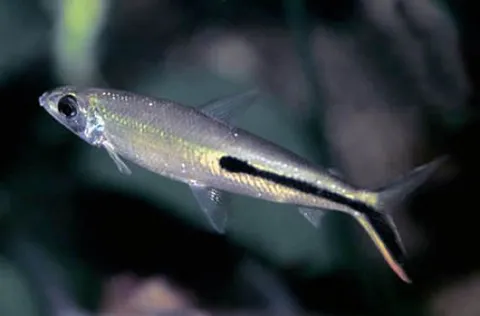
Hemiodus gracilis
The Slender Hemiodopsis (Hemiodus gracilis), belonging to the Hemiodontidae family, is a beautiful and graceful fish with a unique body pattern. It is highly active, which allows it to bring dynamism to any freshwater…
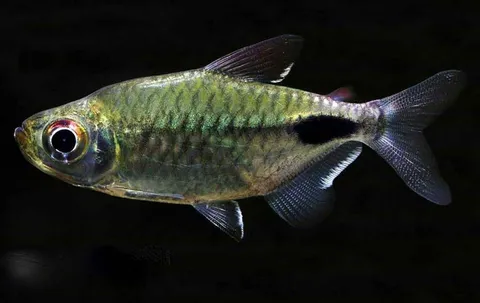
Brachypetersius altus
The Alestes Tetra (Brachypetersius altus), a member of the Alestidae family (African Tetras), is native to the waters of West Africa. It can be found in the middle Congo River basin, as well as in numerous tributaries…
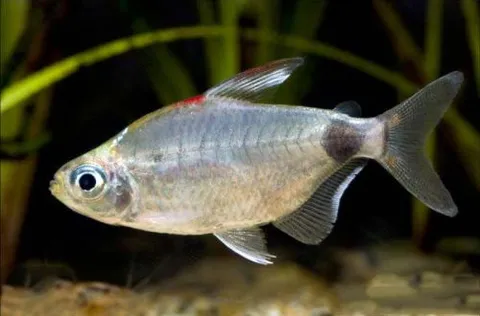
Bathyaethiops breuseghemi
Breuseghem's Tetra, scientifically known as Bathyaethiops breuseghemi, is a member of the family Alestidae, or African Tetras. Its homeland is the African continent, where it is found in the middle Congo River basin, in…
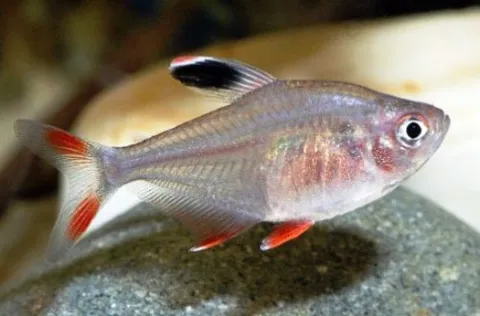
Megalamphodus bentosi
The Ornate Tetra, also known as the Common Ornate Tetra or by its scientific name Megalamphodus bentosi, belongs to the family Acestrorhamphidae. This species is a classic representative of the extensive group of…