Hemiodontidae

Slender Hemiodopsis

Hemiodus gracilis

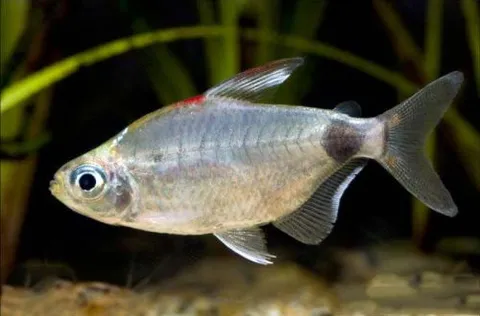
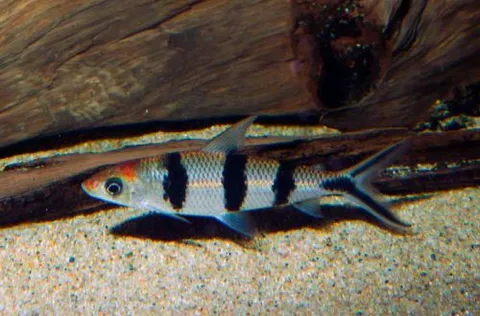
The slender hemiodopsis (Hemiodus gracilis) belongs to the family Hemiodontidae and is a beautiful, graceful fish with a distinctive body pattern. It is highly mobile and brings dynamism to any freshwater tank. This species is relatively straightforward to keep, provided all requirements are met.

Tank
from 250 L (66 gal)
Temperature
23 – 27 °C (73 – 81 °F)
Size in aquarium
15 cm (5.9 in)
Acidity
pH 5.8–7.2
Natural rangeRange on the map
  • Amazon Basin
  • Brazil
  • Venezuela

Tank conditions

Plan the tank stocking
Temperature
23 – 27 °C (73 – 81 °F)
Water pH
Slightly acidic (5.8) – Neutral (7.2)
Water dH
Soft (4) – Hard (15)
Water salinity
no salt (freshwater)
Size in aquarium
15 cm (5.9 in)
Lifespan
5 years
Temperament
Peaceful, active/mobile
Toward small fish
not a predator
Required aquarium volume
from 250 L (66 gal)
Lighting
moderate (regular)
Substrate
coarse sand coarse sand / gravel / pebbles
Water flow
weak
Feeding
Plant-based with meat additives
Keeping
Medium group 6–8 individuals
Jumping
noticeable a lid is needed
  • Lifespan. A lifespan to expect under good care, not a measured value: it depends heavily on tank volume, water quality and diet — and for selectively bred forms, on their origin as well.
  • Toward small fish. Based on the Predators category in the catalog or the temperament in the species parameters. “A risk to small fish” means the species is not a predator by habit, yet will swallow any fish that fits in its mouth.
  • Required aquarium volume. This is a husbandry recommendation, not a measured value: the volume depends on the keeping mode (medium group (6–8 individuals)), footprint, decor and tank mates.

Care and keeping

Description

Adults reach 15 cm in length. They have a slender, elongated body in silvery tones, marked by a black horizontal stripe that runs from just behind the dorsal fin along the tail, curving elegantly along its lower edge. A bright red mark is also visible on the lower rim of the tail fin. The dorsal, ventral and anal fins are short and triangular in shape. This body structure identifies the slender hemiodopsis as a fast swimmer, capable of sudden bursts of speed.

Habitat

This fish is found in South America, in the rivers and lakes of Brazil and Venezuela. They inhabit backwaters of large rivers and numerous lakes in the tropical forests of the Amazon.

Behavior and Compatibility

These are peaceful and friendly fish, highly active in a way that may disturb some quieter species. They do well with Amazonian cichlids, catfish, and other characins of similar size and temperament.

Care and Maintenance

This species needs considerable swimming space, so the tank should be at least 250 litres. Use any sandy substrate and include several pieces of wood, twisted roots or branches, plus rooted and floating plants. Create several hiding spots from these elements, as the slender hemiodopsis is rather shy despite its reasonable size and will retreat when alarmed. Pay close attention to water quality: keep organic waste to a minimum and maintain a high oxygen level. Other important factors are a temperature range of 23–27 °C, slightly acidic pH, and low to moderate water hardness. Choose equipment to meet all these requirements. The tank must also have a tight-fitting lid to prevent the fish from jumping out.

Diet

Their diet can include all appropriately sized dry, frozen and live foods. Supplement with plant matter, varying the diet by combining different foods such as dry flakes, bloodworm and spirulina tablets.

Breeding and Reproduction

There are no reliable reports of the slender hemiodopsis breeding successfully in aquarium conditions. Most fish offered for sale are imported as juveniles from the wild or from specialist farms.

Diseases

The main threat to their health is unsuitable conditions, including incorrect pH, water hardness, temperature and other parameters, as well as high pollution levels. At the first signs of illness (lethargy, loss of appetite, unusual growths on the body), check all water parameters at once and adjust them if needed. Such steps are often enough to restore the fish to health.

How to choose

When buying, choose fish with clean fins and undamaged scales, as this species is prone to injury during transport. Check that the fish swim actively and behave as a group, avoiding thin individuals or those with an unusually swollen belly. The fish are naturally shy and may appear sluggish in the shop, but healthy specimens should respond to movement near the tank. It is best to buy a group of 6–10 at once, as keeping single fish causes severe stress and loss of appetite.

Compatibility

There are no pair reviews for this species yet — check tankmates in the matcher.

All tankmates

Plants and this fish

Matching water does not mean the plant will stay intact.

Frequently asked questions

The essentials: size, tank volume, water parameters and care

How big does Slender Hemiodopsis get?

An adult reaches 15 cm in length. Plan the tank around the maximum size: the fish quickly outgrows a cramped setup.

What size aquarium does Slender Hemiodopsis need?

The recommended volume is 250 L. A smaller tank speeds up nitrate build-up and raises stress levels.

What water parameters does Slender Hemiodopsis need?

Temperature 23–27 °C, pH 5.8–7.2, hardness 4–15 dGH. Stability matters more than exact values: sudden swings are harder on the fish than a small deviation from the ideal.

How long does Slender Hemiodopsis live?

Around 5 years when kept properly. Lifespan depends directly on tank volume, water quality and a varied diet.

Is Slender Hemiodopsis aggressive?

Temperament: peaceful, active/mobile. Keep this in mind when choosing tank mates.

How many Slender Hemiodopsis should be kept together?

Recommended setup: medium group (6–8 individuals). Ignoring this is a common cause of stress and disease.

What does Slender Hemiodopsis eat?

Diet type: plant-based with meat additives. Feed small portions that are finished within a couple of minutes — overfeeding does more harm than underfeeding.

What is the scientific name of Slender Hemiodopsis?

The scientific name of the species is Hemiodus gracilis, family Hemiodontidae. It also appears in the literature as: Hemiodopsis gracilis.

Similar fishes

Matched by family, categories and overlapping keeping conditions

Hemiodus quadrimaculatus

Hemiodus quadrimaculatus

Hemiodus quadrimaculatus

Hemiodontidae

Hemiodus quadrimaculatus, known as the Four-spotted Hemiodus, belongs to the family Hemiodontidae. This fish species originates from South America, where it is widely distributed in the Amazon basins – such as the Rio…
Congo Tetra

Congo Tetra

Phenacogrammus interruptus

African Tetras (Alestidae)

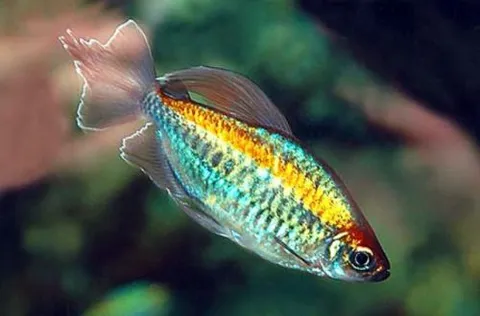
Phenacogrammus interruptus, more commonly known as the Congo Tetra, belongs to the family Alestidae. This species is considered one of the most attractive among African characins, captivating observers with its…

Caenotropus

Caenotropus

Caenotropus labyrinthicus

Chilodontidae

A member of the Chilodontidae family, Caenotropus, scientifically known as Caenotropus labyrinthicus, originates from South America. Its presence is notable throughout the vast Amazon River basin, as well as in the…

Breuseghem's Tetra

Breuseghem's Tetra

Bathyaethiops breuseghemi

African Tetras (Alestidae)

Breuseghem's Tetra, scientifically known as Bathyaethiops breuseghemi, is a member of the family Alestidae, or African Tetras. Its homeland is the African continent, where it is found in the middle Congo River basin, in…

Other scientific names and conservation status

Other scientific names
Hemiodopsis gracilis
Categories
Characins
Conservation status
Least concernLC