Temperature23 – 26 °C
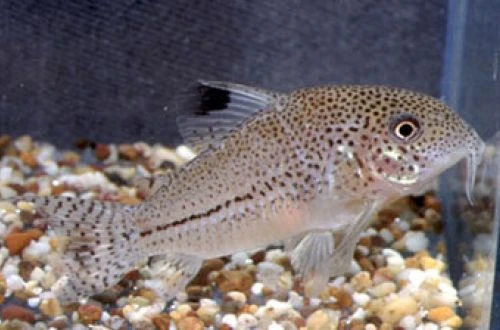
Corydoras julii, scientifically known as Corydoras julii, belongs to the family Callichthyidae. This catfish is likely one of the most sought-after by aquarists among its relatives. Its distinguishing features, such as a peaceful disposition, high activity, striking coloration, and unpretentiousness in care, make it very popular.
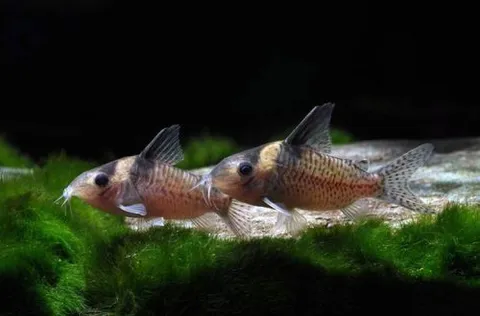
This catfish stands out among others for its unique body pattern. Its creamy or grayish coloration is adorned with numerous small black spots all over its body. A characteristic dark stripe runs from the gills to the caudal fin. This horizontal line, along with a distinct black spot on the dorsal fin, facilitates the identification of the species among members of the genus Corydoras. The catfish itself is small, reaching about 6 cm in length, and has a relatively large head in proportion to its body. It has barbels around its mouth, which it uses to explore the substrate. Determining the sex of these fish in a home environment is often difficult, despite the differences: males are usually slimmer and smaller than females, while females have a more rounded abdomen. Therefore, to ensure successful breeding, it is recommended to keep a group of more than three individuals.
In 1906, the researcher Franz Steindachner first described the Julii Corydoras. These fish were initially discovered in the waterways of South America: in the lower Amazon and in coastal rivers of northeastern Brazil. Preferring the bottom layers of water, this catfish feeds on a variety of foods, including worms, crustaceans, insects, and plant matter.
Corydoras julii is a peaceful and calm fish that, due to its nocturnal lifestyle and preference for hiding places, rarely interacts with other aquarium inhabitants. It will fit perfectly into a community of other peaceful fish.
Since the fish spends most of its time at the bottom, the condition of the substrate becomes particularly important. It is recommended to perform partial water changes of 10-20% weekly or bi-weekly, while cleaning the substrate of food and plant debris. A school of six catfish needs an aquarium of 80 L or more with a large bottom area. In aquarium decoration, preference should be given to natural wood — snags or gnarled roots can serve as excellent hiding places for this small fish. Caves or grottoes can be formed from stones, providing additional shelters. Providing hiding places is extremely important, as Corydoras julii, like many other catfish, is most active at night or in dim light, so it needs to be able to hide during the day. For the substrate, it is best to choose coarse sand or fine, smooth gravel to avoid damaging its sensitive barbels. When choosing aquarium equipment, special attention should be paid to filtration and aeration systems to prevent oxygen deprivation.
It readily accepts almost any food offered. Its diet is suitable for all types of live food of appropriate size, plant-based foods such as lettuce, and dry commercial foods in the form of granules or flakes. An important condition is that the food must be sinking, as the fish only rises to the surface in exceptional cases.
The catfish successfully reproduces, although the spawning period is quite short and has its own characteristics. After the courtship ritual, the female collects some of the male's milt in her mouth, then attaches several eggs to a hard surface (such as sturdy plants, tubes, or glass) and fertilizes each egg. When the milt supply runs out, she returns to the male, repeating the entire process.
These fish are highly resilient. Health problems generally do not arise if optimal keeping conditions are maintained. The only vulnerable area is their sensitive barbels, which are easily damaged by contact with unsuitable substrate or can be susceptible to infections if there is a high concentration of ammonia in the water.
When purchasing, choose active individuals that show interest in foraging at the bottom. Avoid fish with damaged or missing barbels, as this often indicates improper keeping conditions in the store and can lead to further health problems. Carefully inspect the body for white film, spots, or ulcers, which indicate fungal or bacterial infections. Healthy corydoras should have clean, transparent fins without signs of erosion, and breathing should be steady, without constantly staying at the water surface. Since the species is often confused with other spotted corydoras, ensure the presence of the characteristic dark stripe along the lateral line and a black spot on the dorsal fin.
The essentials: size, tank volume, water parameters and care
An adult reaches 5–6 cm in length. Plan the tank around the maximum size: the fish quickly outgrows a cramped setup.
The recommended volume is 80 L. A smaller tank speeds up nitrate build-up and raises stress levels.
Temperature 23–26 °C, pH 6–8, hardness 2–15 dGH. Stability matters more than exact values: sudden swings are harder on the fish than a small deviation from the ideal.
Around 5 years when kept properly. Lifespan depends directly on tank volume, water quality and a varied diet.
Temperament: peaceful (regular). Keep this in mind when choosing tank mates.
Recommended setup: schooling (usually from 5–6 individuals and more). Ignoring this is a common cause of stress and disease.
Diet type: sinking (any). Feed small portions that are finished within a couple of minutes — overfeeding does more harm than underfeeding.
The scientific name of the species is Corydoras julii, family Armored Catfish (Callichthyidae).
The water suits 197 of 208 plants in the catalogue — the easiest ones are shown first.
Afzelius's AnubiasAnacharisAnubiasBrazilian PennywortDwarf CloverDwarf CloverDwarf HygrophilaDwarf SagittariaDwarf ValGuppy GrassHornwortJava FernJava MossMoneywortMud SwordNair's LagenandraNarrow Leaf AnacharisNarrow-leaf CloverStringy MossSüsswassertangTaiwan MossTape GrassTemple PlantUssuri Watermilfoil
Matched by family, categories and overlapping keeping conditions
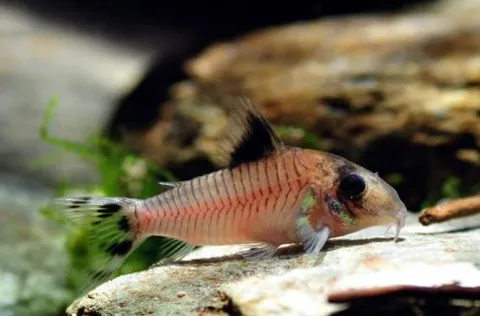
Corydoras condiscipulus
Corydoras condiscipulus, or the Condiscipulus Catfish (scientific name Corydoras condiscipulus), belongs to the family Callichthyidae, known as armored or callichthyid catfishes. The name itself comes from the Latin…
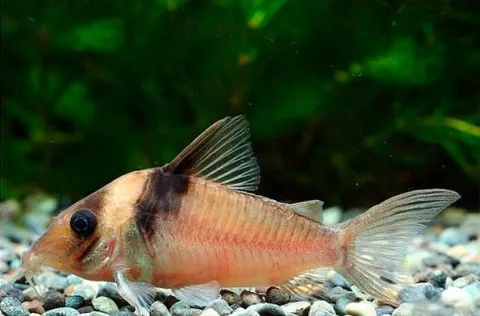
Corydoras virginiae
Corydoras virginiae, scientifically known as Corydoras virginiae, belongs to the family Callichthyidae — armored or callichthyid catfishes. This name was given to the fish in honor of Virginia Schwarz, wife of Adolf…
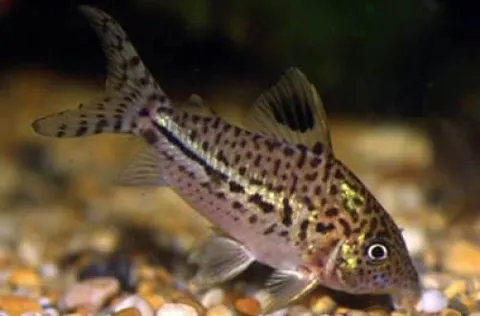
Corydoras gomezi
The scientific name Corydoras gomezi was given to this species of fish, belonging to the family of armored, or callichthyid, catfishes. It was named in honour of Dr Juan A. Gomez. These wild catfishes inhabit the upper…
Corydoras delphax
Corydoras delphax, also known as the Pigmy Corydoras, bears the scientific name Corydoras delphax. Scientists may have given this catfish such a name due to its habit of actively rooting in the substrate with its nose…