Temperature14 – 20 °C
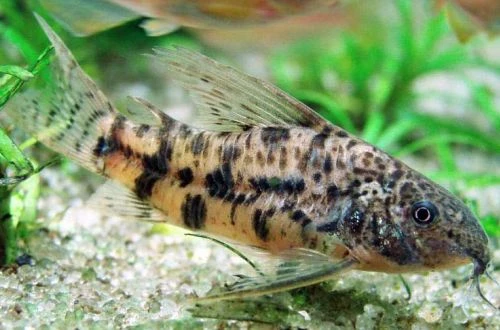
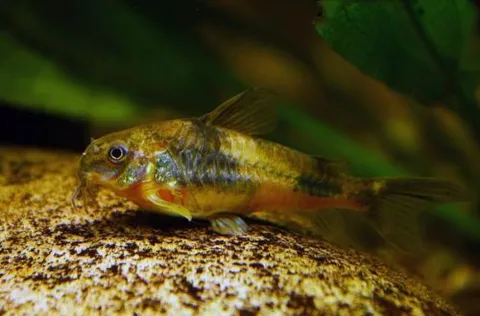
The Largesail Corydoras, scientifically known as Scleromystax macropterus, belongs to the family Callichthyidae. This fish gets its name from its fins, which are noticeably larger than those of closely related species.
Adults of this fish can reach 8–9 cm in length. Their bodies are covered with rows of hard plates instead of traditional scales, which is characteristic of the Armored Catfish group. Their coloration is a pattern of dark speckles on a light background. In males, the pectoral and dorsal fins are noticeably longer than in females.
This catfish inhabits South America, with its natural habitats being the coastal rivers of southern Brazil as well as some tributaries of the Paraná basin. It is most often found in minor rivers within the states of São Paulo, Paraná, and Santa Catarina. A typical habitat is a small stream or river overhung by dense forest cover. The water in such biotopes has a distinct brown tint, due to the high concentration of humic acids formed from the decomposition of plant debris. Brief summary: 8–9 cm in length, omnivorous, prefers slightly cool water.
Male Largesail Corydoras are not always friendly towards each other, as they compete for the attention of females and for territory. In a small aquarium, it is more sensible to keep only one male with several females. They are peaceful towards other fish species. These catfish are compatible with fish of similar size and temperament that are comfortable in cool water.
For a group of 4–6 of these catfish, an optimal aquarium should have a volume of at least 240 liters. The choice of decorations is not critical and can be dictated by the aquarist's personal preferences or the needs of other inhabitants. It is important to pay attention to a soft substrate at the bottom and provide several shelters. Keeping these catfish is not difficult: it is necessary to maintain soft, slightly cool water (up to 20°C) and prevent the accumulation of organic waste (food remnants, excrement, dead plant parts), which can disrupt the nitrogen cycle. Maintaining favorable environmental conditions requires regular performance of mandatory aquarium care procedures. These include weekly partial water changes with fresh water of appropriate pH and dGH, which can be conveniently combined with waste removal, substrate cleaning, and equipment maintenance.
This is an omnivorous species that readily accepts most popular aquarium foods, whether dry, freeze-dried, frozen, or live. Given the fish's bottom-dwelling lifestyle, sinking foods are recommended.
The breeding process for these catfish is similar to other species of the genus Corydoras. The fish lay eggs, securely attaching them to various surfaces: stones, plants, decorative elements, or even the aquarium glass. Parental instincts are absent, so it sometimes happens that the newly hatched parents eat their own offspring. To preserve the eggs, it is recommended to transfer them to a separate tank filled with water from the main aquarium. The incubation period lasts 3–4 days. In the first days after hatching, the fry feed on the remnants of the yolk sac, and then they can be switched to specialized foods for young aquarium fish (such as powders, suspensions, Artemia nauplii, and others).
The well-being of these catfish depends entirely on their living conditions. If the environment is favorable, the fish receive a balanced diet, and are not subjected to aggression from other aquarium inhabitants, then health problems usually do not arise. At the first symptoms of illness, the first step should be to check the water parameters, the presence of pollution, or an elevated concentration of nitrogen cycle products. As a rule, restoring normal conditions helps the fish's immune system cope with the problem on its own. If symptoms persist, medication may be required.
When selecting individuals, attention should be paid to the fish's activity and the cleanliness of their skin. A healthy specimen should show interest in foraging for food in the substrate, have no visible damage, sores, white film, or fin erosion. It is important to avoid purchasing fish that appear emaciated, have sunken bellies, or show apathy, constantly hovering in the water column or near the surface. Since the species is subtropical, it is necessary to clarify the keeping conditions at the store when purchasing. Avoid individuals that have been kept at high temperatures for a long time, as this negatively affects their immunity and lifespan. It is also recommended to check the condition of the barbels — they should be intact, without signs of erosion, which indicates proper water quality and hygiene in the aquarium.
The essentials: size, tank volume, water parameters and care
An adult reaches 8–9 cm in length. Plan the tank around the maximum size: the fish quickly outgrows a cramped setup.
The recommended volume is 240 L. A smaller tank speeds up nitrate build-up and raises stress levels.
Temperature 14–20 °C, pH 5–7, hardness 1–10 dGH. Stability matters more than exact values: sudden swings are harder on the fish than a small deviation from the ideal.
Around 7 years when kept properly. Lifespan depends directly on tank volume, water quality and a varied diet.
Temperament: peaceful (regular). Keep this in mind when choosing tank mates.
Recommended setup: small group (5–6 individuals). Ignoring this is a common cause of stress and disease.
Diet type: small / appropriate size / pieces. Feed small portions that are finished within a couple of minutes — overfeeding does more harm than underfeeding.
The scientific name of the species is Scleromystax macropterus, family Armored Catfish (Callichthyidae). It also appears in the literature as: Corydoras bertoni, Corydoras macropterus.
The water suits 180 of 208 plants in the catalogue — the easiest ones are shown first.
African Onion PlantAfzelius's AnubiasAnacharisAnubiasBrazilian PennywortDwarf CloverDwarf CloverDwarf HygrophilaDwarf SagittariaDwarf ValGuppy GrassHornwortJava FernJava MossMoneywortMud SwordNarrow Leaf AnacharisStringy MossSüsswassertangTaiwan MossTape GrassTemple PlantUssuri WatermilfoilWater Wisteria
Matched by family, categories and overlapping keeping conditions
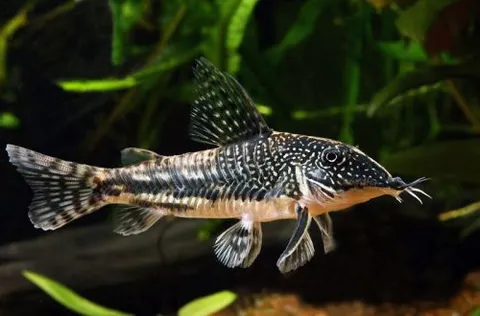
Scleromystax barbatus
Scleromystax barbatus, known as the Plated Cory or Bearded Cory, belongs to the Callichthyidae family. This species is considered the largest among the Corydoras genus, reaching approximately 10 cm in length. Otherwise,…
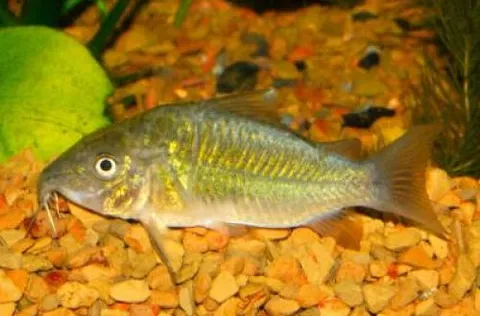
Corydoras splendens
The Emerald Catfish, or Green Brochis (Corydoras splendens), earned its name from its stunning body coloration. Its scales shimmer from metallic blue to rich emerald green, changing hues depending on the light.
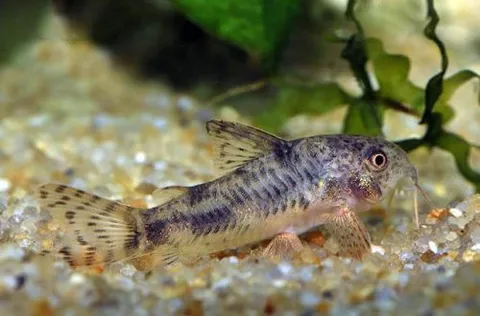
Corydoras carlae
Corydoras carlae, also known by its scientific name Corydoras carlae, belongs to the family Callichthyidae – these are armored or callichthyid catfishes. The catfish was named in honour of Mrs Carla Lindenaar-Sparrius;…
Corydoras ehrhardti
Ehrhardt's Corydoras, known by its scientific name Corydoras ehrhardti, is a member of the Armored Catfish or Callichthyidae family. The specific name honours Mr. W. Ehrhardt; the species itself was described in 1910 by…