Armored Catfish (Callichthyidae)

Leopard Corydoras

Corydoras trilineatus

Corydoras trilineatus, the leopard corydoras, belongs to the family Callichthyidae. It is native to the Amazon basin in Colombia, Peru, and Brazil, and also occurs in the coastal river systems of Surinam. The fish prefers slow-flowing waters: creeks, side channels of large rivers, and backwaters. During the rainy season it moves into flooded forest areas.

Tank
from 70 L (18 gal)
Temperature
22 – 26 °C (72 – 79 °F)
Size in aquarium
5 cm (2 in)
Acidity
pH 5.8–7.2
Natural rangeRange on the map
  • Amazon River Basin
  • Brazil
  • Colombia
  • Peru
  • Suriname

Tank conditions

Plan the tank stocking
Temperature
22 – 26 °C (72 – 79 °F)
Water pH
Slightly acidic (5.8) – Neutral (7.2)
Water dH
Very soft (1) – Hard (12)
Water salinity
no salt (freshwater)
Size in aquarium
5 cm (2 in)
Lifespan
7 years
Temperament
Peaceful (regular)
Toward small fish
not a predator
Required aquarium volume
from 70 L (18 gal)
Lighting
dimmed or moderate
Substrate
sandy (regular, light)
Water flow
weak or moderate
Swimming level
near the bottom
Feeding
Sinking (any)
Keeping
Small group 5–6 individuals
  • Lifespan. A lifespan to expect under good care, not a measured value: it depends heavily on tank volume, water quality and diet — and for selectively bred forms, on their origin as well.
  • Toward small fish. Based on the Predators category in the catalog or the temperament in the species parameters. “A risk to small fish” means the species is not a predator by habit, yet will swallow any fish that fits in its mouth.
  • Required aquarium volume. This is a husbandry recommendation, not a measured value: the volume depends on the keeping mode (small group (5–6 individuals)), footprint, decor and tank mates.

Care and keeping

Description

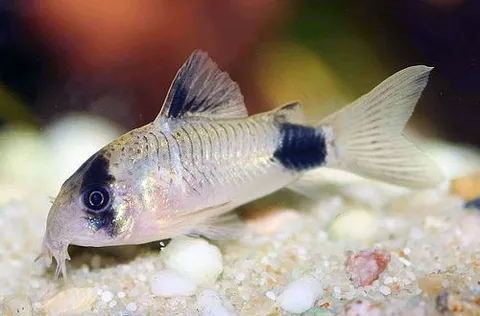
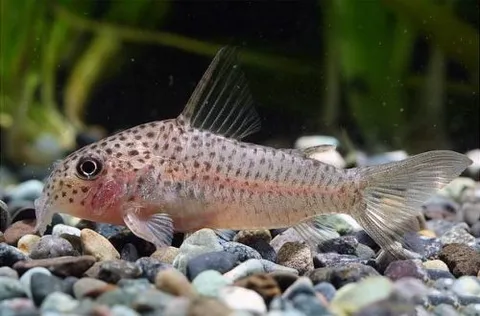
Adults reach about 5 cm in length. The body is light-coloured with dark markings resembling leopard spots. A similar pattern appears on the fins and tail; the dorsal fin has a large black spot. Three parallel stripes run along the sides: two are white, with one dark stripe between them. Sexual dimorphism is weak; males have more intense colouring and a noticeably larger spot on the dorsal fin.

Habitat

The species is widespread in South America, inhabiting the Amazon basin in Peru, Ecuador, Colombia, and Brazil, and some coastal rivers of Surinam. In nature it prefers slow-flowing or stagnant waters with a silted bottom, often in areas with dense aquatic vegetation.

Behavior and Compatibility

This is a peaceful schooling fish that does best in a group of six or more. It is active on the bottom, curious and friendly toward other tank inhabitants. It is compatible with most calm species, but should not be kept with aggressive or very large neighbours.

Care and Maintenance

A school requires a tank of at least 70 L with a large bottom area. Use soft sand or fine rounded gravel without sharp edges to avoid damaging the fish's sensitive barbels. The tank needs filtration, aeration, and hiding places such as driftwood, caves, or dense plant growth. Lighting should be dimmed. Change 20–30% of the water weekly.

Diet

This is an omnivore that feeds on small invertebrates and plant detritus in nature. In the aquarium it prefers sinking specialist foods in tablet or pellet form. Vary the diet with live or frozen foods such as bloodworm, brine shrimp, or daphnia. Feed in the evening, shortly before turning off the lights.

Breeding and Reproduction

Spawning is in pairs or groups, stimulated by frequent water changes with cool water. The female lays eggs on the substrate, often on the glass or broad plant leaves. After spawning, remove the parents as they will eat the eggs. Incubation takes 5–8 days; fry then begin to feed.

Diseases

The fish are sensitive to water quality and the build-up of nitrogenous compounds, which can damage the barbels and weaken immunity. Sudden temperature swings cause stress. Poor conditions can lead to fungal infections, fin rot, and parasites. Prevention involves regular gravel siphoning and stable water parameters.

How to choose

When buying, choose active fish with clean skin free of damage, sores, or coating. Check that the barbels are intact; their absence indicates poor previous care. Healthy corydoras should show interest in searching the bottom for food, not appear apathetic or emaciated.

Compatibility

There are no pair reviews for this species yet — check tankmates in the matcher.

All tankmates

Plants and this fish

Matching water does not mean the plant will stay intact.

Frequently asked questions

The essentials: size, tank volume, water parameters and care

How big does Leopard Corydoras get?

An adult reaches 5 cm in length. Plan the tank around the maximum size: the fish quickly outgrows a cramped setup.

What size aquarium does Leopard Corydoras need?

The recommended volume is 70 L. A smaller tank speeds up nitrate build-up and raises stress levels.

What water parameters does Leopard Corydoras need?

Temperature 22–26 °C, pH 5.8–7.2, hardness 1–12 dGH. Stability matters more than exact values: sudden swings are harder on the fish than a small deviation from the ideal.

How long does Leopard Corydoras live?

Around 7 years when kept properly. Lifespan depends directly on tank volume, water quality and a varied diet.

Is Leopard Corydoras aggressive?

Temperament: peaceful (regular). Keep this in mind when choosing tank mates.

How many Leopard Corydoras should be kept together?

Recommended setup: small group (5–6 individuals). Ignoring this is a common cause of stress and disease.

What does Leopard Corydoras eat?

Diet type: sinking (any). Feed small portions that are finished within a couple of minutes — overfeeding does more harm than underfeeding.

What is the scientific name of Leopard Corydoras?

The scientific name of the species is Corydoras trilineatus, family Armored Catfish (Callichthyidae). It also appears in the literature as: Corydoras dubius, Corydoras episcopi.

Similar fishes

Matched by family, categories and overlapping keeping conditions

White-striped Corydoras

White-striped Corydoras

Corydoras albolineatus

Armored Catfish (Callichthyidae)

The white-striped Corydoras, named Corydoras albolineatus, is a member of the Callichthyidae family (Armored or Callichthyid Catfishes). Before its official scientific description in 2004, this species was known by the…
Bronze Corydoras

Bronze Corydoras

Corydoras aeneus

Armored Catfish (Callichthyidae)

The Bronze Corydoras, also known by its scientific name Corydoras aeneus, is a member of the armored catfish family (Callichthyidae). This species is among the most popular and readily available aquarium fish. Its…

Goldstripe Corydoras

Goldstripe Corydoras

Corydoras aurofrenatus

Armored Catfish (Callichthyidae)

Corydoras aurofrenatus, known as the Goldstripe Corydoras, belongs to the family Callichthyidae, or Armored Catfishes. Its name is due to the unique pigmentation on its head and body, which shimmers with gold. The…

Panda Corydoras

Panda Corydoras

Corydoras panda

Armored Catfish (Callichthyidae)

The Panda Corydoras, widely known as the Panda Catfish or Panda Cory (scientific name Corydoras panda), belongs to the family Callichthyidae. These fish originate from the upper Amazon River basin, where the foothills…

Other scientific names and conservation status

Other scientific names
Corydoras dubius, Corydoras episcopi
Conservation status
Least concernLC