Temperature22 – 26 °C
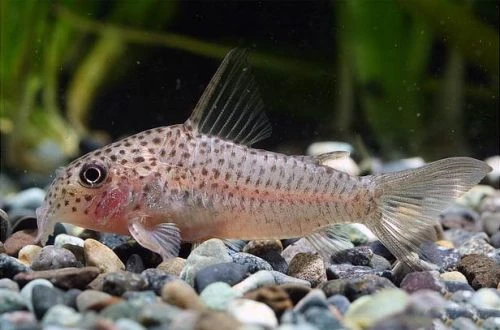
The white-striped Corydoras, named Corydoras albolineatus, is a member of the Callichthyidae family (Armored or Callichthyid Catfishes). Before its official scientific description in 2004, this species was known by the catalog number C056. It is still sometimes found for sale with this identifier in its name.
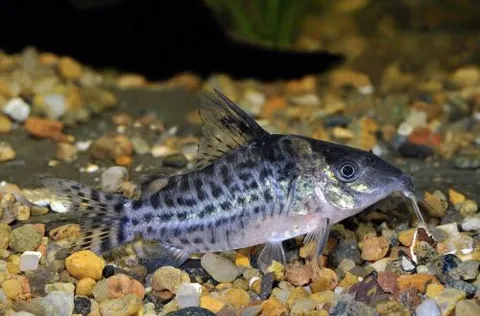
Adults typically reach about 5 cm in length. Their coloration is a delicate pinkish hue, covered with dark brown speckles that are particularly prominent on the head. Upon closer inspection, a light horizontal stripe can be seen running along the lateral line of the body. The fins and tail of these fish are translucent.
The species inhabits South America, endemic to Bolivia. It is a freshwater bottom-dwelling fish, preferring tropical waters. In natural conditions, it leads a benthic lifestyle, adapting to conditions of flowing or stagnant waters with soft substrate.
A peaceful and active schooling fish. It is recommended to keep them in a group of 6 or more individuals, which helps reduce stress and allows for observation of their natural behavior. Compatible with most non-aggressive fish species that inhabit the middle and upper water layers.
This species is easy to keep and undemanding, making it an excellent choice even for beginner aquarists. For a comfortable existence, a group of 6 fish requires a spacious tank of at least 80 liters. The decor can be minimal: sandy or fine-gravel substrate and a few shelters at the bottom, such as snags and dense plant thickets. Water parameters should be maintained within the range of 6.0–7.5 pH and 0–10 dGH. Regular aquarium maintenance ensures these parameters are kept within acceptable limits. Choosing a suitable diet also presents no difficulties. The White-banded Corydoras readily accepts most common foods of appropriate size. The only, yet important, feeding recommendation is to prefer sinking products to avoid the need for the catfish to constantly rise to the water surface. Due to their peaceful nature, these Cory catfish will be excellent tankmates for many freshwater fish species capable of living in similar hydrochemical conditions, including almost all characins, cyprinids, labyrinth fish, and other popular groups of aquarium inhabitants.
An omnivorous species, in nature it feeds on small invertebrates and organic detritus. In the aquarium, it accepts high-quality dry foods in the form of sinking tablets or granules, as well as frozen foods such as bloodworms, daphnia, or artemia. Feeding should be done 1–2 times a day in small portions.
The spawning type is egg-laying. To stimulate reproduction, water changes with softer and cooler water are typically used, mimicking the rainy season. Eggs are laid on the substrate, for example, on broad plant leaves or the aquarium walls. They do not exhibit parental care.
This species has the typical Corydoras sensitivity to water quality and substrate condition. If living conditions are violated, damage to the barbels, bacterial skin, and fin infections are possible. Prevention includes maintaining a clean bottom, regular water changes, and using a soft substrate without sharp edges.
When purchasing, choose active fish with clean fins and no spots on their bodies. It is important to ensure that the barbels are not damaged, as their absence indicates poor water quality or a traumatic substrate. Avoid fish with sunken bellies or signs of apathy.
The essentials: size, tank volume, water parameters and care
An adult reaches 5 cm in length. Plan the tank around the maximum size: the fish quickly outgrows a cramped setup.
The recommended volume is 80 L. A smaller tank speeds up nitrate build-up and raises stress levels.
Temperature 22–26 °C, pH 6–7, hardness 1–10 dGH. Stability matters more than exact values: sudden swings are harder on the fish than a small deviation from the ideal.
Around 5 years when kept properly. Lifespan depends directly on tank volume, water quality and a varied diet.
Temperament: peaceful (regular). Keep this in mind when choosing tank mates.
Recommended setup: small group (5–6 individuals). Ignoring this is a common cause of stress and disease.
Diet type: sinking (any). Feed small portions that are finished within a couple of minutes — overfeeding does more harm than underfeeding.
The scientific name of the species is Corydoras albolineatus, family Armored Catfish (Callichthyidae).
The water suits 197 of 208 plants in the catalogue — the easiest ones are shown first.
Afzelius's AnubiasAnacharisAnubiasBrazilian PennywortDwarf CloverDwarf CloverDwarf HygrophilaDwarf SagittariaDwarf ValGuppy GrassHornwortJava FernJava MossMoneywortMud SwordNair's LagenandraNarrow Leaf AnacharisNarrow-leaf CloverStringy MossSüsswassertangTaiwan MossTape GrassTemple PlantUssuri Watermilfoil
Matched by family, categories and overlapping keeping conditions
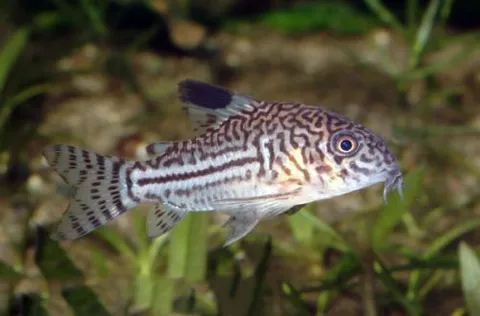
Corydoras trilineatus
Corydoras trilineatus, known as the leopard or three-stripe corydoras catfish, belongs to the family Callichthyidae. The habitat of this species covers the Amazon River basin, extending through Colombia, Peru, and…
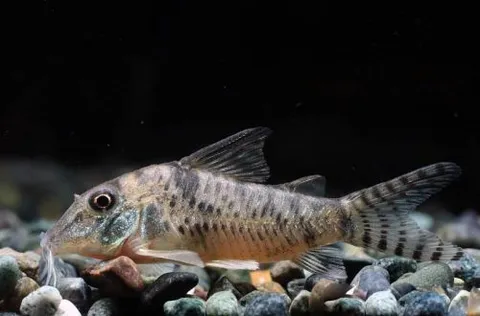
Corydoras aurofrenatus
Corydoras aurofrenatus, known as the Goldstripe Corydoras, belongs to the family Callichthyidae, or Armored Catfishes. Its name is due to the unique pigmentation on its head and body, which shimmers with gold. The…
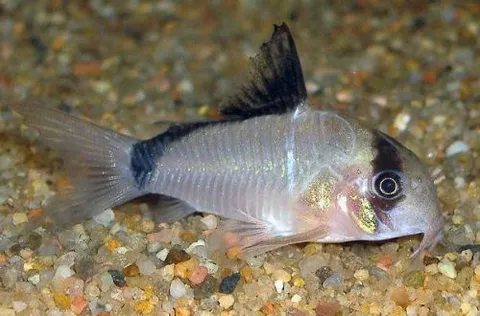
Corydoras metae
Corydoras metae, known among aquarists as Meta Corydoras, Bandit Cory, or “Black Mask” Catfish, is a member of the Callichthyidae family. This species is found exclusively in the Meta River basin, a left tributary of…
Corydoras lamberti
Lamberti's Corydoras, or Cory Catfish Lamberti, known to the scientific community as Corydoras lamberti, is a representative of the family Callichthyidae (Armored Catfish). The species was described in 1986 and named in…