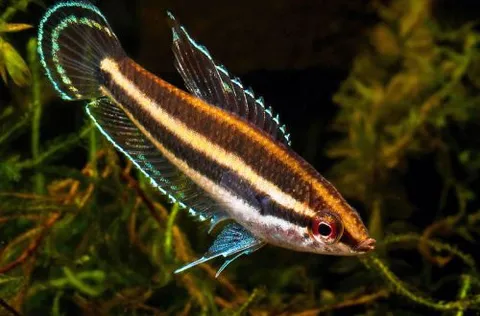
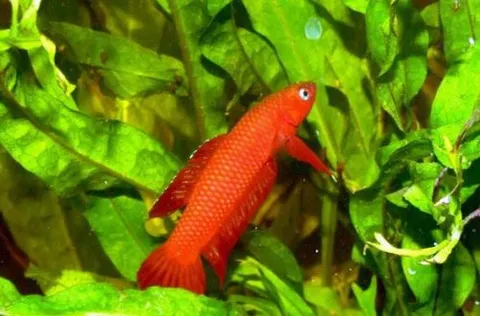
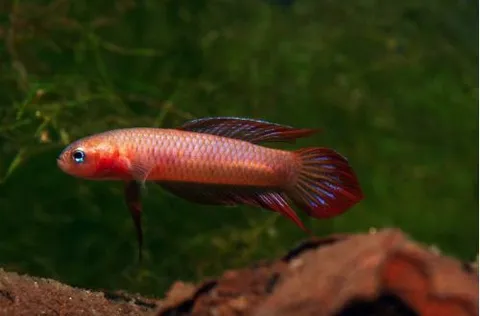
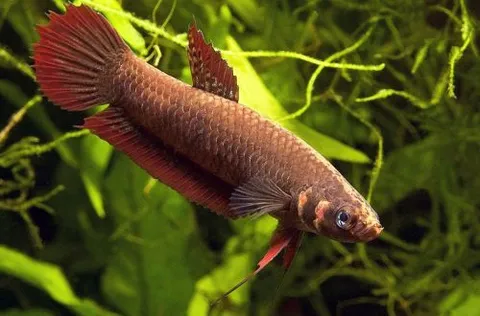
For keeping a single pair of these fish, an aquarium of at least 40 liters is recommended. The aquascape should favor dense plant thickets, a dark substrate, and numerous shelters, which can be created using driftwood, decorative elements (imitations of sunken ships, castles), or ceramic pots laid on their side. The water should be acidic (low pH) and have low carbonate hardness. To recreate the conditions of their natural habitat, a filtration system with alder cones as a filter medium can be used, and fallen leaves can be added to the bottom. These components, as they decompose, color the water a light brown and enrich it with humic acids. Before placing leaves and cones in the aquarium, they should be dried and then soaked until they sink completely. Equipment should also be selected with the fish's needs in mind: lighting should be subdued, and internal currents should be absent. An essential element is a tight aquarium lid, which will prevent the fish from jumping out and create a warm, humid air layer above the surface, which is critically important for the respiration of labyrinth fish. Aquarium care includes regular cleaning of the substrate from organic waste (excrement, food remains), weekly partial water changes (10–15% of the total volume) with fresh water, and replacement of leaves and cones every one to two weeks.