Temperature22 – 28 °C
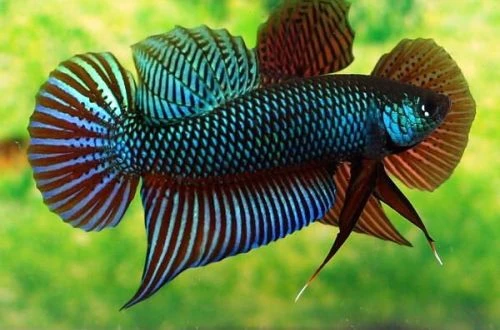
Betta mahachaiensis, or Mahachai Betta, belongs to the family Osphronemidae and is a very unusual representative of the fighting fish. Its peculiarity lies in its ability to inhabit brackish waters, which makes its care certainly more complex. The selection of compatible species can also cause some difficulties due to specific environmental requirements.
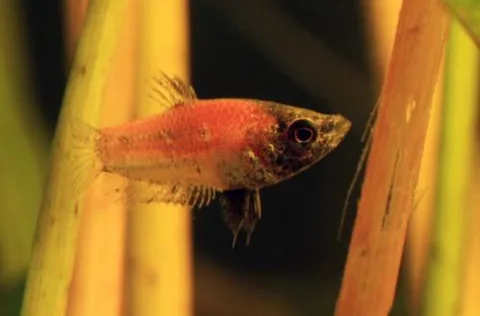
Adults of this fish typically reach a length of 5 to 6 cm. Sexual dimorphism is clearly expressed: males are larger, their bodies are dark with turquoise speckles on the scales, and their fins and tail are adorned with characteristic streaks. Females, in contrast, are smaller and have a more modest gray coloration. It is worth noting that fish from different populations may have slight morphological variations; for example, the shape of the caudal fin varies from rounded to ovoid.
The roots of this species are found in Southeast Asia, specifically in Thailand. Its natural habitats are limited to areas around Bangkok, including the lower reaches of rivers flowing into the Gulf of Thailand. Unfortunately, many of these water bodies are located near a large city, and anthropogenic impact on them is very significant. Pollution has led to the complete disappearance of this species in many places where it once lived. It prefers to live in river mouths, estuaries, and brackish coastal swamps, often among Nypa fruticans mangrove thickets, where a dense network of roots provides shelter and food.
Males show competition for hierarchical position within the group, which sometimes leads to clashes. In small aquariums, it is recommended to keep one male with one or more females, as the latter are not prone to rivalry. They are peaceful towards other fish species. Due to their modest size, they can only be combined with small fish that can adapt to similar keeping conditions.
For keeping a single pair of fish, an aquarium of 40 liters or more will be optimal. It is important to provide shaded areas using a large number of floating plants or tall stem plants. Several shelters must also be provided; these can be natural snags or various decorative elements. If aesthetic appeal is not a priority, simpler options such as ceramic pots lying on their side or sections of PVC pipes will suffice. Unlike most of its relatives, the Mahachai Betta can live not only in fresh but also in brackish water with a salt concentration of 5–10 grams per liter. Notably, this species requires high hydrochemical parameters (pH / dGH), whereas other Bettas often prefer acidic, soft water. The key to successful keeping is maintaining a stable aquatic environment, achieved through regular aquarium maintenance and uninterrupted operation of the filtration system.
In their natural habitat, the diet of these fish consists of insects, small invertebrates, and zooplankton. Individuals adapted to aquarium conditions generally quickly get used to dry foods after recognizing them as edible. However, for complete nutrition, it is important to enrich their diet with protein-rich foods such as frozen and live foods – brine shrimp, daphnia, bloodworms – as well as specialized foods based on them.
When the breeding season arrives, the male begins to build a nest. It is a cluster of sticky bubbles, usually placed on the water's surface, in a corner of the aquarium, or under a floating leaf. After the nest is completed, courtship begins, resulting in the formation of a temporary pair. During the spawning process, the male and female come close, intertwining their bodies; at the climax, eggs are released and immediately fertilized. Each egg is carefully placed by the male into a separate bubble within the nest. After this, the female leaves the spawning site, and the male remains to guard the clutch. The incubation period lasts from 24 to 48 hours, and the hatched fry remain in the nest for another 3–4 days. Once they begin to swim independently, the male loses interest in them.
Most health problems in fish often arise from unsuitable keeping conditions. Maintaining a stable and comfortable habitat is a key factor for successful keeping. If symptoms of illness appear, the first step is to check the water quality. If deviations are found, it is important to take immediate measures to eliminate them. If the symptoms do not disappear or worsen, medicinal treatment may be required.
When purchasing Betta mahachaiensis, it is important to ensure there are no external signs of disease: clean fins without signs of rot, no white spots or film on the body, clear eyes without cloudiness. A healthy fish should be active, curious about its surroundings, and not appear emaciated. Avoid individuals that constantly lie on the bottom or near the surface, breathe heavily, or have an unnaturally swollen abdomen. Given the rarity of the species, ask the seller about the fish's origin: preference should be given to captive-bred individuals, as wild-caught specimens can be greatly weakened by capture and transport. In the store, pay attention to the keeping conditions: the presence of a lid on the aquarium is critical, as this species is prone to jumping. Also, check for compatibility with tank mates, as males can show pronounced aggression in cramped conditions.
The essentials: size, tank volume, water parameters and care
An adult reaches 5–6 cm in length. Plan the tank around the maximum size: the fish quickly outgrows a cramped setup.
The recommended volume is 40 L. A smaller tank speeds up nitrate build-up and raises stress levels.
Temperature 22–28 °C, pH 7–8.5, hardness 5–21 dGH. Stability matters more than exact values: sudden swings are harder on the fish than a small deviation from the ideal.
Around 4 years when kept properly. Lifespan depends directly on tank volume, water quality and a varied diet.
Temperament: peaceful (regular). Keep this in mind when choosing tank mates.
Recommended setup: mixed (solitary / pair / group). Ignoring this is a common cause of stress and disease.
Diet type: any (universal). Feed small portions that are finished within a couple of minutes — overfeeding does more harm than underfeeding.
The scientific name of the species is Betta mahachaiensis, family Osphronemidae.
The water suits 114 of 208 plants in the catalogue — the easiest ones are shown first.
African Onion PlantAfzelius's AnubiasAmazon FrogbitAmazon SwordAnacharisAnubiasArrowhead CryptDwarf CloverDwarf CloverDwarf HygrophilaDwarf SagittariaDwarf ValGuppy GrassHornwortJava MossMoneywortMud SwordNair's LagenandraNarrow Leaf AnacharisNarrow-leaf CloverStringy MossTaiwan MossTape GrassUssuri Watermilfoil
Matched by family, categories and overlapping keeping conditions
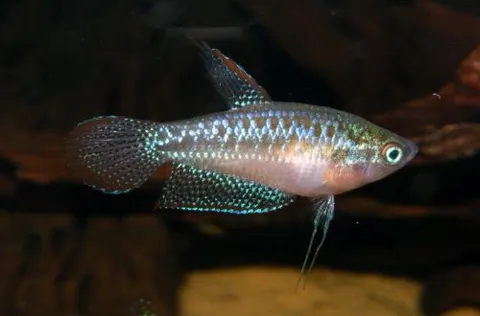
Trichopsis pumila
The Dwarf Gourami, or Pumila, known scientifically as Trichopsis pumila, is a member of the Osphronemidae family. This aquarium fish is popular due to its interesting coloration, as well as its ease of care and…
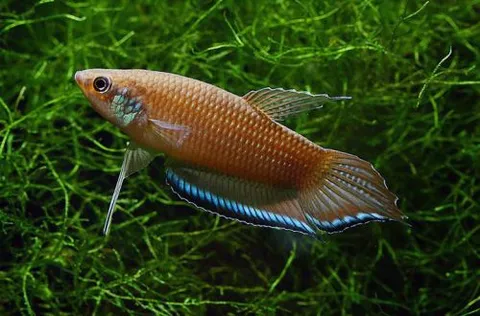
Betta enisae
Betta enisae, or as it is often called, the Energetic Betta, belongs to the family Osphronemidae, receiving its Russian name through adaptive translation from Latin. Despite this, one should not expect high mobility…
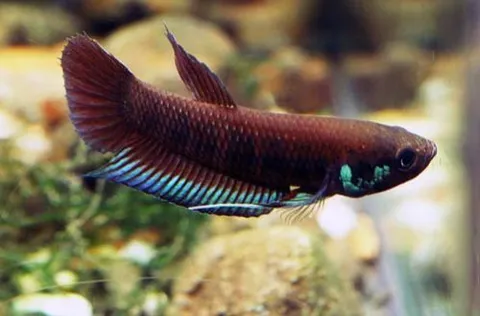
Betta krataios
Betta krataios, or Krataios Betta, is classified as a member of the family Osphronemidae and bears the scientific name Betta krataios. This species belongs to the group of Fighting Fish, however, its temperament and…
Parasphaerichthys lineatus
The scientific name Parasphaerichthys lineatus belongs to the family Osphronemidae, and this species is known as the False Chocolate Gourami. This fish is modest in size, does not stand out with a bright appearance, and…