Temperature24 – 28 °C
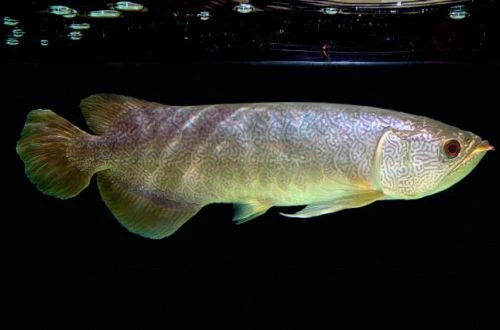
The Myanmar arawana, scientific name Scleropages inscriptus, belongs to the family Osteoglossidae. This species is known for its considerable value, with individual specimens fetching tens of thousands of dollars. It is especially popular in Asian countries.
Adults can reach 60 cm in length. The distinguishing feature of this fish is its powerful, elongated body. The dorsal and anal fins are set close to the tail, which allows rapid acceleration when hunting. Like its South American relatives, the Myanmar arowana is able to leap out of the water. Its colouration consists of light brown tones with a characteristic golden sheen.
The species is associated with South-East Asia, although its exact range remains incompletely known. Wild specimens have been found in southern Myanmar, in the Tanintharyi region. There are no confirmed records outside Myanmar; what is known of this species rests on isolated specimens obtained through the aquarium trade. It favours the upper layers of the water.
This fish is predatory by nature, but shows no aggression. It can be kept with other species provided they are large enough not to fit into its mouth. Although the Myanmar arowana leads a largely solitary life, it is neutral towards its own kind and can be kept in a group.
These fish do not belong to amateur fishkeeping, since keeping them demands not only considerable experience but also a substantial investment of time and money. The Myanmar arowana is most often seen in public aquariums, such as those in shopping centres, or in the private collections of wealthy owners. In both cases their care is usually entrusted to specialists, so a detailed account of husbandry and equipment lies outside the scope of this article.
This is a predator whose diet consists mainly of small fish, insects and other invertebrates living near the water surface. As noted above, the Myanmar arowana is capable of leaping out of the water to seize prey sitting, for instance, on a low-hanging branch. In the aquarium it is given similar meaty foods, either fresh or frozen: fish and shellfish meat, earthworms or shrimp. They must not be fed mammalian or avian meat: the lipids it contains cannot be properly metabolised by the fish and lead to excess fat deposits and even organ degeneration.
The Myanmar arowana belongs to a genus characterised by mouthbrooding performed by the male. In the wild the fish reach sexual maturity at several years of age. Reproduction involves elaborate courtship rituals, after which the female lays her eggs and the male takes them into his buccal cavity to carry them. The fry remain under the parent's protection for a long time, leaving the mouth only once the yolk sac is fully absorbed and they can feed independently. In an aquarium breeding is extremely difficult because of the fish's enormous size and its specific space requirements.
The species is subject to the ailments typical of large freshwater fish, usually linked to poor conditions or water quality. The most common problems are parasitic infestations — skin parasites, flukes and crustaceans — which damage the skin and fins. Prevention involves keeping water parameters stable, filtering regularly, and avoiding live foods, which can carry infections. The fish are sensitive to the accumulation of organic compounds, so the filtration system must meet high demands.
When choosing a specimen, look at its overall health: the fish should be active, with no visible injuries, ulcers or spots on the scales and fins. Make sure there are no signs of emaciation and that the eyes are clear and free of cloudiness. In the shop, check the cleanliness of the water and the fish's behaviour — healthy individuals show interest in their surroundings and react normally to external stimuli. Given the rarity of the species and its high price, buy only from trusted suppliers who hold the appropriate certificates and documentation confirming legal origin and the mandatory identification microchipping.
The essentials: size, tank volume, water parameters and care
An adult reaches 50–60 cm in length. Plan the tank around the maximum size: the fish quickly outgrows a cramped setup.
The recommended volume is 950 L. A smaller tank speeds up nitrate build-up and raises stress levels.
Temperature 24–28 °C, pH 6–7.5, hardness 5–15 dGH. Stability matters more than exact values: sudden swings are harder on the fish than a small deviation from the ideal.
Around 10 years when kept properly. Lifespan depends directly on tank volume, water quality and a varied diet.
Temperament: predator, but semi-peaceful (gets along with large ones). This is a predatory species — any fish small enough to fit in its mouth will eventually be eaten.
Recommended setup: solitary. Ignoring this is a common cause of stress and disease.
Diet type: meat / protein (live, frozen, fresh). Feed small portions that are finished within a couple of minutes — overfeeding does more harm than underfeeding.
The scientific name of the species is Scleropages inscriptus, family Arowanas (Osteoglossidae).
The water suits 196 of 208 plants in the catalogue — the easiest ones are shown first.
Afzelius's AnubiasAnacharisAnubiasBrazilian PennywortDwarf CloverDwarf CloverDwarf HygrophilaDwarf SagittariaDwarf ValGuppy GrassHornwortJava FernJava MossMoneywortMud SwordNair's LagenandraNarrow Leaf AnacharisNarrow-leaf CloverStringy MossSüsswassertangTaiwan MossTape GrassTemple PlantUssuri Watermilfoil
Matched by family, categories and overlapping keeping conditions
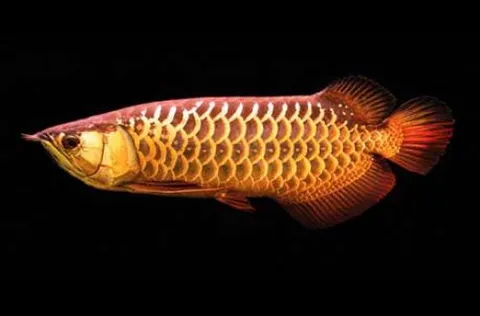
Scleropages formosus
The scientific name Scleropages formosus refers to the Asian arowana, a member of the family Osteoglossidae. Although the name is often used as a blanket term for all Asian arowanas, scientists in fact recognise at…
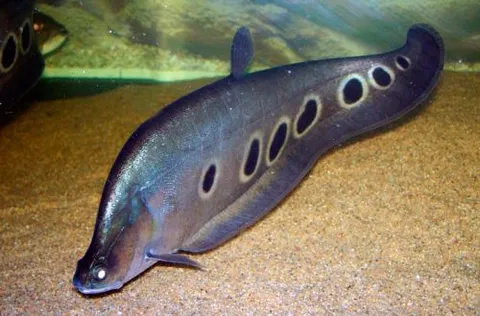
Chitala ornata
The Indian Featherback, or Chitala ornata by its scientific name, belongs to the family Notopteridae. It is a large fish distinguished by its unusual body shape. Keeping it requires significant financial investment and…
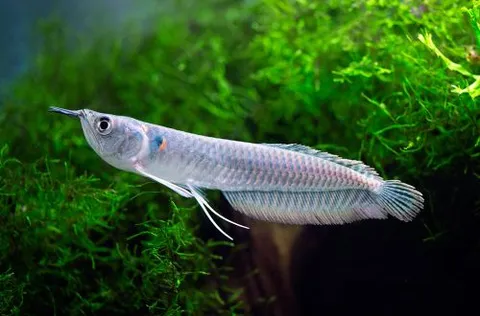
Osteoglossum bicirrhosum
The Silver Arowana, also known simply as Arowana, bears the scientific name Osteoglossum bicirrhosum and belongs to the family Osteoglossidae. This species is a representative of one of the oldest fish families, tracing…
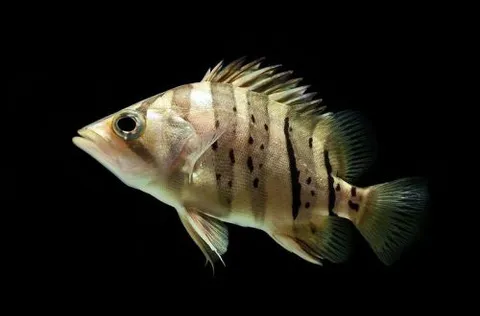
Datnioides microlepis
The Tiger Siamese Perch, or Indonesian Tiger Perch, scientifically known as Datnioides microlepis, belongs to the family Datnioididae. This fish is characterized by its large size and bright, contrasting coloration,…