Temperature20 – 30 °C
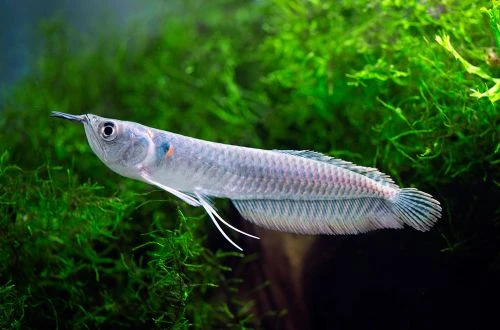
The Silver Arowana, also known simply as Arowana, bears the scientific name Osteoglossum bicirrhosum and belongs to the family Osteoglossidae. This species is a representative of one of the oldest fish families, tracing its history back to the Jurassic period, approximately 150 million years ago. Their ancestors inhabited the rivers of the supercontinent Gondwana, which later split into South America, Africa, Australia, and Southeast Asia. This is why related Arowana species can be found on all these continents today.
Adults can reach a length of 70 to 80 cm. Their body is elongated, and the dorsal and anal fins, starting from the middle of the body, extend all the way to the tail, forming a distinctive “fan.” This structural feature provides the fish with rapid acceleration during hunting and the ability to make high jumps. A distinctive feature of their mouth structure is its upward orientation, which allows the Arowana to easily snatch prey from the water's surface. Two bony protrusions are present on the lower jaw, reflected in the fish's scientific name: Osteoglossum, which translates from Greek as “bony tongue.”
This fish originates from South America, primarily the Amazon River basin and its numerous tributaries. During the dry season, the Arowana prefers to hide in slow-moving waters, backwaters, and lagoons. With the onset of the rainy season, it moves into flooded areas of tropical forests.
In their natural environment, Arowanas exhibit a strict hierarchy: a dominant individual occupies a specific territory, not allowing other members of its species into it. This is why frequent and sometimes violent clashes occur when two or more fish are kept in the same aquarium. Coexistence with Arowanas is only possible for species of comparable size that they do not perceive as potential prey, such as Pacu or large Amazonian catfish. It is also important to exclude fish that inhabit the upper water layers to prevent territorial conflicts.
Keeping Arowanas is only possible in very large and tall aquariums, with a volume of 1000 L or more, equipped with powerful filtration systems and other specialized equipment. The aquarium setup should mimic a natural biotope, as close as possible to their natural habitat, using large snags, a substrate covered with fallen leaves, overhanging vegetation, and several floating plants. Such aquariums are very expensive to set up and maintain, often requiring professional specialists, while owners merely enjoy the results. For this reason, this article does not provide a detailed overview of the specifics of keeping this fish species.
Despite being a predator, the Arowana's diet also includes plant components, such as fruits and other tree produce. In its natural habitat, it hunts both fish and insects, not only aquatic ones. The Arowana can spot prey located above the water, for example, on leaves or tree trunks, after which it leaps, grabbing the victim with astonishing accuracy. When kept in a home aquarium, its diet can consist of shrimp, shell-less mussels, earthworms, various types of insects, as well as pieces of fish or live fish. They must not be fed mammalian or avian meat: the lipids it contains cannot be properly metabolised by the fish and lead to excess fat deposits and even organ degeneration.
During the breeding season, an adult female lays 50 to 250 eggs. However, the number of surviving fry rarely exceeds 12–30 individuals. The young, reaching up to 7 cm in length, are quite large and are most often offered for sale at this age. Breeding Arowanas in a home aquarium is a rare and very difficult phenomenon. Commercial fish farms handle this task much more effectively.
This fish is distinguished by its hardiness and unpretentiousness, as well as the absence of species-specific diseases. Probable causes of health problems are usually related to keeping conditions: poor water quality, elevated concentrations of dangerous substances (nitrogen cycle products), and unsuitable pH and dGH parameters.
When choosing an Arowana, it is important to assess its physical condition and behavior. A healthy fish should swim horizontally, making smooth and graceful movements, without visible effort. Avoid individuals that stay at the bottom, swim with their head down or up, have spinal deformities, or signs of swim bladder problems. The body should be proportionate, without wounds, ulcers, or scale damage, and the fins should be intact and spread. Pay attention to the fish's reaction to external stimuli: a healthy individual shows caution but should not be overly timid or apathetic. It is important to ask the seller what the fish eats, as young individuals can be picky. Refusal to eat in the first days after purchase is often a consequence of stress from transportation and changing conditions, but the fish should show interest in food in a familiar environment. Purchase only those individuals that demonstrate activity and no signs of emaciation.
The essentials: size, tank volume, water parameters and care
An adult reaches 80 cm in length. Plan the tank around the maximum size: the fish quickly outgrows a cramped setup.
The recommended volume is 1000 L. A smaller tank speeds up nitrate build-up and raises stress levels.
Temperature 20–30 °C, pH 5–7.5, hardness 2–15 dGH. Stability matters more than exact values: sudden swings are harder on the fish than a small deviation from the ideal.
Around 15 years when kept properly. Lifespan depends directly on tank volume, water quality and a varied diet.
Temperament: territorial (often aggressive). This is a predatory species — any fish small enough to fit in its mouth will eventually be eaten.
Recommended setup: solitary. Ignoring this is a common cause of stress and disease.
Diet type: meat / protein (live, frozen, fresh). Feed small portions that are finished within a couple of minutes — overfeeding does more harm than underfeeding.
The scientific name of the species is Osteoglossum bicirrhosum, family Arowanas (Osteoglossidae). It also appears in the literature as: Ischnosoma bicirrhosum, Osteoglossum arowana, Osteoglossum bicirrhostum.
The water suits 198 of 208 plants in the catalogue — the easiest ones are shown first.
Afzelius's AnubiasAnacharisAnubiasBrazilian PennywortDwarf CloverDwarf CloverDwarf HygrophilaDwarf SagittariaDwarf ValGuppy GrassHornwortJava FernJava MossMoneywortMud SwordNair's LagenandraNarrow Leaf AnacharisNarrow-leaf CloverStringy MossSüsswassertangTaiwan MossTape GrassTemple PlantUssuri Watermilfoil
Matched by family, categories and overlapping keeping conditions
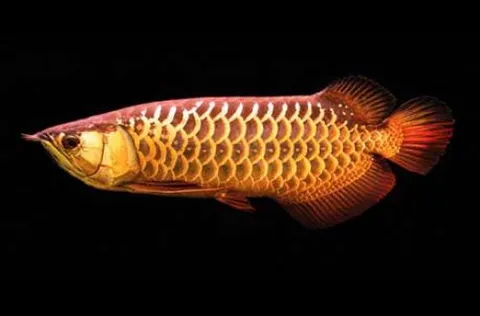
Scleropages formosus
The scientific name Scleropages formosus refers to the Asian arowana, a member of the family Osteoglossidae. Although the name is often used as a blanket term for all Asian arowanas, scientists in fact recognise at…
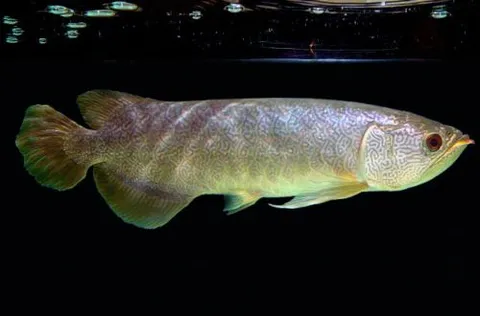
Scleropages inscriptus
The Myanmar arawana, scientific name Scleropages inscriptus, belongs to the family Osteoglossidae. This species is known for its considerable value, with individual specimens fetching tens of thousands of dollars. It is…
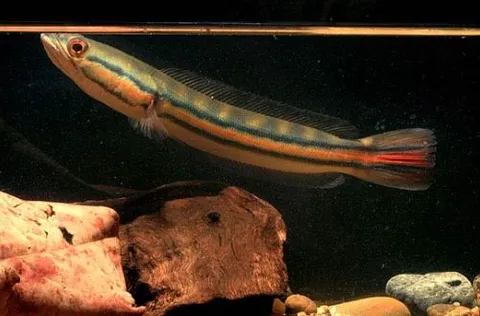
Channa micropeltes
Channa micropeltes, also known as the Red Snakehead or Giant Snakehead, belongs to the family Channidae. This fish species has several common names. Due to its significant size, it is often called the Giant Snakehead,…
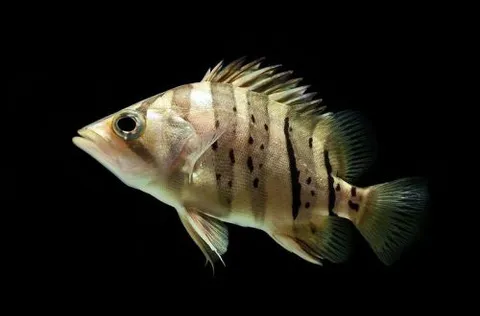
Datnioides microlepis
The Tiger Siamese Perch, or Indonesian Tiger Perch, scientifically known as Datnioides microlepis, belongs to the family Datnioididae. This fish is characterized by its large size and bright, contrasting coloration,…