Temperature20 – 27 °C
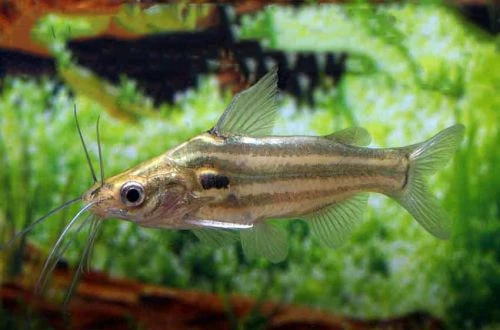
Mystus tengara, known by its scientific name, belongs to the Bagridae family (Bagrid Catfishes). This catfish originates from South Asia and can be found in the river systems of Pakistan, India, Nepal, and Bangladesh.
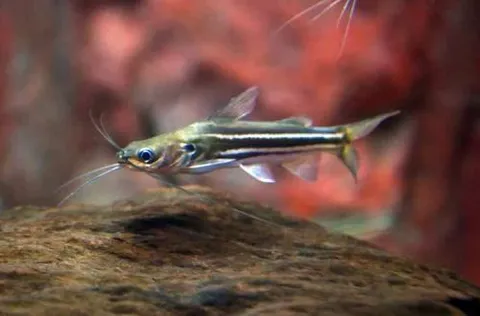
In natural conditions, adult specimens can reach a length of up to 18 cm. However, in a home aquarium, they are usually significantly smaller, growing, according to observations, to only 10 cm. This catfish has an elongated and slender body, with a small hump on its back, which culminates in a high dorsal fin. Large fins and a forked tail indicate an active lifestyle for the species. The body coloration features rows of dark horizontal stripes running from head to tail, set against a silvery background with green and yellow iridescence. Outwardly, it is practically indistinguishable from its closest relative, Mystus vittatus. For the average aquarist, both fish look identical not only in appearance but also in their care requirements. This is why many suppliers do not always accurately identify them, listing one name for both species.
Mystus tengara is widely distributed in South Asia, including the waters of Pakistan, India, Bangladesh, Nepal, Myanmar, and Afghanistan. In nature, it inhabits diverse freshwater biotopes, including both stagnant waters and flowing rivers in lowland and foothill regions.
This species is characterized by a peaceful and calm disposition. These catfishes prefer to stay in groups, so it is recommended to keep them in numbers of 3–4 individuals or more. They get along well with many other non-aggressive fish of comparable size.
For a small group of these fish, the optimal aquarium volume starts from 250 liters. When decorating, it is recommended to create zones with dense aquatic vegetation, snags, and other natural or artificial elements that will serve as shelters. Mystus tengara prefers soft, slightly acidic water. It is desirable to provide conditions with weak or completely absent current. Therefore, a filter that does not create excessive water movement should be chosen.
This is an omnivorous species that readily accepts most popular prepared foods intended for aquarium fish.
Breeding in aquarium conditions is difficult and usually requires the use of pituitary injections to stimulate spawning. Spawning is paired or in groups, occurring at night in aquariums of 200 L or more, using a substrate of fine-leaved plants or artificial nets. The eggs develop for about 30 hours, after which larvae hatch, which after a few days begin to feed on infusoria and Artemia nauplii.
No specific species-specific diseases have been described; however, like most catfishes, these fish are sensitive to water quality and the presence of salts in it. It is important to maintain stable environmental parameters and effective filtration to prevent bacterial infections of the skin and fins, which can occur under poor sanitary conditions.
When selecting specimens, attention should be paid to the integrity of the fins and the absence of plaque or ulcers on the body, as the fish can exhibit intraspecific aggression. Healthy catfishes should show activity in the evening and have clear, transparent eyes. It should be noted that Mystus have sharp spines in their fins, so caution must be exercised during transportation and transfer.
The essentials: size, tank volume, water parameters and care
An adult reaches 8–10 cm in length. Plan the tank around the maximum size: the fish quickly outgrows a cramped setup.
The recommended volume is 250 L. A smaller tank speeds up nitrate build-up and raises stress levels.
Temperature 20–27 °C, pH 6–7, hardness 5–15 dGH. Stability matters more than exact values: sudden swings are harder on the fish than a small deviation from the ideal.
Around 5 years when kept properly. Lifespan depends directly on tank volume, water quality and a varied diet.
Temperament: peaceful (regular). Keep this in mind when choosing tank mates.
Recommended setup: small group (3–4 individuals). Ignoring this is a common cause of stress and disease.
Diet type: sinking (any). Feed small portions that are finished within a couple of minutes — overfeeding does more harm than underfeeding.
The scientific name of the species is Mystus tengara, family Bagridae (naked catfishes). It also appears in the literature as: Macrones tengara, Mystus tengana, Mystus tengra.
The water suits 197 of 208 plants in the catalogue — the easiest ones are shown first.
Afzelius's AnubiasAnacharisAnubiasBrazilian PennywortDwarf CloverDwarf CloverDwarf HygrophilaDwarf SagittariaDwarf ValGuppy GrassHornwortJava FernJava MossMoneywortMud SwordNair's LagenandraNarrow Leaf AnacharisNarrow-leaf CloverStringy MossSüsswassertangTaiwan MossTape GrassTemple PlantUssuri Watermilfoil
Matched by family, categories and overlapping keeping conditions
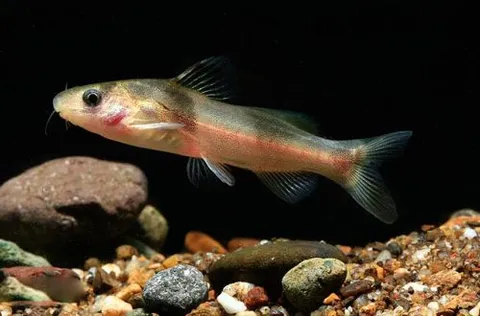
Batasio tigrinus
The Batasio Catfish, scientifically known as Batasio tigrinus, belongs to the Bagridae family (Bagrid Catfishes). These fish are peaceful and calm, easy to care for, and readily coexist with various species. Their…
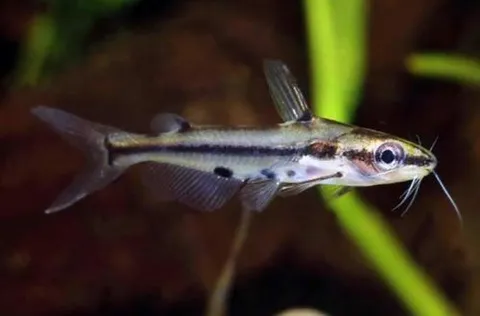
Hyalobagrus ornatus
The scientific name Hyalobagrus ornatus refers to the Ornate Glass Bagrid, a representative of the family Bagridae. This catfish originates from Southeast Asia. It can be found in the river systems of the southern part…
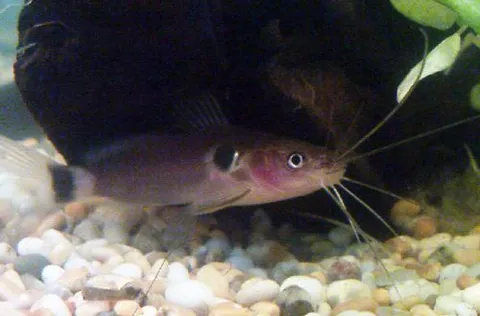
Mystus bimaculatus
The Two-spot Mystus, scientifically known as Mystus bimaculatus, belongs to the Bagridae family. This small, peaceful catfish is an excellent addition to a community tank of Southeast Asian inhabitants. It is…
Mystus vittatus
The Striped Mystus, scientifically known as Mystus vittatus, is a member of the Bagridae family. Its habitat range is wide, covering South Asia, including Pakistan, India, Sri Lanka, Nepal, and Bangladesh. This fish can…