Temperature21 – 25 °C
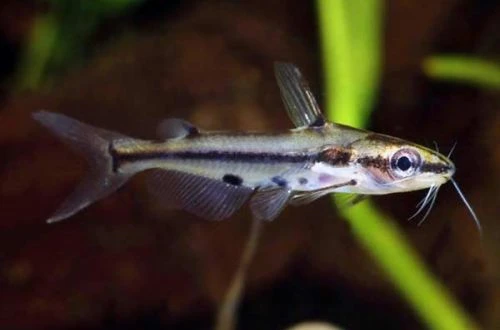
The scientific name Hyalobagrus ornatus refers to the Ornate Glass Bagrid, a representative of the family Bagridae. This catfish originates from Southeast Asia. It can be found in the river systems of the southern part of the Malay Peninsula, as well as on the island of Borneo (Kalimantan). Its natural habitat consists of peat rivers and other bodies of water characterized by a high concentration of tannins.
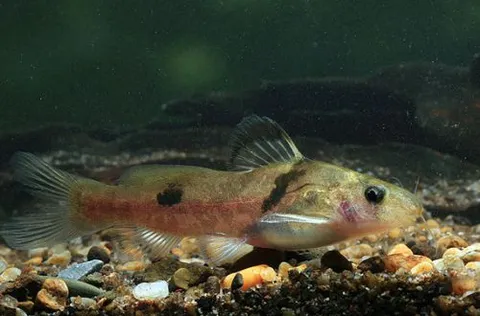
This tiny fish, reaching a length of only up to 3 cm, stands out for its activity, which is reflected in its appearance. It has a slender body and well-developed fins, ensuring fast movement. The head is quite large, equipped with big eyes that help it perceive even dim light in murky waters. Orientation and food search are also facilitated by sensitive barbels located around the mouth. The body coloration is silvery, and the belly area is semi-transparent. The pattern includes a black stripe running along the entire length of the body and dark speckles.
The species inhabits waters of Southeast Asia, including the Muar River basin on the Malay Peninsula and the Kapuas River basin on the island of Borneo. In nature, these fish inhabit peat swamps and slow-flowing streams. The water in such biotopes is usually characterized by softness and an acidic pH, which is important to consider when creating conditions in captivity.
This peaceful and active fish species prefers to be in a group of its own kind. To maintain their comfortable existence, it is recommended to form schools of 8–10 individuals. The Ornate Glass Bagrid coexists perfectly with most other aquarium inhabitants if they are similar in size and temperament.
For a school of 5–6 fish, the optimal aquarium volume starts from 50 L. The use of dark substrate and the placement of several areas with dense aquatic vegetation are welcome in the design. Under low light conditions, these catfish show the greatest activity. When the light is on during the day, they will seek shelter, so it is important to provide hiding places for them. Keeping these fish is not very difficult. They need soft, slightly acidic water and a relatively cool temperature for tropical species — no higher than 25°C. Standard aquarium maintenance includes weekly partial water changes with fresh water, cleaning organic waste, and keeping equipment in working order. It is important to note that the Ornate Glass Bagrid is sensitive to strong currents that can be created by the filtration system. When choosing a filter, preference should be given to models that provide gentle filtration and do not create excessive water movement. This species is omnivorous. It accepts most popular foods of appropriate size, whether dry (flakes, granules), frozen, or live/fresh, such as Artemia, bloodworms, Daphnia, and so on.
Being an omnivorous species, these fish easily adapt to a varied diet. They accept most common foods of appropriate size — both dry (flakes, granules) and frozen or live/fresh, including Artemia, bloodworms, Daphnia, and so on.
There is no information on aquarium breeding. This is a small, semi-transparent bagrid catfish from the peat swamp waters of Southeast Asia; its reproductive biology has not been described and no external sexual differences are reported. The fish reaches the trade as wild-caught stock.
No diseases that affect only this species have been described. Under suitable conditions — clean water, a balanced diet and calm tank mates — health problems usually do not arise. The most common cause of illness is a decline in conditions: it weakens the immune system, and the fish becomes vulnerable to infections that are always present in an aquarium. At the first signs of trouble — lethargy, wasting, refusal of food or clamped fins — check the basic water parameters and the levels of ammonia, nitrite and nitrate first. Restoring acceptable conditions often lets the fish recover on its own. Catfish of this group have naked, scaleless skin and are therefore more sensitive to medication than most aquarium fish. Products based on malachite green and copper should be used with care and at about half the dose stated on the packaging.
When purchasing, select active individuals with clean fins and no visible skin damage. Given the rarity of the species in aquaristics and its endangered status, it is important to ensure the fish's health, as adaptation to new conditions can be difficult. It is recommended to observe the behavior of individuals in the store: healthy fish show interest in food and do not show signs of emaciation.
The essentials: size, tank volume, water parameters and care
An adult reaches 3 cm in length. Plan the tank around the maximum size: the fish quickly outgrows a cramped setup.
The recommended volume is 50 L. A smaller tank speeds up nitrate build-up and raises stress levels.
Temperature 21–25 °C, pH 6.6–7.2, hardness 5–18 dGH. Stability matters more than exact values: sudden swings are harder on the fish than a small deviation from the ideal.
Around 4 years when kept properly. Lifespan depends directly on tank volume, water quality and a varied diet.
Temperament: peaceful (regular). Keep this in mind when choosing tank mates.
Recommended setup: small group (5–6 individuals). Ignoring this is a common cause of stress and disease.
Diet type: sinking (any). Feed small portions that are finished within a couple of minutes — overfeeding does more harm than underfeeding.
The scientific name of the species is Hyalobagrus ornatus, family Bagridae (naked catfishes). It also appears in the literature as: Pelteobagrus ornatus, Pseudobagrus ornatus.
The water suits 196 of 208 plants in the catalogue — the easiest ones are shown first.
Afzelius's AnubiasAnacharisAnubiasBrazilian PennywortDwarf CloverDwarf CloverDwarf HygrophilaDwarf SagittariaDwarf ValGuppy GrassHornwortJava FernJava MossMoneywortMud SwordNarrow Leaf AnacharisNarrow-leaf CloverStringy MossSüsswassertangTaiwan MossTape GrassTemple PlantUssuri WatermilfoilWater Wisteria
Matched by family, categories and overlapping keeping conditions
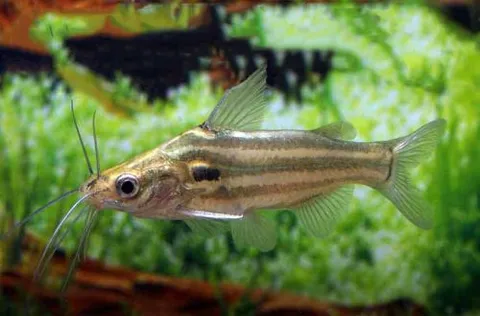
Mystus tengara
Mystus tengara, known by its scientific name, belongs to the Bagridae family (Bagrid Catfishes). This catfish originates from South Asia and can be found in the river systems of Pakistan, India, Nepal, and Bangladesh.
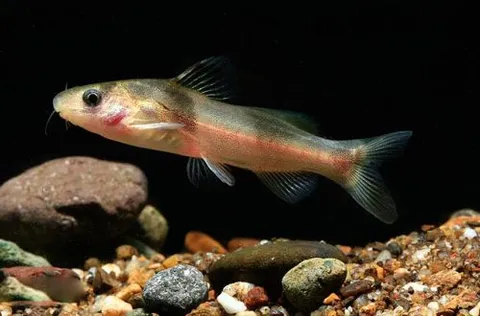
Batasio tigrinus
The Batasio Catfish, scientifically known as Batasio tigrinus, belongs to the Bagridae family (Bagrid Catfishes). These fish are peaceful and calm, easy to care for, and readily coexist with various species. Their…
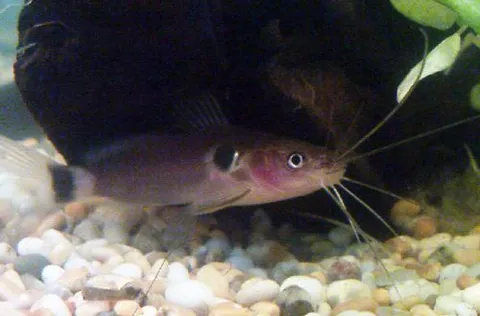
Mystus bimaculatus
The Two-spot Mystus, scientifically known as Mystus bimaculatus, belongs to the Bagridae family. This small, peaceful catfish is an excellent addition to a community tank of Southeast Asian inhabitants. It is…
Batasio fluviatilis
The Batasio fluviatilis catfish, known scientifically as Batasio fluviatilis, belongs to the family Bagridae, or naked catfishes. It is a relatively rare species in the aquarium trade, most often found among enthusiast…