Temperature24 – 30 °C
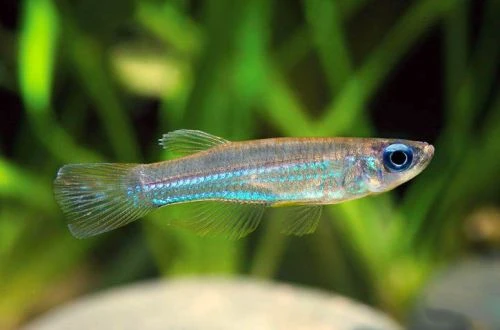
The Neon Lampeye, scientifically known as Poropanchax luxophthalmus (formerly classified as Aplocheilichthys luxophthalmus), is a member of the Poeciliidae family. This beautiful schooling fish is easy to keep and breed. Due to these qualities, it can be confidently recommended to novice aquarists.
Adults of this fish typically do not exceed 3 cm in length. Its body is silver, effectively complemented by two intense blue stripes. The fins and tail are translucent with a thin yellowish edge. Males and females can be distinguished by the shape of the anal fin: in males, it is pointed. Another notable feature is the characteristic bright pigment in the upper part of the iris, which explains the fish's name – "Lampeye."
The natural habitats of this fish are in tropical and equatorial Africa. Its range covers the coastal plains in southern Togo, as well as the southern regions of Benin, Nigeria, and Cameroon. It inhabits shallow streams and rivers that form a dense network in the savannas, as well as temporary bodies of water that appear after the rainy season. During the dry season, these bodies of water become shallow, and the water temperature rises significantly, often exceeding 30 degrees.
The optimal group size for these fish is at least 10 individuals, as solitary specimens generally do not survive long. They coexist well with other peaceful species of similar size. Closely related Norman's Lampeyes make excellent tank mates.
For comfortable keeping of a group of 10 fish, an aquarium with a volume of 40–50 liters is suitable. When setting up, it is important to create enough hiding places, using, for example, dense plant thickets, driftwood, or other natural or artificial decorative elements. It has been observed that fish display their brightest coloration under subdued lighting. Floating plants, such as Salvinia or Pistia, will not only provide the desired shade but also serve as reliable protection against accidental jumps. The Neon Lampeye is known for its jumping ability, which it uses in its natural environment to evade predators or to migrate to new bodies of water during seasonal floods. Although these fish are quite adaptable to various conditions, sudden temperature changes and water parameter fluctuations should be avoided.
The daily diet can include dry and freeze-dried foods, such as flakes or granules of suitable size. Live foods, such as Daphnia, Artemia, and other small invertebrates, will serve as an excellent supplement to the main diet.
Neon Lampeyes regularly reproduce. Optimal conditions for their breeding are slightly acidic water at about 25°C and a protein-enriched diet. The fish spawn among thickets of fine-leaved plants. The incubation period for the eggs is 10 to 14 days. After hatching, it is advisable to transfer the fry to a separate tank to prevent them from being eaten by adult fish.
The fish are hardy and undemanding. Diseases usually manifest only with a significant deterioration in keeping conditions. In a balanced aquarium ecosystem, health problems are generally absent.
When selecting individuals, attention should be paid to the overall activity of the school: healthy fish should be active and exhibit species-specific schooling behavior. Avoid purchasing fish with signs of fin damage, the presence of white spots or ulcers on the body, as well as individuals that keep to themselves or have sunken bellies. Healthy specimens should have clear, transparent eyes with a pronounced luminous pigment in the upper part of the iris. Since this species is an active jumper, when purchasing, make sure that the fish in the store's aquarium do not appear emaciated due to stress or improper feeding. It is recommended to acquire a group of 10 or more individuals at once, as keeping them in smaller numbers leads to severe stress and rapid death of the fish. During transportation, it is important to ensure sufficient water volume and aeration to avoid overheating and oxygen deprivation.
The essentials: size, tank volume, water parameters and care
An adult reaches 3 cm in length. Plan the tank around the maximum size: the fish quickly outgrows a cramped setup.
The recommended volume is 40 L. A smaller tank speeds up nitrate build-up and raises stress levels.
Temperature 24–30 °C, pH 6–8, hardness 3–15 dGH. Stability matters more than exact values: sudden swings are harder on the fish than a small deviation from the ideal.
Around 4 years when kept properly. Lifespan depends directly on tank volume, water quality and a varied diet.
Temperament: semi-peaceful (including aggression during spawning / intraspecific conflicts). Keep this in mind when choosing tank mates.
Recommended setup: schooling (usually from 5–6 individuals and more). Ignoring this is a common cause of stress and disease.
Diet type: any (universal). Feed small portions that are finished within a couple of minutes — overfeeding does more harm than underfeeding.
The scientific name of the species is Poropanchax luxophthalmus, family Poeciliidae. It also appears in the literature as: Aplocheilichthys dispar, Aplocheilichthys hannerzi, Aplocheilichthys luxophthalmus.
The water suits 196 of 208 plants in the catalogue — the easiest ones are shown first.
Afzelius's AnubiasAnacharisAnubiasBrazilian PennywortDwarf CloverDwarf CloverDwarf HygrophilaDwarf SagittariaDwarf ValGuppy GrassHornwortJava FernJava MossMoneywortMud SwordNair's LagenandraNarrow Leaf AnacharisNarrow-leaf CloverStringy MossSüsswassertangTaiwan MossTape GrassTemple PlantUssuri Watermilfoil
Matched by family, categories and overlapping keeping conditions
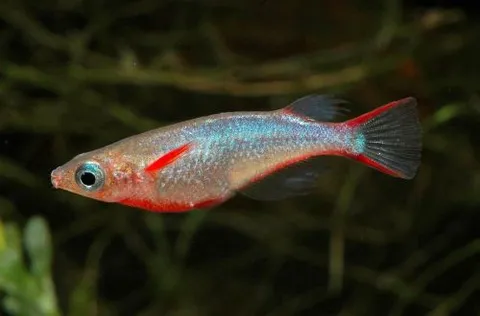
Oryzias woworae
Oryzias woworae, known as the Sulawesi ricefish, is classified in the family Adrianichthyidae. This fish received its interesting name in honour of Daisy Wowor of the Museum Zoologicum Bogoriense on Java, Indonesia, who…
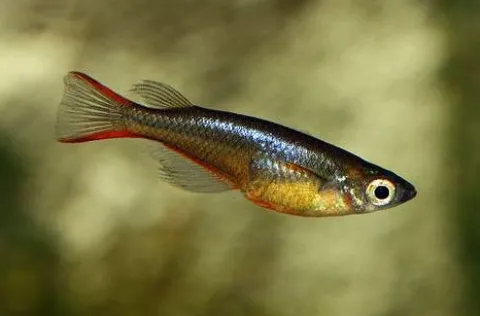
Oryzias asinua
Oryzias asinua, known as the Asian Ricefish, belongs to the family Adrianichthyidae and is part of the Killifish group, also called Toothcarps. This fish is a close relative of the Japanese Ricefish, inheriting its…
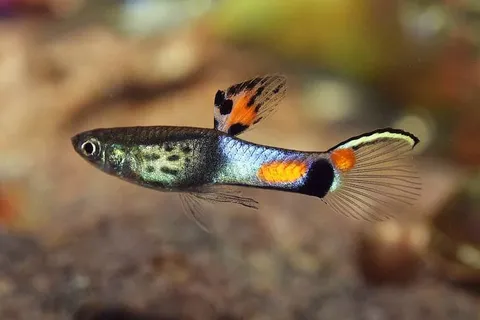
Poecilia wingei
Endler's Guppy, scientifically known as Poecilia wingei, belongs to the family Poeciliidae. This vibrant and colorful fish is easy to keep and breed, making it an excellent choice for beginners in the aquarium hobby.…
Betta burdigala
Betta burdigala, or Bordeaux Betta, belongs to the family Osphronemidae. A distinctive feature of this fish is its beautiful red coloration, which reminded French researchers of the noble color of the famous Bordeaux…