Temperature24 – 26 °C
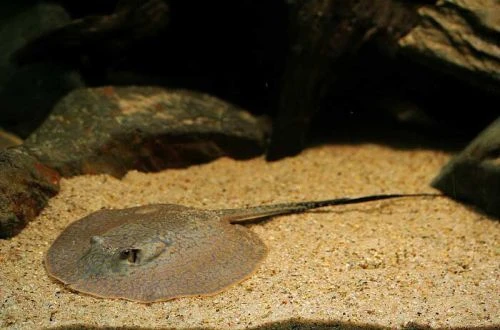
The reticulated stingray, scientific name, Potamotrygon orbignyi, belongs to the family Potamotrygonidae (river stingrays). Its earlier scientific name, Potamotrygon reticulatus, is now treated as a synonym.
The stingray has the classic disc-shaped body, which can reach 35 cm across. The total length of the fish is far greater, however, because of the long tail, which may be twice the length of the body or more. At the end of the slender tail sits a sharp though brittle spine equipped with venom glands. The colouration is notable for its reticulated pattern made up of various shades of brown.
Its home is South America, where it is one of the more widespread species. Its natural range covers the extensive river systems of the Amazon and the Orinoco, as well as the rivers of Suriname, Guyana and French Guiana. The stingray occupies a variety of biotopes, but is most often found along the marshy stretches of rivers, where the shallows have a sandy or silty bottom.
In their natural environment these stingrays are the top predators and pose a danger to most small fish and freshwater shrimp. Despite this predatory way of life, the reticulated stingray shows no aggression towards species that are too large to be eaten and is peaceable by nature. Possible tankmates include: — some cichlids (Geophagus species or the severum, for example) — Pimelodus catfish In spacious aquariums it can also be kept with South American arowanas and the Asian tigerfish.
If you manage to find a healthy stingray, it will need an aquarium of at least 600 litres; the bottom area matters more here than the height of the tank. The stingray is undemanding about decor — the main requirement is plenty of free space on the bottom. Particular attention should go to the substrate: river sand and fine gravel are recommended. A few massive pieces of driftwood may be added, along with smooth stones and boulders. Make sure the decorations are heavy enough that the stingray cannot shift them. Since stingrays like to bury themselves in the substrate, planting is of questionable value: most rooted species will simply be dug up. As an alternative, consider plants that attach to wood and stone, such as: — anubias — most aquatic ferns — mosses Filtration is decisive for long-term care. Predatory bottom-dwelling species need high-capacity filtration with one or more external filters. Prefer models with a built-in heater and aerator, so as to keep the amount of equipment inside the tank to a minimum. A system that turns over four times the volume of the aquarium per hour is considered effective. Water quality also depends on regular maintenance: half the water in the tank should be replaced weekly, combined with the removal of organic deposits such as uneaten food and waste.
The diet is based on small fish, freshwater shrimp and large invertebrates such as worms. Juveniles will take bloodworm, tubifex, brine shrimp and other live foods. Dry foods are not used; only live or fresh items are offered. Small portions of food should be present in the aquarium at all times. They must not be fed mammalian or avian meat: the lipids it contains cannot be properly metabolised by the fish and lead to excess fat deposits and even organ degeneration.
The reticulated stingray is viviparous: the young develop inside the mother and are born fully formed. Gestation lasts several months, and between one and eight young are born in a season. Notably, the gestation period in the aquarium may be shorter than in the wild. These fish are highly selective about partners, and simply keeping two together is no guarantee of reproduction. The approach used in the hobby is to acquire a group of young fish, which pair off on their own as they mature. That process can take several years, however, which is not always acceptable to the ordinary aquarist. For this reason breeding stingrays at home is a considerable challenge.
Net stingrays are extremely sensitive to water quality and to the build-up of organic waste, which is the main cause of most diseases. If water parameters drift or filtration is inadequate, the immune system weakens quickly, leading to secondary bacterial and fungal infections. Mechanical skin injuries from sharp substrate or decor also frequently become entry points for pathogens, causing necrosis and ulcers. — secondary bacterial infections of the skin and fins — fungal infection of wounds — tissue necrosis following injury — internal parasitic infestations Prevention consists of keeping the water impeccably clean, changing part of the volume regularly and using a soft sandy substrate free of sharp inclusions. It is important to avoid harsh medications, as stingrays tolerate many of the chemicals used to treat other fish poorly. At any sign of illness the first step is to check the water parameters and correct the conditions.
These fish are frequently available for sale. They arrive both from South America and from specialist farms in Europe and Asia. Whatever the origin and however long the journey, there is a high risk of buying a weakened or sick fish. The stingray's long tail is often damaged in transport containers — bent against the walls, or left above the water when the container stands upright — and this is the main cause of illness. A further problem concerns feeding: the stomach of the reticulated stingray is small relative to its body mass compared with many related species, which calls for frequent but measured meals. Feeding irregularities during transport lead to emaciation. Juveniles, which make up the bulk of commercial shipments, are especially sensitive to dietary lapses. Before buying, it is worth watching the fish feed: healthy stingrays take food readily. There should be no visible ridges at the base of the tail stalk and no hollows behind the eyes — both are signs of emaciation. Any visible damage, especially to the tail, indicates a health problem.
The essentials: size, tank volume, water parameters and care
An adult reaches 35 cm in length. Plan the tank around the maximum size: the fish quickly outgrows a cramped setup.
The recommended volume is 600 L. A smaller tank speeds up nitrate build-up and raises stress levels.
Temperature 24–26 °C, pH 6.5–7.5, hardness 4–10 dGH. Stability matters more than exact values: sudden swings are harder on the fish than a small deviation from the ideal.
Around 10 years when kept properly. Lifespan depends directly on tank volume, water quality and a varied diet.
Temperament: predator, but semi-peaceful (gets along with large ones). This is a predatory species — any fish small enough to fit in its mouth will eventually be eaten.
Recommended setup: both solitary and in group (flexible). Ignoring this is a common cause of stress and disease.
Diet type: meat / protein (live, frozen, fresh). Feed small portions that are finished within a couple of minutes — overfeeding does more harm than underfeeding.
The scientific name of the species is Potamotrygon orbignyi, family Potamotrygonidae (River stingrays). It also appears in the literature as: Potamotrygon dorbignyi, Potamotrygon dumerilii, Potamotrygon reticulatus.
The water suits 33 of 208 plants in the catalogue — the easiest ones are shown first.
African Water FernAmazon FrogbitAnubiasAsian WatermossBlue BuceBuceChristmas MossDwarf African FernFloating CrystalwortFloating Water SpriteGiant VallisneriaGlobefruit LudwigiaGreater DuckweedJapanese RushJava FernJava MossJungle ValNair's LagenandraPelliaSchismatoglottisStringy MossSüsswassertangTaiwan MossWater Spangles
This fish digs through the substrate and pulls rooted plants out.
African Onion PlantAfzelius's AnubiasAmazon SwordAnacharisArrowhead CryptBalansa Water TrumpetBanana PlantBarth's SwordBeckett's Water TrumpetBladderwort CarpetBog MossBoivin's AponogetonBolivian Chain SwordBrazilian PennywortBroad-leaf Water SpriteBrookweedBrown's LimnophilaCardinal PlantCaribbean MintCarolina Micro SwordCognac AmmanniaCongo AnubiasCreeping JennyCreeping RushCreeping SpotflowerCreeping StaurogyneCrinkled AponogetonCupheaCutleaf WatermilfoilCylindricfruit LudwigiaDark SwordDense MayacaDitch StonecropDwarf AmbuliaDwarf Baby TearsDwarf CloverDwarf CloverDwarf HairgrassDwarf HygrophilaDwarf Microcarpaea
Matched by family, categories and overlapping keeping conditions
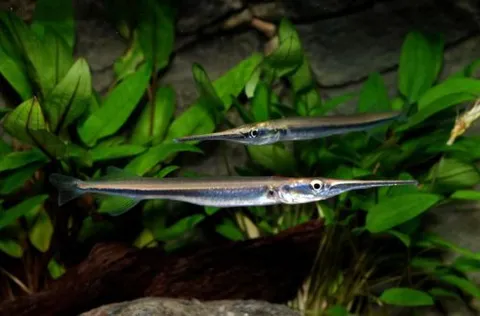
Xenentodon cancila
Xenentodon cancila, known as the Freshwater Gar, Freshwater Needlefish, or "Silver Needle," is a member of the Belonidae family. A very similar species, Xenentodon canciloides, is also found under the same name, and…
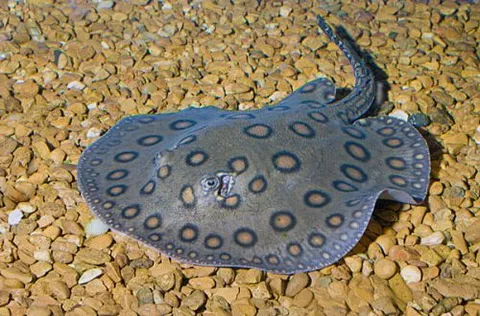
Potamotrygon motoro
The Ocellated River Stingray, also known as the South American Freshwater Stingray (scientific name Potamotrygon motoro), belongs to the family Potamotrygonidae. This predator poses a certain danger to aquarists due to…
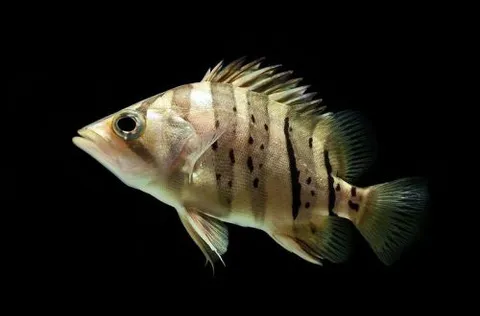
Datnioides microlepis
The Tiger Siamese Perch, or Indonesian Tiger Perch, scientifically known as Datnioides microlepis, belongs to the family Datnioididae. This fish is characterized by its large size and bright, contrasting coloration,…
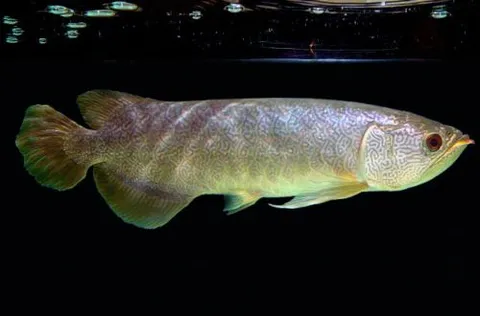
Scleropages inscriptus
The Myanmar arawana, scientific name Scleropages inscriptus, belongs to the family Osteoglossidae. This species is known for its considerable value, with individual specimens fetching tens of thousands of dollars. It is…