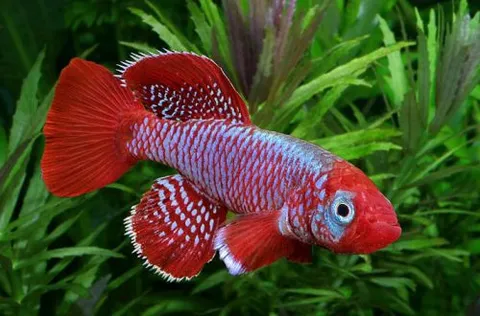
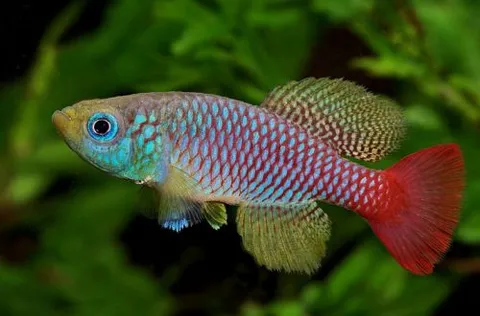
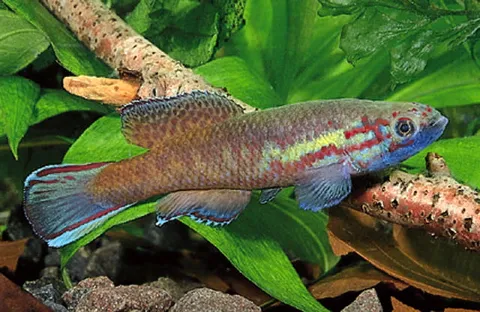
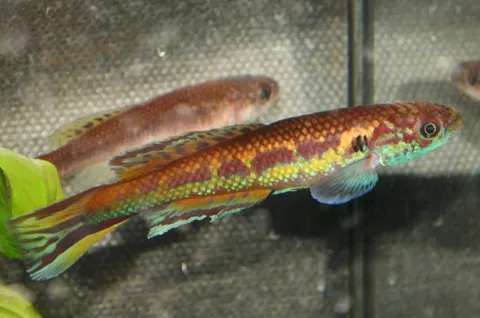
For an aquarist passionate about such a unique species as Nothobranchius rachovii, the main goal is often the appearance of a new generation of fish. Typically, the life of this fish lasts about a year, during which time it manages to go through a full development cycle from fry to adult sexually mature individual. Spawning is preferably carried out in a separate tank, where peat or coconut fibers are used as a substrate. The female lays eggs directly into this substrate. For equipping a spawning aquarium, a heater and a lighting system are sufficient. Adult individuals are placed in the spawning tank, gradually raising the temperature above 24°C and lowering the water level, which stimulates the beginning of the breeding period. After the female lays eggs and the male fertilizes them, the fish are returned to the main aquarium, after equalizing the temperature. Returning to familiar conditions often contributes to an increase in their lifespan. The substrate with eggs from the spawning aquarium is removed, after draining the water, and left in a dark, warm, but dry place at a temperature of 21–25°C for 3–4 months. After this period, the substrate is again immersed in water, and after some time, fry appear. They grow very quickly, and soon they can be transferred to the main aquarium. It is important to remember that after each cycle, it is necessary to replace males or females, acquiring new individuals to ensure genetic diversity. Constant interbreeding of close relatives from the same brood can lead to the degeneration of the species.