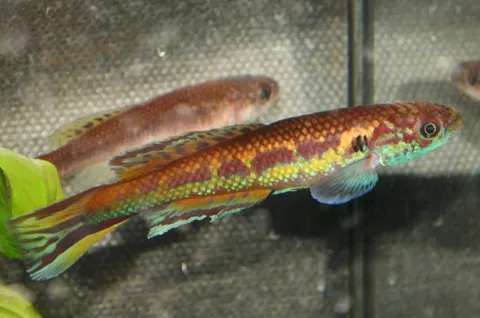
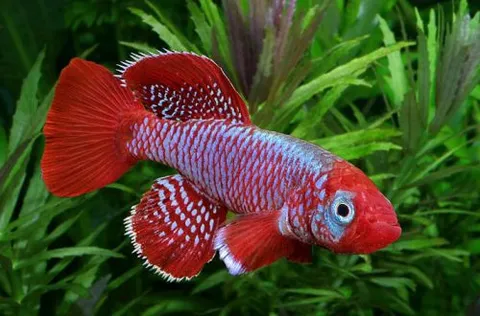
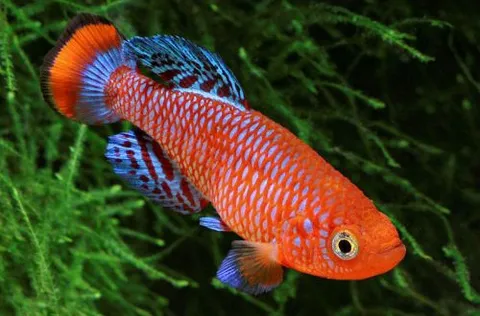
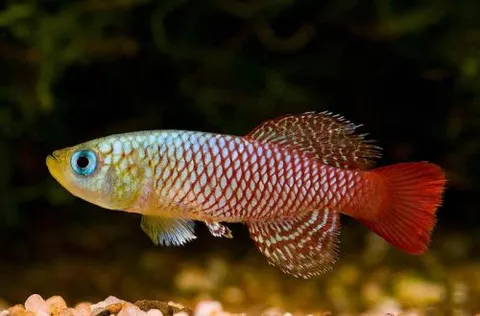
The "Golden Pheasant" fish is rarely found in amateur aquariums. This is due to its short lifespan, complex character, and difficulties in breeding. Most often, Roloffia occidentalis is supplied as eggs, which are then placed in a suitable aquatic environment for fry incubation. For keeping one adult male and two to three females, an aquarium of at least 40 liters is optimal. However, since the number and sex of hatched fry cannot be predicted, it is advisable to provide a separate tank in advance. Water parameters should be soft (1-6 dH) and slightly acidic (pH 6.3-7.0), with a temperature of 20-24°C. The bottom of the aquarium should be covered with a soft substrate, on which low-growing, fine-leaved plants, mosses, and ferns are placed. For example, Java moss can be a good choice, as females can hide in its thickets from excessive male attention, and it also serves as a potential spawning site. Live foods are always preferable to dry foods, but Roloffia occidentalis will eat any food offered. Fish become sexually mature at approximately two months of age. At this time, males begin to exhibit aggressive behavior and should be separated. The eggs are laid by the fish in the substrate a few centimeters deep. As mentioned, the substrate should be very soft; a peat and coconut fiber-based substrate would be ideal. After spawning, this substrate is carefully removed and placed in a separate container to dry to a slightly damp state. The incubation period is typically about five months. If, after this period, the substrate with the eggs is returned to an aquatic environment, the fry can appear within a few hours. The main difficulty in the breeding process is related to preserving the eggs, as the substrate and the eggs themselves are often affected by mold and fungi.