Temperature20 – 27 °C
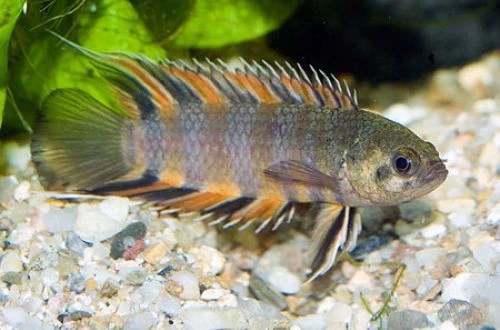
The peaceful and calm aquarium fish, known as Ansorg's Ctenopoma or Ornate Ctenopoma (scientific name Microctenopoma ansorgii), belongs to the family Anabantidae. Its body is adorned with a bright and contrasting pattern. Keeping this species is not particularly difficult, but the presence of live or frozen food in its diet is a prerequisite for its successful existence.
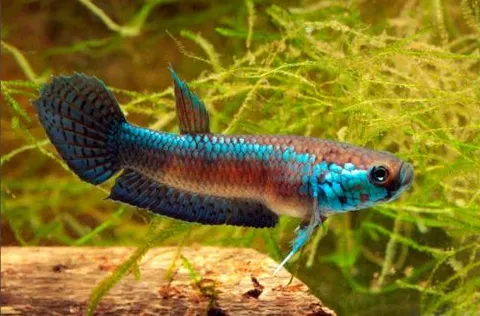
Adult fish of this species reach approximately 7 cm in length. A distinctive feature is the more intense coloration of males compared to females. Given proper lighting, males display a contrasting pattern consisting of alternating dark gray and orange vertical stripes. These stripes continue onto the fins. The tail of Ansorg's Ctenopoma is rounded, and the dorsal and anal fins are pointed and extend almost the entire length of the body.
Ansorg's Ctenopoma originates from African waters, its natural range covering the Congo River basin in the territories of the modern states of the Republic of the Congo and the Democratic Republic of the Congo. In addition, wild populations of these fish have also been found on the island of Madagascar. They are widespread in various biotopes, from open river sections with abundant riparian vegetation to swampy areas.
These fish are distinguished by their peaceful and calm disposition, which allows them to be successfully kept with other species of similar size and temperament. However, it should be noted that overly active tankmates may push the Ctenopoma away from food sources, so such cohabitation is best avoided. Intraspecific relationships are characterized by male territorial dominance. In small aquariums, skirmishes may occur between them, especially intensifying during the breeding season. The best keeping conditions are achieved with pair or harem placement.
The setup and maintenance of an aquarium for Ansorg's Ctenopoma are quite simple and do not require significant financial investment. For keeping a single pair of fish, the minimum tank volume is about 80 liters. The decor can be arbitrary, but it is important to provide dense thickets of plants, including floating species, and a moderate level of lighting. The water should have a slightly acidic pH with a wide range of hardness. It is recommended to use a filtration system with an alder cone filler, which contributes to additional water acidification. The presence of a lid on the aquarium not only creates the necessary layer of warm, humid air for labyrinth fish to breathe but also prevents them from accidentally jumping out. Regular care includes cleaning the substrate of organic debris and weekly water changes of 10–15% of the volume with fresh water.
The basis of these fish's diet should be live or frozen food of appropriate size. Dry and freeze-dried foods are recommended only as supplementary nutrition. It is worth noting that some aquarists successfully train Ansorg's Ctenopoma to certain types of dry foods, so when acquiring a new pet, it will be useful to clarify its usual diet with the seller.
The appearance of offspring in a community tank is quite possible, but the survival rate of the fry will be extremely low if they are not promptly transferred to a separate tank with similar water parameters. Spawning can occur at any time of the year. Optimal breeding conditions include acidic pH values (around 5.0) and very dim lighting. At the beginning of the breeding period, the male builds a small bubble nest among floating plants or under the surface of a broad leaf. After completing the nest, the male invites the female, and after a specific courtship dance, she lays up to 600 eggs. The incubation period lasts about 24 hours, and after another 2–3 days, the fry begin to swim freely in search of food. This is the most suitable moment for their transfer, as otherwise, they risk becoming easy prey for other fish, and in some cases, for their own parents.
The main cause of most diseases in these fish is unsuitable keeping conditions and poor-quality nutrition. If initial symptoms are observed, it is first necessary to check water parameters and the concentration of dangerous substances such as ammonia, nitrites, and nitrates. If the indicators deviate from the norm, they should be brought back into order, and only then should treatment begin.
When choosing individuals, preference should be given to young fish 3–4 cm in size, as they adapt more easily to new conditions than adult specimens, which often tolerate relocation poorly. A healthy fish should be active, show no visible damage, ulcers, white plaque on scales or fins, and not show signs of emaciation. — Avoid buying fish that constantly hide or appear lethargic, unless this is due to a lack of hiding places in the retail aquarium. — Pay attention to behavior: healthy ctenopomas should be attentive to their surroundings, not apathetic. — Check the cleanliness of the keeping conditions in the store, as stress from poor water significantly reduces the chances of successful adaptation of the species in a new place.
The essentials: size, tank volume, water parameters and care
An adult reaches 7 cm in length. Plan the tank around the maximum size: the fish quickly outgrows a cramped setup.
The recommended volume is 80 L. A smaller tank speeds up nitrate build-up and raises stress levels.
Temperature 20–27 °C, pH 5–7.5, hardness 5–20 dGH. Stability matters more than exact values: sudden swings are harder on the fish than a small deviation from the ideal.
Around 5 years when kept properly. Lifespan depends directly on tank volume, water quality and a varied diet.
Temperament: semi-peaceful (including aggression during spawning / intraspecific conflicts). Keep this in mind when choosing tank mates.
Recommended setup: pair (male/female). Ignoring this is a common cause of stress and disease.
Diet type: meat / protein (live, frozen, fresh). Feed small portions that are finished within a couple of minutes — overfeeding does more harm than underfeeding.
The scientific name of the species is Microctenopoma ansorgii, family Anabantidae. It also appears in the literature as: Anabas ansorgei, Anabas davidae, Ctenopoma ansorgii.
The water suits 198 of 208 plants in the catalogue — the easiest ones are shown first.
Afzelius's AnubiasAnacharisAnubiasBrazilian PennywortDwarf CloverDwarf CloverDwarf HygrophilaDwarf SagittariaDwarf ValGuppy GrassHornwortJava FernJava MossMoneywortMud SwordNair's LagenandraNarrow Leaf AnacharisNarrow-leaf CloverStringy MossSüsswassertangTaiwan MossTape GrassTemple PlantUssuri Watermilfoil
Matched by family, categories and overlapping keeping conditions
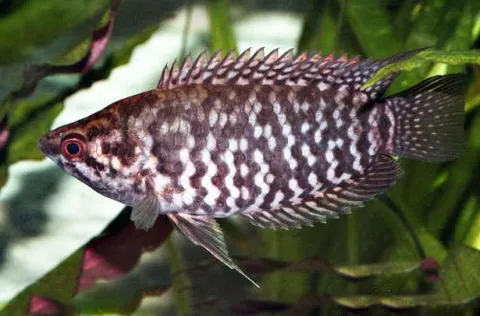
Microctenopoma fasciolatum
Microctenopoma fasciolatum, or the eight-banded ctenopoma, belongs to the family Anabantidae and is an African labyrinth fish. This species is easy to keep and breed. Thanks to its original coloration and good…
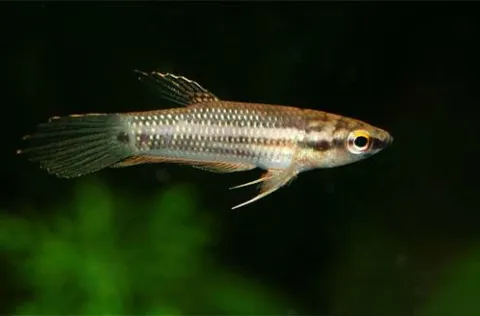
Betta pugnax
A member of the Osphronemidae family, the Malayan Betta, scientifically known as Betta pugnax, may not appear as brightly colored as many other Betta species. Nevertheless, this species possesses its own advantages and…
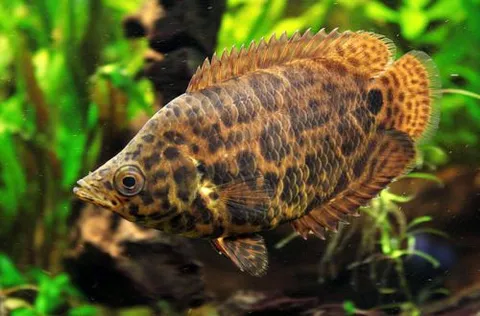
Ctenopoma acutirostre
Ctenopoma acutirostre, known as the Leopard Ctenopoma, belongs to the family Anabantidae. This spotted inhabitant of African rivers, despite its predatory nature, behaves quite peacefully towards fish of comparable…
Betta unimaculata
Betta unimaculata, a member of the family Osphronemidae, is a fighting fish that fully lives up to its name. Males of this species display a temperamental character, often engaging in skirmishes over territory and…