Nemacheilidae

Paracanthocobitis zonalternans

Paracanthocobitis zonalternans belongs to the family Nemacheilidae. This peaceful fish, despite its complex scientific name, is quite popular with aquarists. It gets along well with many tropical species, does not require complicated care, and is reasonably easy to breed.

Tank
from 50 L (13 gal)
Temperature
20 – 25 °C (68 – 77 °F)
Size in aquarium
6 – 7 cm (2.4 – 2.8 in)
Acidity
pH 6–7.5
Natural rangeRange on the map
  • Manipur area
  • Myanmar
  • Thailand

Tank conditions

Plan the tank stocking
Temperature
20 – 25 °C (68 – 77 °F)
Water pH
Slightly acidic (6) – Neutral (7.5)
Water dH
Very soft (2) – Medium hardness (10)
Water salinity
no salt (freshwater)
Size in aquarium
6 – 7 cm (2.4 – 2.8 in)
Lifespan
6 years
Temperament
Peaceful (regular)
Toward small fish
not a predator
Required aquarium volume
from 50 L (13 gal)
Lighting
any
Substrate
any (no restrictions)
Water flow
any
Feeding
Any (universal)
Keeping
Group (8–10 individuals)
  • Lifespan. A lifespan to expect under good care, not a measured value: it depends heavily on tank volume, water quality and diet — and for selectively bred forms, on their origin as well.
  • Toward small fish. Based on the Predators category in the catalog or the temperament in the species parameters. “A risk to small fish” means the species is not a predator by habit, yet will swallow any fish that fits in its mouth.
  • Required aquarium volume. This is a husbandry recommendation, not a measured value: the volume depends on the keeping mode (group (8–10 individuals)), footprint, decor and tank mates.

Care and keeping

Description

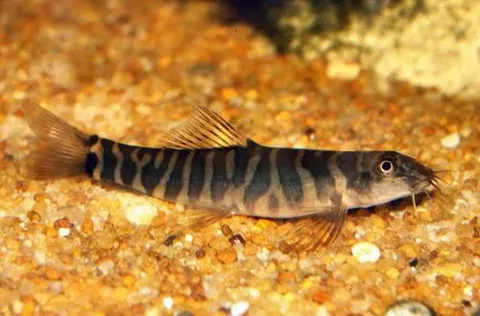
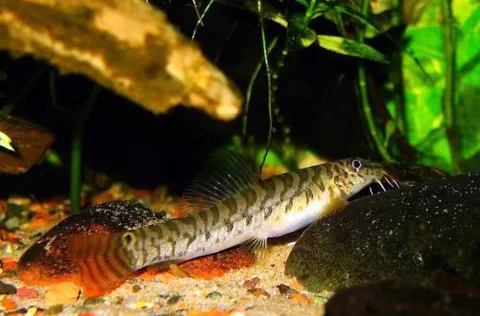
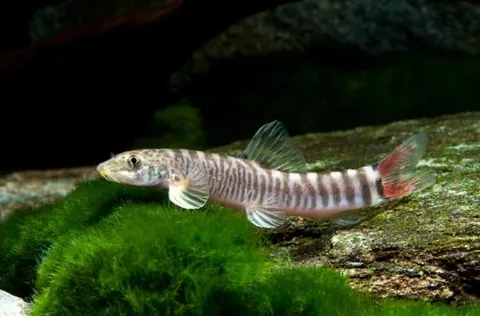
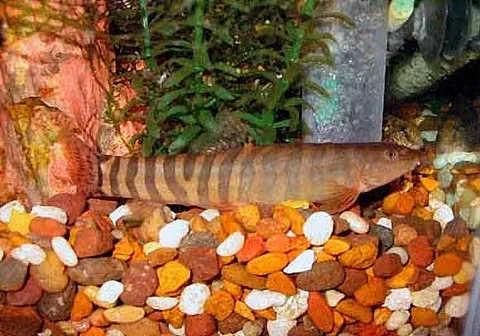
Adult fish usually reach 7–8 cm in length. The body is elongated and the fins are relatively short. Sensitive barbels near the mouth help the fish search for food on the bottom. Females are generally slightly larger than males, whose pectoral fins may have a yellowish or reddish tint. Overall, the fish is grey with a dark pattern that can vary slightly depending on where it comes from.

Habitat

This species is naturally found in South-East Asia, including eastern India (Manipur state), Burma, western Thailand, and mainland Malaysia. Paracanthocobitis zonalternans occur in diverse biotopes, from small mountain streams to swampy river sections. They usually prefer flowing waters with a pebbly bottom and plenty of wood from fallen branches and tree trunks.

Behavior and Compatibility

This fish is peaceful toward other species. Minor squabbles may occur between individuals, which is part of their normal social behaviour and never results in injury. They are compatible with many non-aggressive, non-territorial species of comparable size.

Care and Maintenance

A group of 8–10 fish needs a tank of at least 50 litres. The layout can be varied, but provide plenty of hiding places. These may include low broad-leaved plants, various pieces of wood, and crevices and caves made from stones or other decorative elements. Indian almond leaves, oak leaves, or beech leaves can be added to give the water a brownish tint that mimics their natural habitat. Since Paracanthocobitis zonalternans live in flowing waters, pay special attention to water quality. Remove organic waste (leftover food, droppings) regularly, do a 30–50% water change weekly, and maintain the recommended water pH and dGH.

Diet

Feed a mix of sinking flakes and granules. However, vary the diet with live or frozen foods such as daphnia, brine shrimp, or bloodworm.

Breeding and Reproduction

This species is rarely bred commercially, and most specimens in the trade are still wild-caught. However, breeding wild fish is possible. Since the fish eat their own eggs and show no parental care, spawn them in a separate breeding tank. Protect the eggs by covering the bottom with glass marbles or fine mesh so adults cannot reach them. Special decoration in the breeding tank is not essential, but water parameters should match those of the main tank. The minimum equipment is a heater, simple lighting, and a sponge-type air-lift filter. When spawning, place the fullest females with several males in the breeding tank. The males will compete with each other, so you may need to remove all but one and return them to the main tank. After spawning, move the adults out. A single female can lay around 300 eggs. The fry hatch the next day. For the first few hours they feed on the yolk sac, then move to microscopic foods such as infusoria and brine shrimp nauplii.

Diseases

Non-colourful fish that have remained close to their wild ancestors usually show high hardiness, robust immunity, and resistance to disease. Health problems usually signal unsuitable keeping conditions. Before treating the fish, always check water quality and parameters first. Start treatment only once all readings are back to normal, if treatment is still needed.

How to choose

Buy with care, as this species often arrives in shops severely starved, which is hard to reverse. A healthy fish should be active, with a full belly rather than a sunken one, and clean skin without visible damage, spots, or fungal signs. Avoid fish that look apathetic, lie on their side constantly, or have an unnaturally thin body. Watch how the fish behave in the tank—they should be curious and explore the bottom. If possible, ask the seller to feed the fish so you can see it eat. Check the fins too: they should be intact, without splits or erosion. Since this is often a wild-caught species, prefer specimens that have already spent time adapting in a shop.
Compatibility

There are no pair reviews for this species yet — check tankmates in the matcher.

All tankmates

Plants and this fish

Matching water does not mean the plant will stay intact.

Frequently asked questions

The essentials: size, tank volume, water parameters and care

How big does Paracanthocobitis zonalternans get?

An adult reaches 6–7 cm in length. Plan the tank around the maximum size: the fish quickly outgrows a cramped setup.

What size aquarium does Paracanthocobitis zonalternans need?

The recommended volume is 50 L. A smaller tank speeds up nitrate build-up and raises stress levels.

What water parameters does Paracanthocobitis zonalternans need?

Temperature 20–25 °C, pH 6–7.5, hardness 2–10 dGH. Stability matters more than exact values: sudden swings are harder on the fish than a small deviation from the ideal.

How long does Paracanthocobitis zonalternans live?

Around 6 years when kept properly. Lifespan depends directly on tank volume, water quality and a varied diet.

Is Paracanthocobitis zonalternans aggressive?

Temperament: peaceful (regular). Keep this in mind when choosing tank mates.

How many Paracanthocobitis zonalternans should be kept together?

Recommended setup: group (8–10 individuals). Ignoring this is a common cause of stress and disease.

What does Paracanthocobitis zonalternans eat?

Diet type: any (universal). Feed small portions that are finished within a couple of minutes — overfeeding does more harm than underfeeding.

What is the scientific name of Paracanthocobitis zonalternans?

The scientific name of the species is Paracanthocobitis zonalternans, family Nemacheilidae. It also appears in the literature as: Cobitis zonalternans, Nemacheilus phuketensis, Nemacheilus zonalternans.

Similar fishes

Matched by family, categories and overlapping keeping conditions

Schistura vinciguerrae

Schistura vinciguerrae

Schistura vinciguerrae

Nemacheilidae

Schistura vinciguerrae, also known as Vinciguerra's loach, belongs to the family Nemacheilidae. It was named after the zoologist Decio Vinciguerra, who made significant contributions to the study of fish species…

Schistura scaturigina

Schistura scaturigina

Schistura scaturigina

Nemacheilidae

The fish, known scientifically as Schistura scaturigina and belonging to the family Nemacheilidae (loaches), originates from South Asia. Its natural habitats are the upper reaches of the Ganges River basin, which spans…

Schistura Mae Hong Son

Schistura Mae Hong Son

Mustura maepaiensis

Nemacheilidae

The fish, known scientifically as Mustura maepaiensis, belongs to the family Nemacheilidae and is called Schistura Mae Hong Son. This name comes from the mountainous province of Mae Hong Son in north-western Thailand,…

Spotted Loach

Spotted Loach

Acanthocobitis botia

Nemacheilidae

Acanthocobitis botia, also known as the Spotted Loach, belongs to the family Nemacheilidae. These peaceful fish coexist easily with many tropical species. They are undemanding in care and do not entail significant…

Other scientific names and conservation status

Other scientific names
Cobitis zonalternans, Nemacheilus phuketensis, Nemacheilus zonalternans, Nemachilus zonalternans, Noemacheilus phuketensis, Noemacheilus zonalternans
Paracanthocobitis zonalternans
formerly Acanthocobitis zonalternans
Categories
Loaches
Conservation status
Least concernLC