Temperature21 – 26 °C
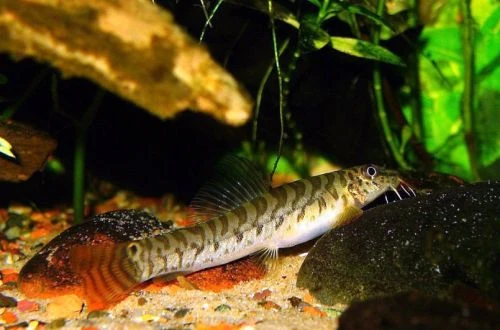
Acanthocobitis botia, also known as the Spotted Loach, belongs to the family Nemacheilidae. These peaceful fish coexist easily with many tropical species. They are undemanding in care and do not entail significant financial costs, making them easy to introduce into an already established freshwater aquarium.
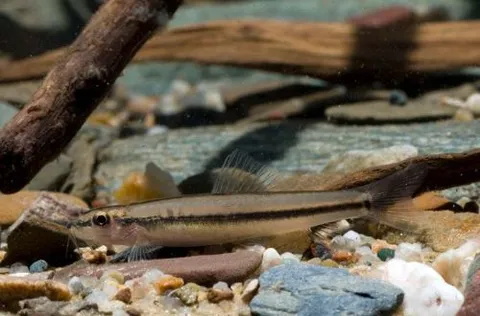
Adult fish reach 8–10 cm in length; occasional reports of 15 cm apparently refer to misidentified specimens of a closely related species. Sexual dimorphism is not clearly pronounced, however, females are usually significantly larger than males. Their coloration is characterized by gray-yellow tones with a brown pattern, and the belly has a silvery hue. Fins and tail may acquire reddish tones. Young individuals are lighter, and the pattern on their bodies differs. Oral barbels on the head are used to search for food on the bottom, possessing high sensitivity.
Previously, the natural habitat of this species was thought to extend from Pakistan to Thailand. However, research conducted in 2015 clarified this data. It was found that the Spotted Loach is predominantly found in the Brahmaputra River basin, while its close relatives inhabit other regions. Their habitat is extremely diverse due to alternating dry and rainy seasons. Thanks to this, the fish have successfully adapted to a wide variety of conditions – from turbulent, murky currents to semi-transparent rivers with calm flows. They prefer areas with a stony or sandy bottom, where there are many natural shelters made of leaves, branches, and snags.
This peaceful and friendly species coexists well with other calm fish of comparable size. They look especially harmonious in the company of schooling cyprinids, many of which originate from the same habitats. It is recommended to keep them in a group of at least 5–6 individuals. In isolation, the Spotted Loach becomes excessively timid, which can negatively affect its well-being and lead to refusal to eat.
An aquarium of 70–80 liters is required for keeping 5–6 fish. For decoration, it is recommended to use broad-leaved plants, as well as shelters made of snags and other decorations. The bottom should preferably be covered with sandy substrate with several large boulders. To recreate natural conditions, several Indian almond leaves can be placed on the bottom, which will give the water a brownish tint. It is preferable to maintain subdued lighting and moderate water flow. Care for the Spotted Loach is similar to keeping other aquarium fish. It is important to weekly replace part of the water with fresh, regularly remove organic waste, and periodically replace leaves if they were used.
In natural conditions, Spotted Loaches feed on aquatic insect larvae and small crustaceans. In the aquarium, their diet can be based on dry sinking foods. Nevertheless, for full development, it is necessary to introduce live or frozen foods, such as bloodworms, daphnia, and artemia, into the diet several times a week.
There is insufficient information on the successful breeding of this species in home aquarium conditions. Currently, juvenile Spotted Loaches available for sale are caught in the wild. Commercial breeding on an industrial scale is not carried out.
Non-ornamental fish species that have retained a close resemblance to their wild relatives usually exhibit high endurance, strong immunity, and resistance to various diseases. The occurrence of health problems most often indicates unsuitable keeping conditions. Therefore, before proceeding with treatment, it is strongly recommended to check the water quality and parameters. Only after all indicators have been brought back to normal should treatment begin, if it is still necessary.
When purchasing, select active individuals that show interest in food and do not show signs of emaciation. Carefully inspect the fish's belly: it should be rounded; a sunken belly is a critical sign of health problems or prolonged starvation. Ensure there are no skin lesions, ulcers, or unnatural spots. Since this species is often confused with other loaches, check for the characteristic ocellated spot on the caudal peduncle to confirm species identity. It is advisable to observe the fish's behavior in the store: healthy individuals usually explore the bottom in search of food. Avoid purchasing specimens that appear apathetic, constantly lie on their side, or show signs of severe stress.
The essentials: size, tank volume, water parameters and care
An adult reaches 8–10 cm in length. Plan the tank around the maximum size: the fish quickly outgrows a cramped setup.
The recommended volume is 70 L. A smaller tank speeds up nitrate build-up and raises stress levels.
Temperature 21–26 °C, pH 6–7.5, hardness 2–12 dGH. Stability matters more than exact values: sudden swings are harder on the fish than a small deviation from the ideal.
Around 8 years when kept properly. Lifespan depends directly on tank volume, water quality and a varied diet.
Temperament: peaceful (regular). Keep this in mind when choosing tank mates.
Recommended setup: small group (5–6 individuals). Ignoring this is a common cause of stress and disease.
Diet type: sinking (any). Feed small portions that are finished within a couple of minutes — overfeeding does more harm than underfeeding.
The scientific name of the species is Acanthocobitis botia, family Nemacheilidae. It also appears in the literature as: Botia nebulosa, Cobitis botia, Nemacheilus botia.
The water suits 197 of 208 plants in the catalogue — the easiest ones are shown first.
Afzelius's AnubiasAnacharisAnubiasBrazilian PennywortDwarf CloverDwarf CloverDwarf HygrophilaDwarf SagittariaDwarf ValGuppy GrassHornwortJava FernJava MossMoneywortMud SwordNair's LagenandraNarrow Leaf AnacharisNarrow-leaf CloverStringy MossSüsswassertangTaiwan MossTape GrassTemple PlantUssuri Watermilfoil
Matched by family, categories and overlapping keeping conditions
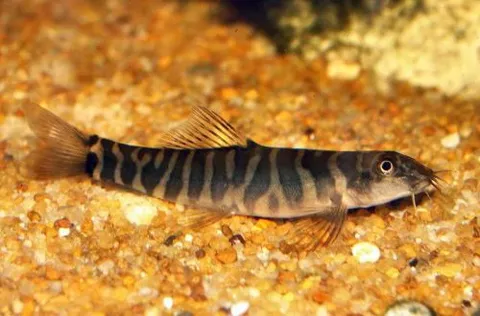
Mustura maepaiensis
The fish, known scientifically as Mustura maepaiensis, belongs to the family Nemacheilidae and is called Schistura Mae Hong Son. This name comes from the mountainous province of Mae Hong Son in north-western Thailand,…
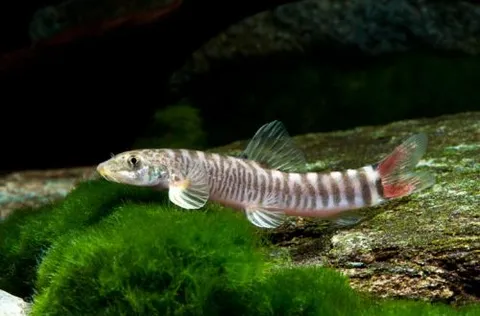
Schistura vinciguerrae
Schistura vinciguerrae, also known as Vinciguerra's loach, belongs to the family Nemacheilidae. It was named after the zoologist Decio Vinciguerra, who made significant contributions to the study of fish species…
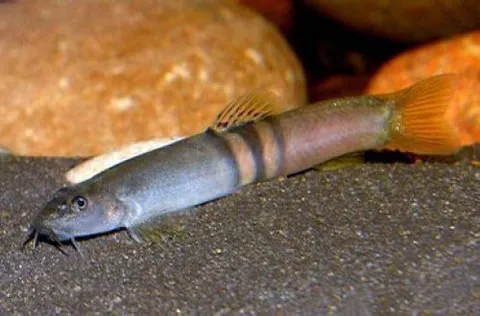
Schistura balteata
The fish scientifically known as Schistura balteata, belonging to the family Nemacheilidae, is commonly referred to as the Schistura balteata. This species is relatively easy to keep and coexists well with many common…
Nemacheilus binotatus
A member of the Nemacheilidae family (stone loaches), the striped loach, known scientifically as Nemacheilus binotatus, originates from Southeast Asia. These fish are found in the waters of Thailand, particularly in the…