Temperature22 – 28 °C
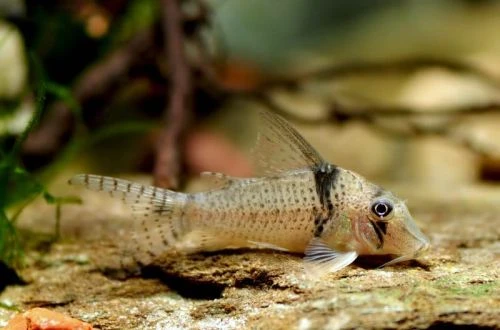
The Pastaza Corydoras, also known as the Pastaza Cory catfish, bears the scientific name Corydoras pastazensis and belongs to the family Callichthyidae (Armored or Callichthid catfishes). This fish was named after the region of its first discovery – the basin of the Pastaza River, which flows through Ecuador in South America. The name Corydoras orcesi is sometimes found as a synonym, which was used until 2001 but was then recognized as a separate species.
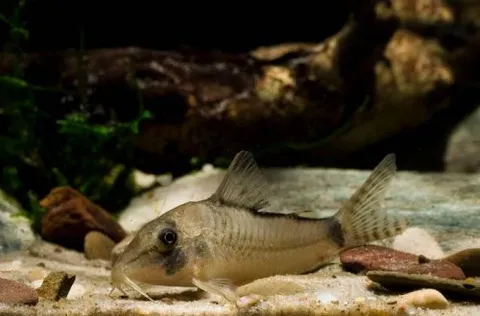
Adults of this species typically reach 6–7 cm in length. Their coloration is mainly gray and adorned with numerous black speckles distributed over the entire body. A distinctive feature is two dark vertical stripes: the first runs across the head, and the second is located in the anterior part of the body. It is important to note that the aforementioned Corydoras orcesi catfish has a similar coloration, but its spotted pattern is less regular, and the second stripe appears more uniform.
The species has been collected in the upper Pastaza river basin in Ecuador and in the ríos Ucayali and Puinahua in Peru. In nature, it occupies areas with soft substrate, preferring bodies of water with slow to moderate currents. Typical water parameters in its natural habitat are characterized by a tropical temperature regime and a wide range of acidity.
A peaceful schooling fish, most active in the evening. It is recommended to keep them in groups of 5 or more individuals, as solitary catfish become timid and less active. They are compatible with most peaceful fish species that inhabit the middle and upper water layers. Avoid cohabitation with aggressive or overly active fish that can create stressful situations.
For a comfortable existence of a group of 4–6 fish, an aquarium of 100 liters or more will be optimal. It should include a soft substrate, which will allow the catfish to dig, as well as several shelters. Natural elements such as driftwood and live plants, as well as various artificial decorations, are suitable as shelters. Like many other representatives of the genus Corydoras, the Pastaza Corydoras is not particularly demanding and easily adapts to various conditions. The main thing is that they are within the permissible range of temperatures and hydrochemical parameters. To maintain these conditions, the aquarium should be equipped with the necessary equipment and regular maintenance procedures should be carried out. As for feeding, the fish's diet is quite diverse, and they readily accept various foods, so choosing suitable feeds will not be difficult. It is only important to provide them with a diet that includes sinking foods. Behavior and compatibility: the Pastaza Corydoras catfish is peaceful by nature, so almost all freshwater fish with a similar temperament will be suitable as tank mates. Thanks to its calmness and ability to adapt to different conditions, choosing companions will not cause difficulties.
An omnivorous species, in nature it feeds on small invertebrates, insect larvae, and detritus. In the aquarium, it accepts any quality sinking foods: specialized tablets for bottom-dwelling fish, frozen or live foods such as bloodworms or brine shrimp. It is recommended to diversify the diet and ensure that the food reaches the bottom, where the fish feed in their natural manner.
Breeding in captivity is difficult, and reliable cases of successful breeding in aquariums are practically nonexistent. In nature, the fish are egg-layers, depositing their eggs among dense vegetation. They do not exhibit parental care for their offspring. To stimulate spawning in artificial conditions, additional research and the creation of specific conditions mimicking seasonal changes in water parameters are required.
The species has a strong immune system when kept under proper conditions. Like other members of the family, it is sensitive to water quality and substrate cleanliness. Accumulation of organic waste in the substrate can lead to damage to their sensitive barbels and the development of bacterial infections. Prevention includes regular water changes and the use of soft substrate without sharp edges.
When purchasing, choose active individuals with clean skin without visible spots, sores, or film. Healthy fish should have intact and undamaged barbels, and clear eyes. Avoid specimens with sunken bellies or signs of apathy, as this may indicate emaciation or hidden diseases. Observe the group in the store: the fish should exhibit social behavior and actively explore the substrate.
The essentials: size, tank volume, water parameters and care
An adult reaches 6–7 cm in length. Plan the tank around the maximum size: the fish quickly outgrows a cramped setup.
The recommended volume is 100 L. A smaller tank speeds up nitrate build-up and raises stress levels.
Temperature 22–28 °C, pH 5–7, hardness 1–12 dGH. Stability matters more than exact values: sudden swings are harder on the fish than a small deviation from the ideal.
Around 5 years when kept properly. Lifespan depends directly on tank volume, water quality and a varied diet.
Temperament: peaceful (regular). Keep this in mind when choosing tank mates.
Recommended setup: small group (5–6 individuals). Ignoring this is a common cause of stress and disease.
Diet type: sinking (any). Feed small portions that are finished within a couple of minutes — overfeeding does more harm than underfeeding.
The scientific name of the species is Corydoras pastazensis, family Armored Catfish (Callichthyidae).
The water suits 198 of 208 plants in the catalogue — the easiest ones are shown first.
Afzelius's AnubiasAnacharisAnubiasBrazilian PennywortDwarf CloverDwarf CloverDwarf HygrophilaDwarf SagittariaDwarf ValGuppy GrassHornwortJava FernJava MossMoneywortMud SwordNair's LagenandraNarrow Leaf AnacharisNarrow-leaf CloverStringy MossSüsswassertangTaiwan MossTape GrassTemple PlantUssuri Watermilfoil
Matched by family, categories and overlapping keeping conditions
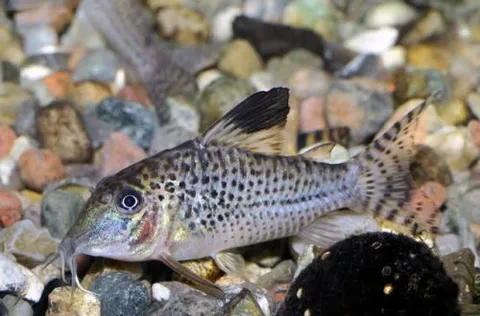
Corydoras acutus
Corydoras acutus, also known as the Black-spotted Corydoras, belongs to the family Callichthyidae (Armored Catfishes) and bears the scientific name Corydoras acutus. Both of its names accurately reflect its…
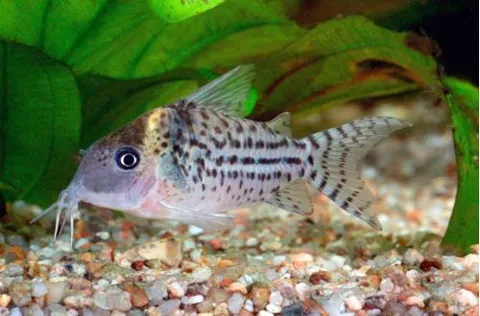
Corydoras agassizii
Agassiz's Corydoras, also known as the Spotted Cory (scientific name Corydoras agassizii), belongs to the family Callichthyidae. This catfish was named in honor of the distinguished researcher and naturalist Jean Louis…
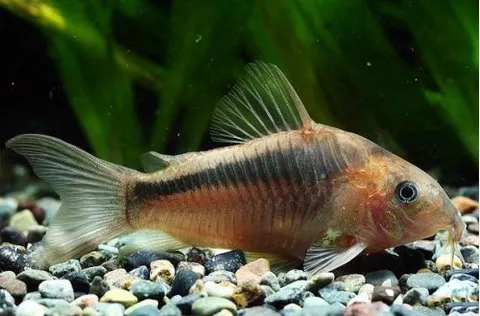
Corydoras zygatus
Corydoras zygatus, also known as the zygatus cory catfish (scientific name Corydoras zygatus), belongs to the armored catfish family Callichthyidae. The species name is derived from the Greek word ζυγόν (zugón), meaning…
Corydoras simulatus
The scientific name Corydoras simulatus places it in the family Callichthyidae, known as Armored Catfishes or Callichthids. The species name itself, simulatus, comes from Latin and translates as “to imitate” or “to…