Temperature18 – 22 °C
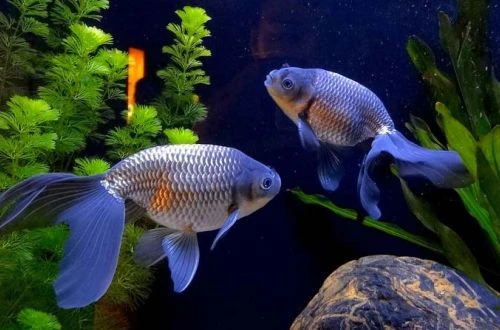
The Phoenix Goldfish, also known by its English trade name Blue Phoenix Goldfish, stands out with its solid grey-blue body coloration, which harmoniously blends with a lighter, silvery belly. This unique variety was first bred in China back in the 18th century. It represents a further development of the Egg-shaped Goldfish, from which the Phoenix inherited its characteristic body shape and the complete absence of a dorsal fin.
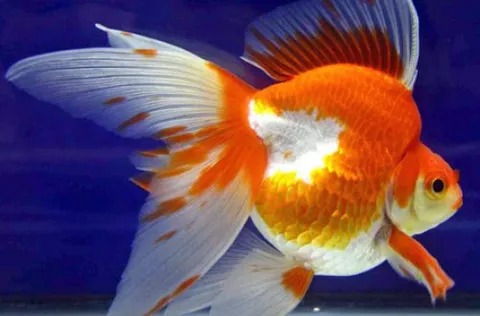
The Phoenix Goldfish is a selective breed developed in China. The body has a characteristic egg shape, and the dorsal fin is absent. A distinctive feature is the long, wide, and deeply forked caudal fin, which can account for up to half the length of the fish. The coloration is varied: solid, calico, and mottled variations are found, including red, yellow, black, white, and blue colors. Adult specimens reach 16–18 cm in length.
Like all Carassius auratus breeds, the Phoenix is an artificially bred form and does not occur in the wild. The ancestor of the species is the silver crucian carp, which inhabits freshwater bodies of East Asia. In aquarium conditions, the fish prefer cool, clean, and oxygen-rich water with a temperature of 18–22 °C, hardness of 5–19 dGH, and a wide pH range of 6 to 8.
The fish are characterized by a calm temperament and slowness, which makes them vulnerable to more active tankmates that may nip their fins. It is recommended to keep them in a species-only tank. Intraspecific compatibility is high; however, due to their body structure and long fins, the fish require a spacious aquarium without sharp decorations that could injure them.
Keeping the Phoenix Goldfish is no different from the requirements for other goldfish. The aquarist must provide a spacious aquarium with water that should be clean, relatively cool, and well-oxygenated. The aquarium's decor does not play a particularly important role. The hydrochemical composition of the water can vary within a fairly wide range, but it is crucial to avoid sudden changes in pH and dGH levels. The Phoenix Goldfish will gladly accept most common foods, whether dry, frozen, or live. Although by judging standards this fish should be quite active, it is still less mobile than many other species, which can lead to losing out in food competition. This aspect should definitely be taken into account when choosing tankmates.
An omnivorous species with a pronounced need for plant-based food. The diet should be balanced and include: — high-quality dry foods in the form of pellets or flakes, designed for goldfish — plant components, such as blanched lettuce or spinach leaves — small portions of live or frozen foods Feed small portions 1–2 times a day, avoiding overfeeding, to which the fish are prone.
Breeding requires the creation of specific conditions, including lowering the temperature to stimulate spawning. Spawning occurs in pairs or groups. Eggs are laid on fine-leaved plants. Parents are prone to eating eggs, so after the process is complete, the breeders are removed. Fry require careful care, regular water changes, and a gradual transition to starter foods as they grow.
The species is prone to gastrointestinal diseases due to improper feeding and swim bladder problems, which often occur in short-bodied breeds. Long fins are susceptible to bacterial and fungal infections if damaged. Prevention includes maintaining high water quality, eliminating sharp objects in the aquarium, and controlling the diet.
When choosing, attention should be paid to the fish's activity and the cleanliness of its body. Healthy individuals should swim smoothly, without signs of clumsiness or tilting to one side. The fins should be intact, without white film, redness, or torn edges. Avoid purchasing fish with signs of lethargy, sunken bellies, or an unnatural body position in the water column.
The essentials: size, tank volume, water parameters and care
An adult reaches 16–18 cm in length. Plan the tank around the maximum size: the fish quickly outgrows a cramped setup.
The recommended volume is 75 L. A smaller tank speeds up nitrate build-up and raises stress levels.
Temperature 18–22 °C, pH 6–8, hardness 5–19 dGH. Stability matters more than exact values: sudden swings are harder on the fish than a small deviation from the ideal.
Around 15 years when kept properly. Lifespan depends directly on tank volume, water quality and a varied diet.
Temperament: semi-peaceful (dangerous to smaller ones). Not a predatory species, but small fish that fit in its mouth will eventually be eaten.
Recommended setup: both solitary and in group (flexible). Ignoring this is a common cause of stress and disease.
Diet type: any (universal). Feed small portions that are finished within a couple of minutes — overfeeding does more harm than underfeeding.
The scientific name of the species is Carassius auratus, family Cyprinids (Cyprinidae). It also appears in the literature as: Carasius auratus, Carassius buergeri, Carassius burgeri.
The water suits 196 of 208 plants in the catalogue — the easiest ones are shown first.
Afzelius's AnubiasAnacharisAnubiasBrazilian PennywortDwarf CloverDwarf CloverDwarf HygrophilaDwarf SagittariaDwarf ValGuppy GrassHornwortJava FernJava MossMoneywortMud SwordNarrow Leaf AnacharisNarrow-leaf CloverStringy MossSüsswassertangTaiwan MossTape GrassTemple PlantUssuri WatermilfoilWater Wisteria
Matched by family, categories and overlapping keeping conditions
Carassius auratus
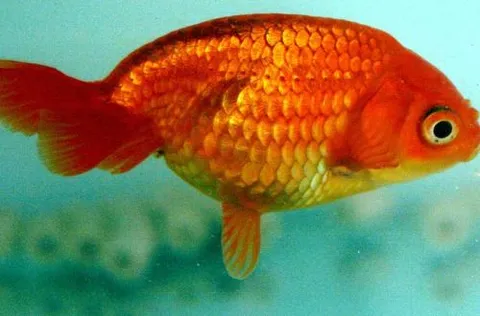
This variety of Goldfish, known in the West as Egg-fish Goldfish, is called Maruko in Japan. The fish owes its name to a remarkable feature—its body shape, which resembles an egg. A distinctive characteristic is its…
Carassius auratus
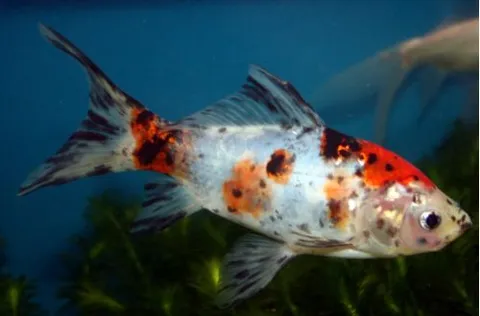
The history of the Shubunkin begins in Japan, where in 1892, breeder Yoshigoro Akiyama created this variety. He crossed a common Goldfish, a Calico Telescope Eye, and a single-tailed Wakin. In 1900, the new form…
Carassius auratus
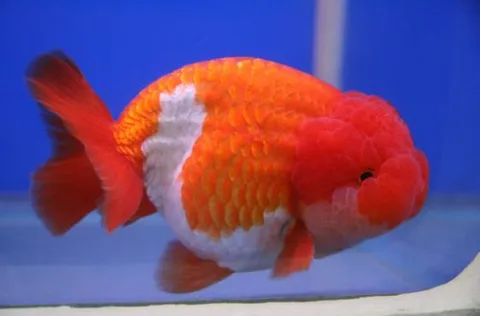
The Ranchu, also known as the Buffalo (or Ranchu Goldfish in English), holds a special place among valuable and popular aquarium inhabitants in Asia. In countries like China and Japan, there is an entire industry…
Carassius auratus
The Ryukin, known in English-speaking countries as the Ryukin Goldfish, is a Japanese adaptation of the Nymph goldfish. Although both varieties originated from a common ancestor, the Ryukin is distinguished by a high…