Temperature22 – 28 °C
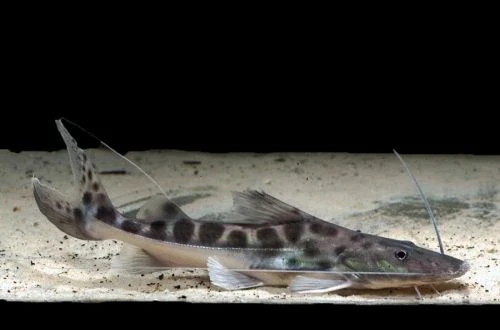
Piraiba, also known by its scientific name Brachyplatystoma filamentosum, belongs to the family Pimelodidae, or long-whiskered catfish (flat-headed catfish). It is one of the largest freshwater fish, rarely encountered in amateur aquaristics, which is rather an exception. In its natural habitat, it has significant commercial importance.
This catfish is considered one of the most impressive fish of the Amazon. Adults can reach a length of up to two and a half meters and a weight exceeding 150 kg. The fish's body is elongated and slender, especially when young. Piraiba's eyes are set high on its head and are quite close together. Long whisker-like barbels help it navigate in conditions of poor lighting and high water turbidity. The coloration is usually gray, with a noticeably lighter belly. Round dark spots are visible on the body, forming a characteristic pattern. Sexual dimorphism is weakly expressed, making it difficult to distinguish males and females externally.
Its origin is associated with South America. This species is widely distributed throughout most of the Amazon and Orinoco river basins. It inhabits the main river channels, and during the rainy season, it can swim into the delta, where it merges with the ocean and the saltwater is significantly diluted by freshwater. Catfish prefer to stay at depth, where oxygen concentration is higher.
Despite its predatory lifestyle, this fish is surprisingly peaceful and calm, but only towards species that are comparable in size and cannot be perceived as potential prey.
A two-meter Piraiba requires colossal volumes of water, measured in thousands of liters, which makes it practically unsuitable for keeping in home aquariums. These fish are mainly kept in large public aquariums or by a small number of affluent enthusiasts. In such conditions, the decor often replicates natural habitats: a riverbed with massive snags and rock formations, illuminated by subdued light. A large catfish is a source of a significant amount of waste. To maintain high water quality, high-performance filtration systems and other equipment are necessary to control key parameters such as pH, dGH, and the concentration of nitrogen cycle products.
In its natural habitat, Piraiba feeds on anything it can catch and swallow, including carrion and remains. In captivity, it easily adapts to alternative food sources, readily consuming strips of white fish fillet, shrimp, mussel meat, squid, and the like.
In artificial conditions, Piraiba does not reproduce due to the complexity of its spawning cycle. At the peak of the rainy season, Piraibas migrate to the headwaters of rivers for spawning, laying eggs in temporarily flooded areas of the rainforest. The hatched fry do not lack food and grow quickly. As the water recedes, the fry return to the main river channels and descend all the way to the delta. There, at the junction of fresh and saltwater, they will spend about three years. Then they ascend to the middle Amazon, reaching sexual maturity by their fourth year of life. The total migration distance for the entire spawning cycle is over 5500 km, which is the longest among all freshwater fish.
When kept in favorable conditions, fish rarely experience health deterioration. The occurrence of diseases usually indicates problems in keeping, such as polluted water, poor quality food, or injuries. In most cases, eliminating the root cause leads to recovery. However, sometimes medication may be required.
When purchasing a Piraiba, it should be noted that young specimens are most often available for sale. It is important to ensure there are no external injuries, such as ulcers, whitish spots, or signs of fin erosion, which may indicate bacterial infections. A healthy fish should be active, have clear eyes, and normal breathing without rapid gill movements. Due to the extremely large size of adult specimens, exceeding 1 meter, acquiring this species requires prior readiness for keeping it in specialized systems, as regular home aquariums are not suitable for long-term care.
The essentials: size, tank volume, water parameters and care
An adult reaches 120–360 cm in length. Plan the tank around the maximum size: the fish quickly outgrows a cramped setup.
The recommended volume is 2000 L. A smaller tank speeds up nitrate build-up and raises stress levels.
Temperature 22–28 °C, pH 6–8, hardness 1–21 dGH. Stability matters more than exact values: sudden swings are harder on the fish than a small deviation from the ideal.
Around 20 years when kept properly. Lifespan depends directly on tank volume, water quality and a varied diet.
Temperament: predator, but semi-peaceful (gets along with large ones). This is a predatory species — any fish small enough to fit in its mouth will eventually be eaten.
Recommended setup: both solitary and in group (flexible). Ignoring this is a common cause of stress and disease.
Diet type: sinking (meat / protein). Feed small portions that are finished within a couple of minutes — overfeeding does more harm than underfeeding.
The scientific name of the species is Brachyplatystoma filamentosum, family Pimelodidae (Long-whiskered Catfishes). It also appears in the literature as: Brachyplatystoma goeldii, Pimelodes filamentosus, Pimelodus filamentosus.
The water suits 197 of 208 plants in the catalogue — the easiest ones are shown first.
Afzelius's AnubiasAnacharisAnubiasBrazilian PennywortDwarf CloverDwarf CloverDwarf HygrophilaDwarf SagittariaDwarf ValGuppy GrassHornwortJava FernJava MossMoneywortMud SwordNair's LagenandraNarrow Leaf AnacharisNarrow-leaf CloverStringy MossSüsswassertangTaiwan MossTape GrassTemple PlantUssuri Watermilfoil
Matched by family, categories and overlapping keeping conditions
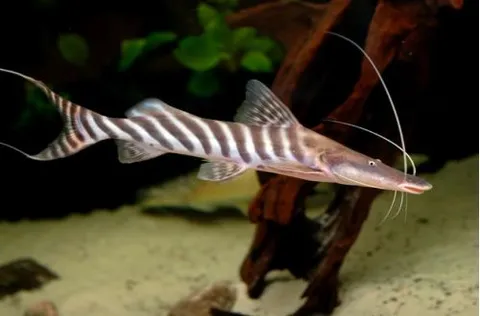
Brachyplatystoma tigrinum
Brachyplatystoma tigrinum, also known as the Tiger Catfish, is a member of the family Pimelodidae (long-whiskered or flat-headed catfish). This large and impressive fish is compatible with other freshwater species,…
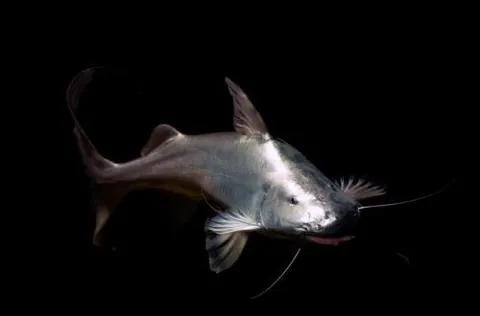
Brachyplatystoma rousseauxii
Dourada, known scientifically as Brachyplatystoma rousseauxii, belongs to the family Pimelodidae, also called pimelodid or flat-headed catfishes. This large predatory fish is highly valued by the local population as an…
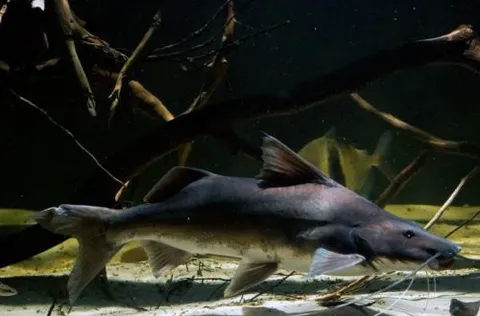
Brachyplatystoma vaillantii
The large predatory fish known as the Lau-Lau Catfish, or Brachyplatystoma vaillantii, belongs to the family Pimelodidae, also known as the Pimelodids or flat-headed catfishes. It is virtually impossible to encounter it…
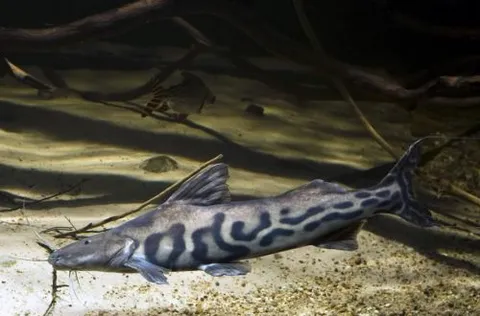
Brachyplatystoma juruense
The Striped Brachyplatystoma, also known as the Golden Zebra Catfish (scientific name Brachyplatystoma juruense), belongs to the family Pimelodidae, which includes flat-headed catfish. This large predatory fish inhabits…