Temperature20 – 28 °C
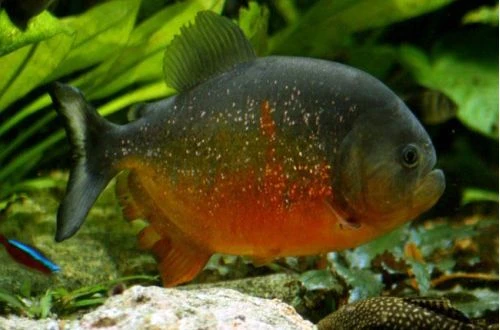
Scientifically named Pygocentrus piraya, belonging to the family Serrasalmidae, this is the common piranha, also known as the São Francisco piranha. It's important to note that the name does not refer to the city of the same name in California; it refers to the São Francisco River in Brazil, where this species lives. It is perhaps one of the most recognizable freshwater predators, whose fame has been cemented by numerous Hollywood films. Keeping such a fish in a home aquarium will undoubtedly attract attention, but at the same time, it will require considerable effort from the owner due to its rather specific care requirements.
Adults of this fish typically reach a length of 30 to 35 cm. Their body is massive, oval-shaped, gradually tapering towards the caudal fin. The dorsal and anal fins are located closer to the rear of the body. The fish's head is large, with a prominent mouth studded with sharp teeth. The coloration varies: the back and head have a gray hue, while the lower body and belly can range from yellow to red. Sexual dimorphism is weakly expressed; however, females are generally larger and appear significantly rounder during the breeding season.
Its natural habitat is South America, specifically the São Francisco River basin, which flows through the eastern regions of Brazil. This species is found in main river channels, tributaries, floodplains, and large artificial reservoirs formed by dams.
They show animosity towards individuals of their own species, which is expressed in extremely aggressive intraspecific relations. Therefore, only solitary keeping is recommended. As a rule, they behave calmly towards other fish if well-fed, but the risk of predatory behavior always remains. Compatibility is possible with larger species, as well as with some armored catfish, which have reliable protection in the form of bony plates and spines.
For comfortable keeping of a single specimen, the optimal aquarium volume starts from 400–500 liters. The choice of decorations does not play a decisive role; many aquarists prefer empty tanks to simplify maintenance. Nevertheless, minimal decor is recommended, such as a sandy or rocky substrate and several large snags. Live plants will most likely be eaten, so using artificial vegetation is the best solution. Since the fish exhibits rather temperamental behavior, especially during feeding, fragile or delicate decorative elements should be avoided. The same applies to equipment: it must be external, including the heating system. The common piranha, like any large carnivorous species, produces a significant amount of waste, which heavily pollutes the water. To maintain biological balance, powerful filters must be installed, organic waste (food remnants, excrement) regularly removed, and 30–50% of the water volume replaced weekly with fresh water. Overall, the complexity of keeping is largely determined by the equipment installed in the aquarium, and with automated systems, it can be quite manageable even for a beginner aquarist.
Piranhas have gained widespread notoriety as bloodthirsty predators, but this perception is not entirely accurate. In fact, this species is considered omnivorous. Although their diet primarily consists of other fish, a significant portion of their nutrition comes from aquatic insects and invertebrates, as well as nuts, seeds, and fruits. In aquarium conditions, they can be offered earthworms, shrimp, mussel meat, and fish. Regular feeding with animal products such as beef or pork should be avoided, as they contain components that are difficult to digest.
In their natural habitat, two reproductive cycles are observed. The first cycle occurs during the rainy season when water levels rise. The second occurs during periods of low water, usually in November-December. Piranha spawning takes place in floodplain lakes and other areas with calm water and abundant aquatic vegetation. In home aquarium conditions, spawning instances are extremely rare. The main reason for this is often related to tank size, as safe keeping of two or more individuals requires thousands of liters of water, which is generally beyond the capabilities of amateur aquaristics.
This fish is distinguished by its hardiness and unpretentiousness. Health problems are most often associated with injuries, inadequate nutrition, or unsuitable water composition. When signs of illness appear, such as lethargy, changes in body shape, or loss of appetite, it is often enough to normalize the keeping conditions for the fish's body to cope with the ailment. However, in some cases, medication may be required.
When selecting individuals, attention should be paid to their activity and appearance. A healthy fish should exhibit natural curiosity, have clean scales without damage, sores, or white film, and clear eyes without cloudiness. It is important to avoid purchasing individuals with signs of emaciation, sunken bellies, bloated abdomens, or unnatural behavior, such as constantly hovering near the surface or at the bottom in an attempt to hide. Since this species is territorial and prone to intraspecific aggression, fish in stores may often have minor signs of skirmishes, such as damaged fins. However, deep wounds or signs of secondary infection at the sites of damage are reasons to refuse the purchase. Given the high risk of injury, extreme caution is required when catching fish in the store, as a frightened piranha can bite through a net or injure a person.
The essentials: size, tank volume, water parameters and care
An adult reaches 35 cm in length. Plan the tank around the maximum size: the fish quickly outgrows a cramped setup.
The recommended volume is 400 L. A smaller tank speeds up nitrate build-up and raises stress levels.
Temperature 20–28 °C, pH 5–8, hardness 3–23 dGH. Stability matters more than exact values: sudden swings are harder on the fish than a small deviation from the ideal.
Around 10 years when kept properly. Lifespan depends directly on tank volume, water quality and a varied diet.
Temperament: aggressive / incompatible / unfriendly. This is a predatory species — any fish small enough to fit in its mouth will eventually be eaten.
Recommended setup: solitary. Ignoring this is a common cause of stress and disease.
Diet type: meat / protein (live, frozen, fresh). Feed small portions that are finished within a couple of minutes — overfeeding does more harm than underfeeding.
The scientific name of the species is Pygocentrus piraya, family Piranhas (Serrasalmidae). It also appears in the literature as: Polycentrus piraya, Pygocentrus bidorsalis, Pygocentrus piranha.
The water suits 198 of 208 plants in the catalogue — the easiest ones are shown first.
Afzelius's AnubiasAnacharisAnubiasBrazilian PennywortDwarf CloverDwarf CloverDwarf HygrophilaDwarf SagittariaDwarf ValGuppy GrassHornwortJava FernJava MossMoneywortMud SwordNair's LagenandraNarrow Leaf AnacharisNarrow-leaf CloverStringy MossSüsswassertangTaiwan MossTape GrassTemple PlantUssuri Watermilfoil
Matched by family, categories and overlapping keeping conditions
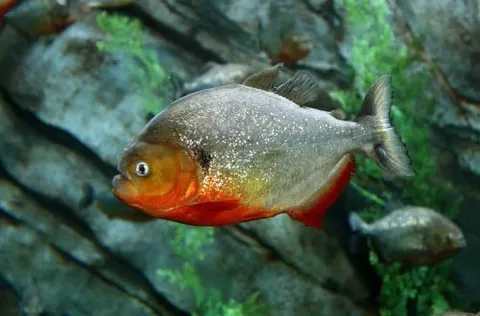
Pygocentrus cariba
The Blackspot Piranha, scientifically known as Pygocentrus cariba, belongs to the Serrasalmidae family and is considered one of the most famous predators of river depths. Despite its widespread notoriety, few aquarists…
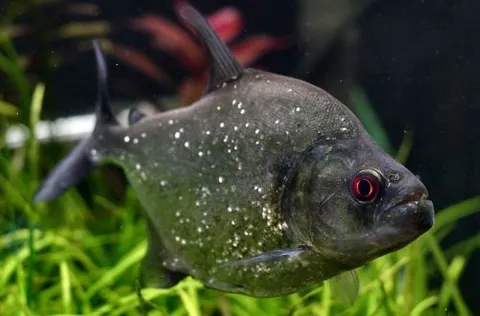
Serrasalmus rhombeus
The Rhombic, or Black Piranha, also known as the Red-Eyed Piranha (scientific name Serrasalmus rhombeus), belongs to the subfamily Serrasalminae. This fish is one of the most recognizable. Although its reputation as a…
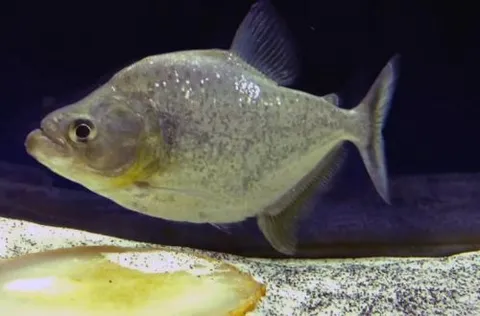
Serrasalmus brandtii
The White Piranha, also known as Brandt's Piranha (Serrasalmus brandtii), is a member of the family Serrasalmidae. Its name commemorates the German naturalist Johann Friedrich von Brandt (1802–1879); the species itself…
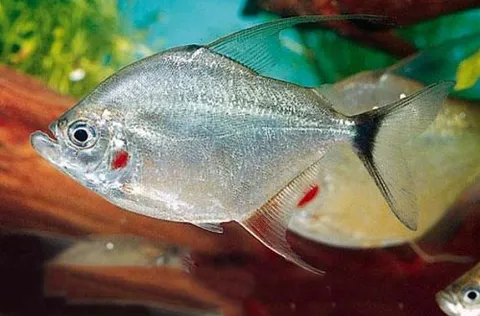
Catoprion mento
The Wimple Piranha, known scientifically as Catoprion mento, is classified in the family Serrasalmidae, or Piranhas. It is interesting to note that, despite its name, this species is not part of the group of classic…