Temperature20 – 30 °C
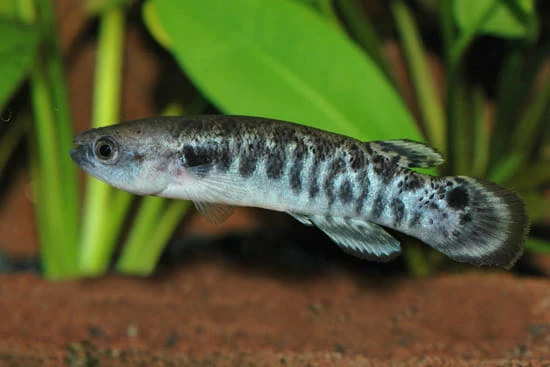
Rivulus caudomarginatus, known scientifically as Kryptolebias caudomarginatus, belongs to the family Rivulidae. This fish species originates from South America, where its wild populations are found along the coastline of Brazil—between Rio de Janeiro, Santa Catarina, and São Paulo. The habitats of these fish include swamps and bodies of water where stagnant brackish and marine water predominates.
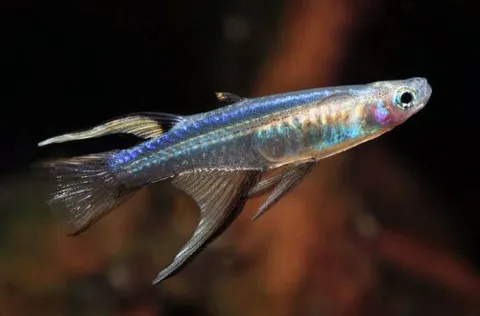
Adults reach approximately 6 cm in length. Their body is elongated with short fins. The coloration is predominantly grey with a noticeable blue sheen, and the belly has a silvery hue. The body pattern consists of numerous dark dashes and two distinct spots: one located immediately behind the head, the other at the base of the caudal fin. Males are easily distinguished from females by their brighter and more contrasting pattern, as well as their colored fins; in females, the fins and tail remain semi-transparent.
The species inhabits South America, primarily the coastal regions of Brazil (states of Rio de Janeiro, São Paulo, Santa Catarina). Its natural environment includes brackish and freshwater biotopes, including stagnant bodies of water, swamps, and mangrove areas. The fish prefer areas with dense vegetation, dark substrate, and calm water flow.
This fish species is considered peaceful, though somewhat timid. They prefer to stay in groups with their conspecifics. Keeping them with other species is permissible if the fish are comparable in size, especially if they also inhabit brackish waters.
For a group of 3–4 Kryptolebias caudomarginatus, the optimal aquarium volume starts from 60–80 liters. The aquarium setup should include an abundance of shelters created by dense plant thickets. A dark substrate is preferred, supplemented with a layer of leaves and snags. Although Kryptolebias caudomarginatus can survive in fresh water, they will feel most comfortable in a brackish environment where the salt concentration is 10–15 grams per 1 liter. It is important to maintain a medium to high water hardness level, and the pH should be above 7.0.
The daily diet of these fish should be based on live, frozen, or fresh foods with a high protein content. Excellent choices include Artemia, Daphnia, and bloodworms.
The fish reach sexual maturity at 5–7 months of age. They spawn regularly, laying eggs in soft, silty substrate. Notably, the size of the eggs, about 2 mm, is quite large for such miniature fish. Despite this, a single clutch can contain several dozen eggs. The incubation period usually lasts 2–3 weeks. Information.
Fish are sensitive to water quality and sudden changes in its chemical parameters. If keeping conditions are violated, especially with insufficient filtration or accumulation of organic matter, the risk of bacterial infections and fungal skin lesions increases. Prevention includes maintaining stable environmental parameters, regular water changes, and observing aquarium hygiene.
When choosing specimens, attention should be paid to the condition of the fins and skin, which should be free of white film, ulcers, or signs of damage. A healthy fish shows activity, has clear eyes, and a normal appetite. It is recommended to avoid purchasing fish that appear lethargic, stay at the surface, or show signs of emaciation, as the species is considered difficult to adapt to aquarium conditions.
The essentials: size, tank volume, water parameters and care
An adult reaches 6 cm in length. Plan the tank around the maximum size: the fish quickly outgrows a cramped setup.
The recommended volume is 80 L. A smaller tank speeds up nitrate build-up and raises stress levels.
Temperature 20–30 °C, pH 7–8.5, hardness 5–20 dGH. Stability matters more than exact values: sudden swings are harder on the fish than a small deviation from the ideal.
Around 3 years when kept properly. Lifespan depends directly on tank volume, water quality and a varied diet.
Temperament: peaceful (regular). Keep this in mind when choosing tank mates.
Recommended setup: small group (3–4 individuals). Ignoring this is a common cause of stress and disease.
Diet type: high protein (predominantly meat). Feed small portions that are finished within a couple of minutes — overfeeding does more harm than underfeeding.
The scientific name of the species is Kryptolebias caudomarginatus, family Rivulidae. It also appears in the literature as: Rivulus caudomarginatus.
The water suits 114 of 208 plants in the catalogue — the easiest ones are shown first.
African Onion PlantAfzelius's AnubiasAmazon FrogbitAmazon SwordAnacharisAnubiasArrowhead CryptDwarf CloverDwarf CloverDwarf HygrophilaDwarf SagittariaDwarf ValGuppy GrassHornwortJava MossMoneywortMud SwordNair's LagenandraNarrow Leaf AnacharisNarrow-leaf CloverStringy MossTaiwan MossTape GrassUssuri Watermilfoil
Matched by family, categories and overlapping keeping conditions
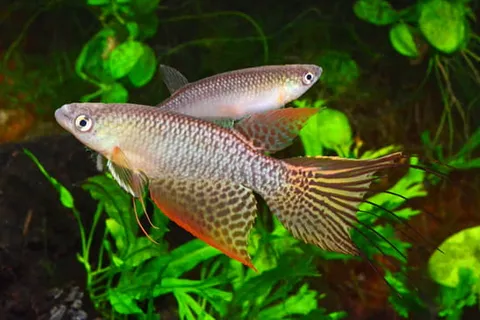
Pterolebias hoignei
Pterolebias hoignei, known as the Orinoco Pterolebias, is a member of the family Rivulidae, which includes many species of rivuline killifish. This vibrant annual fish lives in the wild in temporary water bodies that…
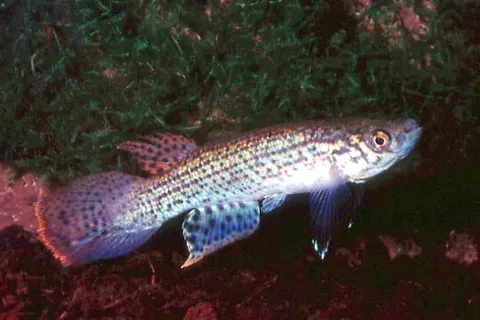
Moema piriana
The scientific name Moema piriana belongs to a representative of the Rivuline family. This beautiful annual fish originates from South America, where it can be found in its natural habitat. The fish is widespread…
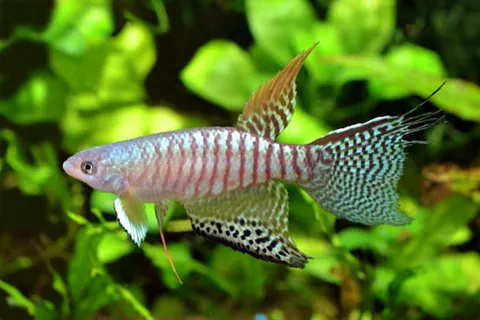
Pterolebias zonatus
Pterolebias zonatus, belonging to the family Rivulidae, is an annual fish whose habitat covers the Orinoco River basin in South America. Its lifespan is determined by the alternation of rainy and dry seasons, which is…
Pseudomugil cyanodorsalis
The Blue-eyed Neon (scientific name Pseudomugil cyanodorsalis), also known as the Blue-backed Pseudomugil, belongs to the family Pseudomugilidae. This unique tropical fish exhibits remarkable adaptability, allowing it…