Temperature22 – 26 °C
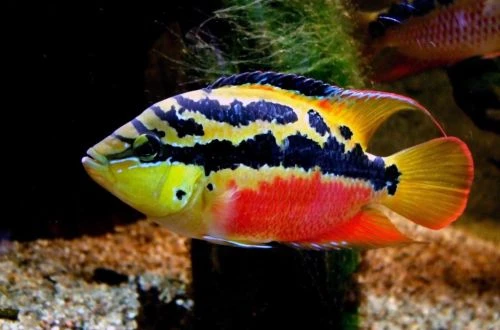
Trichromis salvini, or Salvin's Cichlid, belongs to the family Cichlidae. Previously, this species was known as Cichlasoma salvini, before the classification was revised. It is characterized by a complex temperament and difficult relationships within its own species, showing aggression towards other aquarium inhabitants. Despite its behavioral peculiarities, the care and breeding of this fish are not overly complex. Its keeping is not recommended for aquarists without experience.
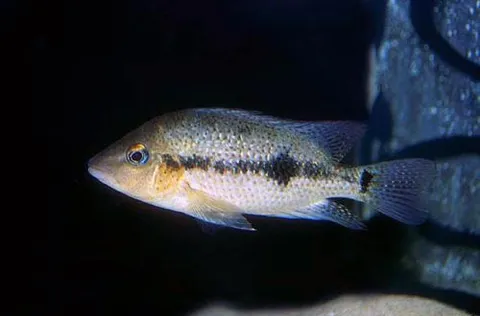
Adult males can reach a length of 15 cm. They are distinguished by a bright coloration, a combination of red and yellow hues. The head and upper body are adorned with a pattern of black spots and strokes. The dorsal and anal fins of males are noticeably elongated and pointed. Females are smaller, growing up to 11 cm, and their coloration is less vibrant. The female's body has a yellow background with a characteristic black stripe running along the lateral line.
The natural range of this fish covers Central America, including southern Mexico, as well as adjacent territories of Guatemala and Belize. Salvin's Cichlid inhabits numerous but small rivers and their tributaries. It prefers the middle and lower reaches of water bodies with moderate or strong water flow.
Salvin's Cichlid is an aggressive fish, characterized by territorial behavior. This quality is especially pronounced in males during the spawning period. Solitary keeping is recommended, or as part of an established pair or group. It is important to note that only fish that have grown up together can coexist peacefully. Attempting to introduce adult specimens from different aquariums will likely lead to sad consequences, and the weaker individual may perish. Compatibility with other Central American species is limited. For example, they can get along with Jack Dempsey cichlids provided there is a large aquarium volume and reliable shelters.
For keeping a single specimen or a pair of Salvin's Cichlids, an aquarium of 100 liters or more will be required. When decorating, be sure to provide a sufficient number of shelters where the fish can find refuge. Sand is recommended as a substrate. The presence of aquatic plants is welcome, but their quantity should be limited, avoiding excessive overgrowth, as the fish need free swimming space. Successful keeping of these fish depends on several key factors, including maintaining stable water parameters (optimal pH and dGH values), regular aquarium maintenance (cleaning), and weekly replacement of 20–25% of the water volume with fresh water.
This fish is carnivorous. In its natural environment, it feeds on various aquatic invertebrates and small fish. In aquarium conditions, Salvin's Cichlid will readily accept all common types of food. Nevertheless, to maintain a complete diet, it is important to include live or frozen foods, such as bloodworms or brine shrimp.
Finding an ideal breeding pair is the main difficulty in successful breeding. It should be remembered that simply keeping a male and female together does not guarantee offspring. The key is that the fish must grow and mature together. Experienced aquarists aiming for reproduction often acquire a group of at least 6 young individuals or an entire school of fry; this approach allows at least one stable pair to form over time. When the breeding period begins, the fish occupy several spots on the bottom where eggs will subsequently be laid. The total number of eggs can reach 500. For approximately one month, the male and female vigilantly guard both the laid clutch and the hatched fry, and it is during this period that their behavior becomes noticeably aggressive.
The main cause of most diseases is unsuitable living conditions and poor-quality food. If you notice the first symptoms, you should immediately check the water parameters and ensure there are no high concentrations of dangerous substances (ammonia, nitrites, nitrates, etc.). The parameters must be brought back to normal, and only then can treatment measures begin.
When selecting individuals, preference should be given to young fish, as adult cichlids adapt extremely poorly to changes in habitat and may show increased aggression towards tank mates. Inspect the fish for intact fins, absence of ulcers, plaque, or spots on the scales, and ensure that the fish's eyes are clear and transparent. — Avoid purchasing individuals that appear emaciated or have a sunken belly. — Observe their behavior in the store: a healthy fish should be active and show interest in its surroundings. — Ask the seller about the keeping conditions, as transport stress and a sudden change in water parameters can provoke disease outbreaks in this species.
The essentials: size, tank volume, water parameters and care
An adult reaches 11–15 cm in length. Plan the tank around the maximum size: the fish quickly outgrows a cramped setup.
The recommended volume is 100 L. A smaller tank speeds up nitrate build-up and raises stress levels.
Temperature 22–26 °C, pH 6.5–8, hardness 8–15 dGH. Stability matters more than exact values: sudden swings are harder on the fish than a small deviation from the ideal.
Around 10 years when kept properly. Lifespan depends directly on tank volume, water quality and a varied diet.
Temperament: aggressive / incompatible / unfriendly. Keep this in mind when choosing tank mates.
Recommended setup: pair (male/female). Ignoring this is a common cause of stress and disease.
Diet type: meat / protein (live, frozen, fresh). Feed small portions that are finished within a couple of minutes — overfeeding does more harm than underfeeding.
The scientific name of the species is Trichromis salvini, family Cichlids (Cichlidae). It also appears in the literature as: Cichlasoma salvini, Cichlasoma tenue, Heros salvini.
The water suits 197 of 208 plants in the catalogue — the easiest ones are shown first.
Afzelius's AnubiasAnacharisAnubiasBrazilian PennywortDwarf CloverDwarf CloverDwarf HygrophilaDwarf SagittariaDwarf ValGuppy GrassHornwortJava FernJava MossMoneywortMud SwordNair's LagenandraNarrow Leaf AnacharisNarrow-leaf CloverStringy MossSüsswassertangTaiwan MossTape GrassTemple PlantUssuri Watermilfoil
Matched by family, categories and overlapping keeping conditions
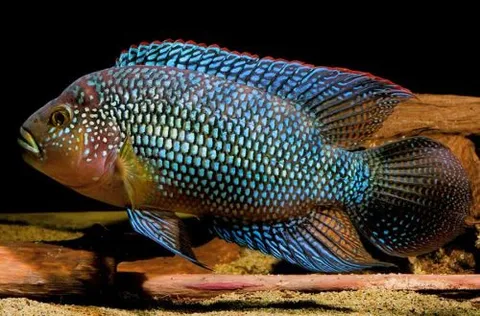
Rocio octofasciata
The scientific name Rocio octofasciata belongs to the Cichlidae family. In the world of aquarium enthusiasts, it is most commonly known as the Jack Dempsey Cichlid or the "Morning Dew" Cichlid. Another common name is…
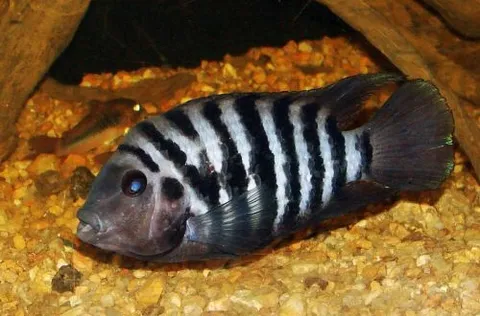
Amatitlania nigrofasciata
The Convict Cichlid, scientifically known as Amatitlania nigrofasciata, belongs to the family Cichlidae. This fish possesses many qualities attractive to aquarists: unpretentiousness in keeping, ease of breeding,…
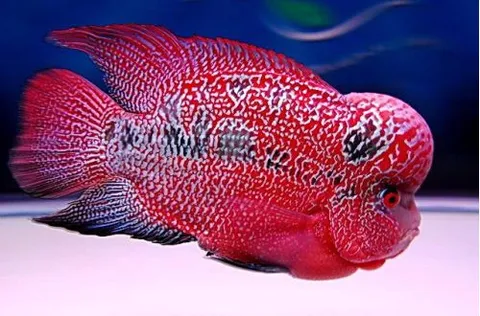
Amphilophus hybrid
The Cichlidae family includes a remarkable representative — the Flowerhorn, also known as the Flowerhorn Cichlid. This fish stands out for its vibrant coloration and unusual shape, making it an excellent choice for…
Darienheros calobrensis
The Red-spotted Cichlid, also known by its scientific name Darienheros calobrensis, belongs to the family Cichlidae. It's interesting to note that in the past, this species was classified under a different genus and was…