Temperature20 – 28 °C
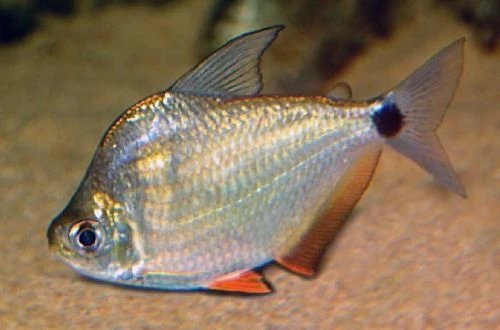
Ctenobrycon spilurus, known as the Silver Dollar Tetra, is a species belonging to the family Acestrorhamphidae. Its natural habitat is in South America: the Orinoco River basin, as well as the coastal river basins of Guyana, Suriname and French Guiana. These fish prefer shallow areas of rivers, abundant with dense aquatic vegetation.
Adults of this fish can reach a length of approximately 8 cm. Their body is characterized by a high profile and noticeable lateral compression, which, combined with their silvery coloration, earned them the name “silver dollar.” A distinctive feature is a bright black spot at the base of the tail; another, less pronounced, is located behind the gill cover. The anal and pelvic fins often have a reddish tint. Differences between males and females are subtle, making sex determination difficult.
The species inhabits South America, the Orinoco River basin as well as the coastal rivers of Guyana, Suriname, and French Guiana. In nature, the fish populate shallow areas of rivers, preferring places with dense aquatic vegetation. The water bodies are characterized by stable water parameters, close to neutral pH values of around 7.0.
These fish are active and have a peaceful disposition. They feel comfortable in a group of at least 6–8 individuals; when kept alone, they become excessively timid. Ideal tank mates include other non-aggressive species of comparable size, such as various tetras, small catfish, and cyprinids, including barbs, danios, and rasboras.
For a school of 6–8 individuals, the optimal aquarium volume starts from 150 liters. When setting up the tank, it is important to provide both open spaces for free swimming and sheltered areas created by dense plant thickets. Preference should be given to plant species with tough leaves, as the fish tend to damage softer parts. Natural elements such as driftwood and stones will be a good addition. An important aspect of long-term keeping is maintaining a stable hydrochemical balance of the water within acceptable pH and dH values, as well as regular aquarium maintenance, including substrate cleaning, equipment checks, and partial water changes. Silver Dollar Tetras are sensitive to strong currents, which are often created by filters. Therefore, when choosing a filtration system, it is recommended to opt for models that provide gentle water movement. This species is omnivorous. They readily accept a variety of dry, frozen, and live foods of appropriate size. It is essential that plant components are included in their diet.
These fish are omnivorous and gladly accept various types of food, be it dry granules, frozen, or live foods of appropriate size, and it is important that their diet includes plant components. They are active and peaceful, preferring to live in a group of 6–8 individuals, as they become excessively timid when kept alone. They coexist well with other non-aggressive fish of similar size, such as tetras, small catfish, and cyprinids — for example, barbs, danios, and rasboras.
Under favorable aquarium conditions, these fish spawn regularly. During the breeding period, males display courtship rituals. Spawning usually occurs in the upper water layers, among dense plant thickets. Fertilized eggs are left without parental care; their only protection comes from the surrounding plants. Adult fish do not care for their offspring and may eat their own eggs. To save the fry, it is recommended to carefully transfer the eggs to a separate aquarium with identical water parameters. The incubation period lasts from 30 to 36 hours. In the first days after hatching, the fry feed on the remnants of the yolk sac, and after about a week, they begin to swim freely in search of food. They should be fed specialized powdered foods or suspensions.
Provided the correct habitat and absence of aggressive tank mates, the health of these fish usually remains robust. If the first signs of illness are observed, the first step should be to check the hydrochemical parameters of the water and the levels of nitrogen cycle products. It is possible that the cause of stress and poor well-being is low water quality.
When purchasing, choose active individuals with clean scales and no visible fin damage. Healthy fish should exhibit natural schooling behavior and show no signs of emaciation or body deformation. It is recommended to avoid specimens that appear excessively timid or constantly hide in a corner of the aquarium, as this may indicate stress or hidden diseases. It is important to ensure there are no spots, film, or ulcers on the fish's body.
The essentials: size, tank volume, water parameters and care
An adult reaches 8 cm in length. Plan the tank around the maximum size: the fish quickly outgrows a cramped setup.
The recommended volume is 150 L. A smaller tank speeds up nitrate build-up and raises stress levels.
Temperature 20–28 °C, pH 7–7.5, hardness 2–20 dGH. Stability matters more than exact values: sudden swings are harder on the fish than a small deviation from the ideal.
Around 4 years when kept properly. Lifespan depends directly on tank volume, water quality and a varied diet.
Temperament: peaceful, active/mobile. Keep this in mind when choosing tank mates.
Recommended setup: medium group (6–8 individuals). Ignoring this is a common cause of stress and disease.
Diet type: any (universal). Feed small portions that are finished within a couple of minutes — overfeeding does more harm than underfeeding.
The scientific name of the species is Ctenobrycon spilurus, family Acestrorhamphidae. It also appears in the literature as: Tetragonopterus spilurus.
The water suits 114 of 208 plants in the catalogue — the easiest ones are shown first.
African Onion PlantAfzelius's AnubiasAmazon FrogbitAmazon SwordAnacharisAnubiasArrowhead CryptDwarf CloverDwarf CloverDwarf HygrophilaDwarf SagittariaDwarf ValGuppy GrassHornwortJava MossMoneywortMud SwordNair's LagenandraNarrow Leaf AnacharisNarrow-leaf CloverStringy MossTaiwan MossTape GrassUssuri Watermilfoil
Matched by family, categories and overlapping keeping conditions
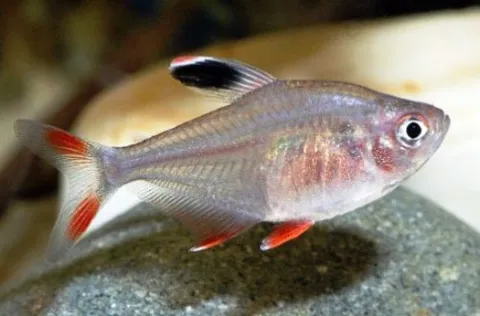
Megalamphodus bentosi
The Ornate Tetra, also known as the Common Ornate Tetra or by its scientific name Megalamphodus bentosi, belongs to the family Acestrorhamphidae. This species is a classic representative of the extensive group of…
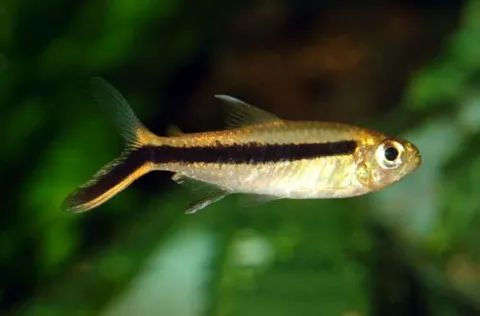
Thayeria boehlkei
The Crooked-Striped Thayeria, widely known as the Penguin Tetra, with the scientific name Thayeria boehlkei, is a member of the Acestrorhamphidae family. These fish are characterized by their cheerful, energetic, and…
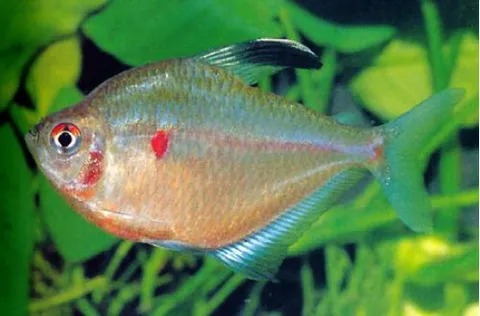
Megalamphodus erythrostigma
The Red-Spotted Tetra, also known as Rubrostigma or Ornate Red-Spotted Tetra (scientific name Megalamphodus erythrostigma), belongs to the Acestrorhamphidae family. This active, peaceful fish, distinguished by its…
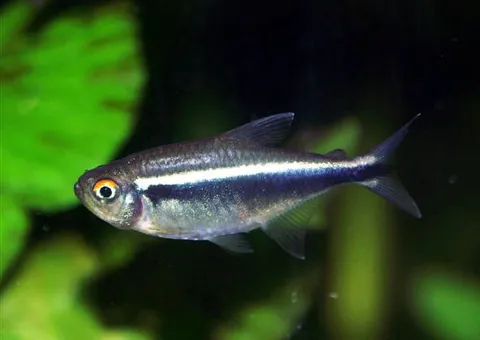
Hyphessobrycon herbertaxelrodi
Hyphessobrycon herbertaxelrodi, also known as the Black Neon Tetra, belongs to the family Acestrorhamphidae. This fish is characterized by its energetic nature and attractive appearance, especially due to the bright,…