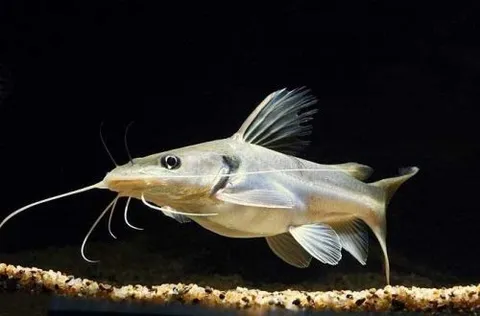
Given the schooling lifestyle and impressive size of this fish, an aquarium of at least 850 L will be required for its keeping. It is noteworthy that the catfish reaches its maximum size in just two years. It is very important to provide sufficient free swimming space. The aquarium decor should ideally resemble its natural habitat as much as possible, for example, using mangroves, driftwood, and intertwined roots. For plants, species with a strong root system capable of growing well in brackish water are preferred. To prevent possible injury to the catfish's sensitive barbels, coarse sand or fine smooth gravel is recommended as a substrate. This fish requires a high oxygen content, so it is necessary to ensure an enhanced aeration system and use combined filters capable of diffusing air. Care should also be taken to create water movement in the aquarium. If the catfish constantly stays near the filters, where water is discharged, this may indicate insufficient current. As a rule, productive filters and an effective aeration system successfully solve this problem, creating the necessary water flows. Water should be hard and brackish. It is recommended to change about 30% of the total volume weekly. Marine salt is used to prepare brackish water. Adult individuals require a salt concentration of 10 grams per 1 liter of water, while for juveniles, 2 grams per 1 liter is sufficient. It is important to remember that when maintaining the aquarium, gloves must be worn, as there is a risk of accidental injury from the venomous spine. In people prone to allergic reactions, such injuries can lead to serious complications.