Temperature23 – 28 °C
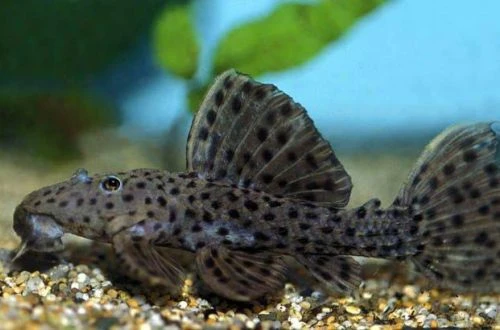
Pseudacanthicus spinosus, known in the aquarium hobby as the Spiny Pleco or Ornate Pleco, is a species of catfish from the family Loricariidae, also referred to as Armored Catfish. This inhabitant of South American waters is widely distributed throughout the vast Amazon River basin.
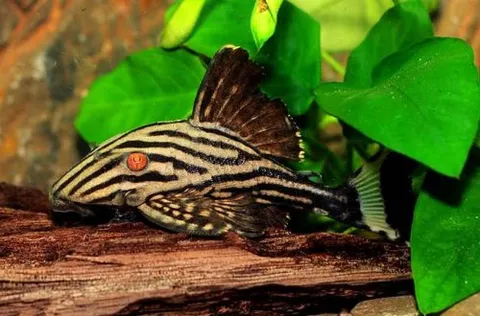
In natural conditions, adult specimens of this species reach about 26 cm in length. The maximum known for the species is about 40 cm, but in an aquarium the fish grows slowly and usually stops at 25–30 cm. The catfish's body is somewhat flattened and adorned with large, fan-shaped fins. The body surface is rigid, covered with roughness and rows of sharp spines, which is reflected in the species' name. It is also worth noting that the first rays of the fins are significantly thickened, forming sharp spines, which are also studded with small prickles. One of the characteristic features of its appearance is the presence of rounded dark spots evenly distributed over the entire body. The coloration also varies, ranging from yellowish to almost black tones, depending on the specific geographical origin. The catfish's mouth, located on the underside of the head, is a sucker. Its few but very strong teeth are perfectly adapted for cracking the shells of river mollusks.
The species is endemic to Brazil and inhabits the Amazon River basin, including the Rio do Pará region. In nature, the fish live in rivers with clear water and slow currents. As natural shelters, they prefer areas with snags and rocky bottoms, where they spend daylight hours, showing activity mainly during the night.
It should be noted that the behavior pattern of these catfish is quite complex. The Spiny Pleco exhibits pronounced territorial instincts. If two adult individuals are not provided with enough space, conflicts and mutual aggression are inevitable. Similar difficulties will arise when cohabiting with other territorial fish species. For comfortable keeping of a single catfish, it is recommended to provide it with a minimum aquarium bottom area of 0.6 m². Provided this requirement is met, hostile manifestations are generally not observed. This catfish is peaceful towards fish of comparable size that inhabit the upper or middle water layers.
For keeping a single adult Ornate Pleco, an aquarium of 250–300 liters will be optimal, provided its bottom area reaches the aforementioned 0.6 square meters (for example, 120×50 cm). It is desirable to include various appropriately sized shelters in the decor — these can be large snags, rock formations, boulders, or artificial caves. The fish show the highest activity under subdued lighting, especially after the main lights are turned off. If light intensity is not critical for other aquarium inhabitants and plants, you can initially set up dim lighting or create shaded areas using floating plants. Acclimated individuals can successfully adapt to a fairly wide range of water parameters, especially pH and dGH. However, slightly acidic or neutral water conditions of medium hardness are considered most comfortable. Long-term and successful keeping largely depends on the aquarist's ability to maintain a stable habitat that meets the needs of this species. Regular aquarium maintenance activities, as well as the uninterrupted operation of all equipment, and especially the filtration system, are crucial for achieving this goal.
In natural conditions, the diet consists mainly of various invertebrates, such as mollusks, worms, aquatic insects, and their larvae. In the absence of familiar food, these catfish can feed on various plants, fallen fruits, and other plant organic matter. Overall, it is an omnivorous species, but its diet is dominated by protein components. In a home aquarium, sinking dry foods with high protein content should be offered, as well as live or frozen foods, such as bloodworms, pieces of mussels, and shrimp. As additional components, vegetable fragments such as cucumber, zucchini, or eggplant can be used.
Breeding in aquarium conditions is difficult and requires the creation of specific conditions. Spawning occurs in prepared enclosed shelters, which the male actively guards. Fry grow slowly and require quality nutrition and stable water parameters for successful development. Due to the territorial behavior of the parents, the breeding tank must provide a sufficient number of hiding places.
This species is characterized by high sensitivity to water quality, particularly to the accumulation of nitrogenous compounds. If keeping conditions are violated, bacterial infections of the skin and fins are possible. Prevention includes regular water changes, powerful filtration, and maintaining substrate cleanliness. Due to the presence of sharp spines on the fish's body, caution should be exercised during transportation and transfer to avoid injury.
When purchasing, choose active individuals with clean fins and no visible body damage. It is important to ensure there is no sunken belly, which may indicate emaciation or internal parasitic diseases. In the store, the fish often behave secretively, so it is worth asking the seller to gently lift decorations to inspect the catfish. The territorial nature of the species should be considered, and multiple individuals should not be acquired for keeping in a limited volume.
The essentials: size, tank volume, water parameters and care
An adult reaches 26 cm in length. Plan the tank around the maximum size: the fish quickly outgrows a cramped setup.
The recommended volume is 250 L. A smaller tank speeds up nitrate build-up and raises stress levels.
Temperature 23–28 °C, pH 5.8–7.5, hardness 2–18 dGH. Stability matters more than exact values: sudden swings are harder on the fish than a small deviation from the ideal.
Around 12 years when kept properly. Lifespan depends directly on tank volume, water quality and a varied diet.
Temperament: territorial (often aggressive). Keep this in mind when choosing tank mates.
Recommended setup: solitary. Ignoring this is a common cause of stress and disease.
Diet type: sinking (meat / protein). Feed small portions that are finished within a couple of minutes — overfeeding does more harm than underfeeding.
The scientific name of the species is Pseudacanthicus spinosus, family Armored Catfishes (Loricariidae). It also appears in the literature as: Hypostomus spinosus.
The water suits 197 of 208 plants in the catalogue — the easiest ones are shown first.
Afzelius's AnubiasAnacharisAnubiasBrazilian PennywortDwarf CloverDwarf CloverDwarf HygrophilaDwarf SagittariaDwarf ValGuppy GrassHornwortJava FernJava MossMoneywortMud SwordNair's LagenandraNarrow Leaf AnacharisNarrow-leaf CloverStringy MossSüsswassertangTaiwan MossTape GrassTemple PlantUssuri Watermilfoil
Matched by family, categories and overlapping keeping conditions
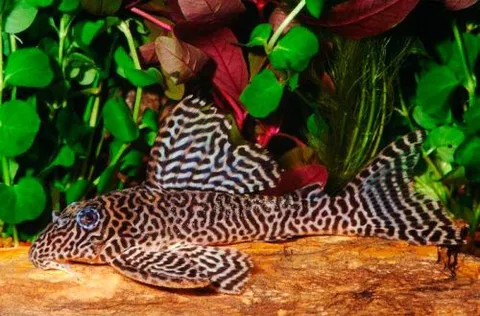
Hypancistrus sp. L066
The Royal Tiger Pleco, scientifically known as Hypancistrus sp. L066, belongs to the family Loricariidae, or Armored Catfishes. Its natural habitat is South America, where it is primarily found in the Brazilian state of…
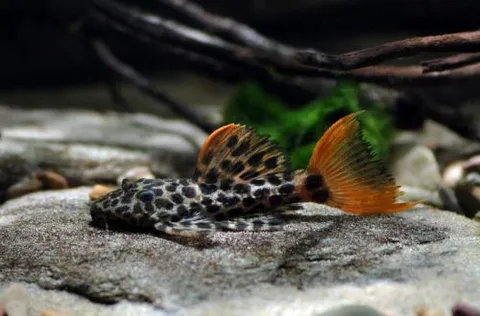
Pseudacanthicus cf. leopardus
The Leopard Pleco, known scientifically as Pseudacanthicus cf. Leopardus L114, LDA007, belongs to the armored catfish family (Loricariidae). Despite its exact classification not yet being determined, this has not…
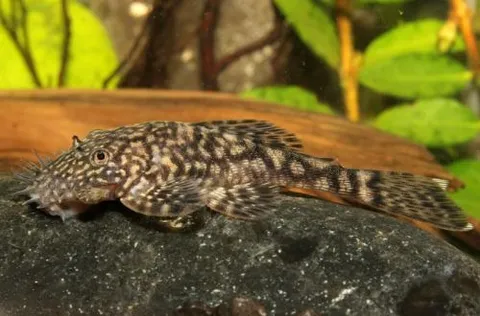
Ancistrus claro
Ancistrus claro, scientifically named Ancistrus claro, belongs to the family Loricariidae, also known as Armored Catfish. Its name originates from the Claro River, a small tributary of the Cuiabá River in the Brazilian…
Panaque nigrolineatus
The Royal Panaque, known in scientific literature as Panaque nigrolineatus, belongs to the family Loricariidae, which includes armored catfish. This large fish is distinguished by its beautiful appearance and…