Temperature20 – 28 °C
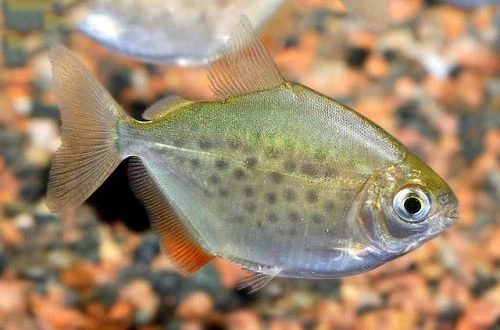
The Spotted Metynnis, scientifically known as Metynnis maculatus, is a member of the Serrasalmidae family. This fish bears a resemblance to piranhas, its close relatives, but is distinguished by a more peaceful disposition and less demanding care requirements. Nevertheless, it is not recommended for beginner aquarists, especially those who plan to care for the aquarium independently.
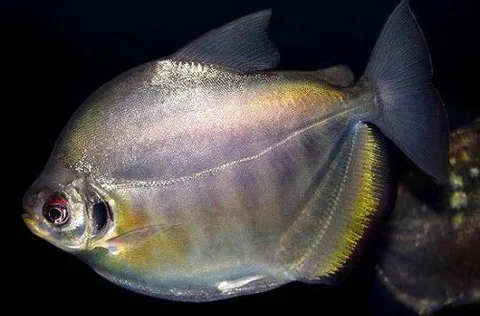
Adult specimens of this fish reach a length of about 15 cm. Their body is characterized by a large, disc-shaped form, strongly compressed laterally. The coloration is predominantly silvery, adorned with numerous rounded spots. During spawning, males acquire reddish hues on the lower part of their belly. Among other distinguishing features are the elongated first rays of the anal fin, resembling a petal, and a prominent black spot behind the gill cover, standing out against the general pigmentation.
Its natural habitat is the waters of South America, specifically the Guaporé River basin, which is one of the tributaries of the upper Amazon. The species' distribution covers territories from Bolivia to the western regions of Brazil, including the border areas of these countries. The Spotted Metynnis is found throughout the entire course of the river.
These fish prefer to live in a school or a small group, consisting of at least 6 individuals. When kept alone, they can become excessively aggressive and nervous. They are compatible with fish of comparable size from among South American cichlids, catfish, characins, and also cyprinids. Small fish species are not recommended to be kept with them, as they will inevitably be perceived as food.
For a school of 6–8 individuals, the optimal aquarium volume starts from 400 liters. When setting up the tank, it is important to provide ample open swimming space, complemented by shelters. Branched snags, imitating tree roots, are ideal. The substrate can be stony, with the inclusion of large boulders. Live aquatic plants are not recommended, as they will quickly be eaten. If there is a desire to add "greenery," artificial plants will be a good alternative. The Spotted Metynnis has high demands regarding its habitat conditions. It requires very clean, well-aerated flowing water. It is advisable to use a powerful internal filter system that not only cleans the water but also creates the necessary current for these fish. In some cases, additional aerator diffusers may be required. In addition to equipment, regular execution of specific aquarium care procedures is of great, and sometimes key, importance: timely removal of organic waste (food remnants, excrement), weekly partial water changes (30–50% of the total volume) with fresh water, and other measures.
Being an omnivorous species, this fish feeds on almost any available food. Its diet includes small fish, insects, worms, as well as algae, aquatic plants, and even fallen fruits and seeds. In a home aquarium, it is important to provide a varied diet, including both live and frozen foods (such as earthworms, shrimp meat, mussels), and plant supplements (for example, blanched pieces of lettuce, peas, zucchini, fruits). There are also specialized commercial foods developed to meet all the dietary needs of such fish.
As of the preparation of this article, the authors have not been able to find confirmed information about the successful breeding of this species in artificial aquarium conditions.
This fish is distinguished by its unpretentiousness and hardiness. Health problems usually arise due to injuries, inadequate nutrition, or unsuitable water composition. When signs of illness appear, such as lethargy, changes in body shape, or loss of appetite, it is often sufficient to normalize the keeping conditions for the fish's body to cope with the problem on its own. However, in some cases, medication may be required.
When purchasing, choose active individuals that show interest in food and swim in the water column. Avoid fish with signs of fin damage, film on scales, or an unnaturally swollen belly. It is important to consider that in stores, these fish are often kept in conditions that do not meet their needs, so carefully assess the overall health of the entire group in the aquarium. Since the species is schooling, it is recommended to acquire a group of six or more individuals at once to reduce stress levels and prevent aggressive behavior.
The essentials: size, tank volume, water parameters and care
An adult reaches 12–18 cm in length. Plan the tank around the maximum size: the fish quickly outgrows a cramped setup.
The recommended volume is 400 L. A smaller tank speeds up nitrate build-up and raises stress levels.
Temperature 20–28 °C, pH 5–7.5, hardness 1–15 dGH. Stability matters more than exact values: sudden swings are harder on the fish than a small deviation from the ideal.
Around 10 years when kept properly. Lifespan depends directly on tank volume, water quality and a varied diet.
Temperament: semi-peaceful (dangerous to smaller ones). Not a predatory species, but small fish that fit in its mouth will eventually be eaten.
Recommended setup: medium group (6–8 individuals). Ignoring this is a common cause of stress and disease.
Diet type: mixed diet (meat + plant-based). Feed small portions that are finished within a couple of minutes — overfeeding does more harm than underfeeding.
The scientific name of the species is Metynnis maculatus, family Piranhas (Serrasalmidae). It also appears in the literature as: Myletes maculatus.
The water suits 198 of 208 plants in the catalogue — the easiest ones are shown first.
Afzelius's AnubiasAnacharisAnubiasBrazilian PennywortDwarf CloverDwarf CloverDwarf HygrophilaDwarf SagittariaDwarf ValGuppy GrassHornwortJava FernJava MossMoneywortMud SwordNair's LagenandraNarrow Leaf AnacharisNarrow-leaf CloverStringy MossSüsswassertangTaiwan MossTape GrassTemple PlantUssuri Watermilfoil
Matched by family, categories and overlapping keeping conditions
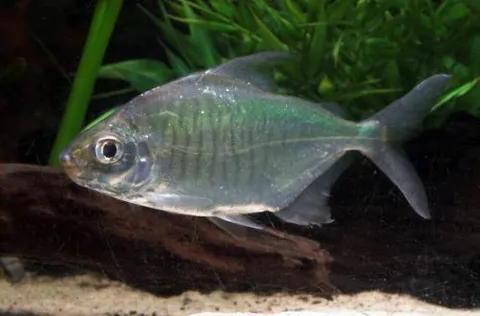
Acnodon normani
Acnodon normani, widely known as Norman's Acnodon or Sheep Pacu, is a member of the family Serrasalmidae. This fish received its scientific name in honor of John Roxborough Norman (1898–1944), who made a significant…
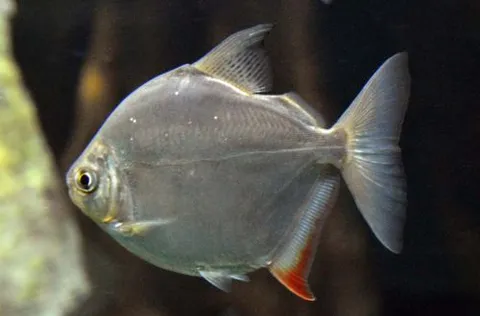
Metynnis hypsauchen
The Common Metynnis, also known by its scientific name Metynnis hypsauchen, belongs to the family Serrasalmidae, which also includes piranhas. However, unlike its formidable relatives, this fish exhibits much more…
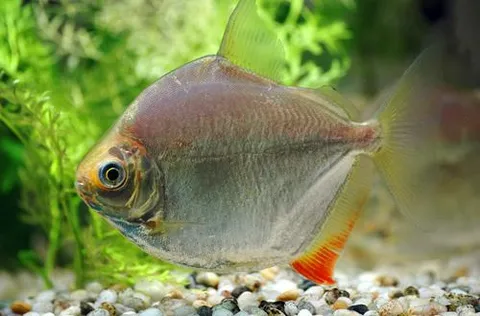
Metynnis argenteus
Metynnis argenteus, known as the Silver Dollar or Silver Metynnis, belongs to the family Serrasalmidae, also called the Piranha family. This fish got its name due to its widespread popularity among North American…
Mylossoma duriventre
The fish Mylossoma duriventre, known as Mylossoma duriventre, belongs to the family Serrasalmidae, or piranhas. Its natural range covers the tropical and subtropical regions of South America, found in the Amazon,…