Temperature22 – 25 °C
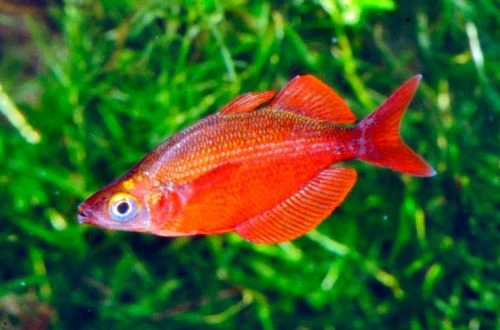
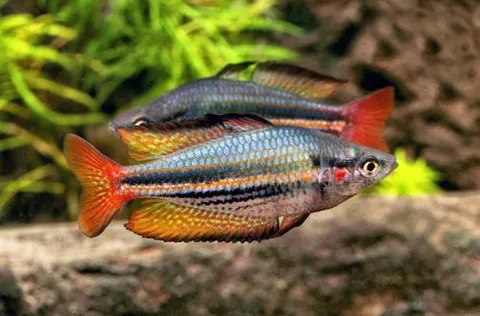
Glossolepis pseudoincisa, or Tami Rainbowfish, belongs to the family Melanotaeniidae. This species is endemic to the island of New Guinea. In the wild the species is known above all from a small oxbow lake near the Tami River, approximately 23 kilometers southeast of Jayapura in Indonesia.
Males of this species attract attention with their rich, bright red coloration, making them similar to male Red Irian Rainbowfish, although Tami Rainbowfish are slightly smaller (growing up to 8 cm). Females look even more graceful, reaching about 6 cm in length, and most often display greenish hues in their coloration. A distinctive feature is the orange-red zigzag lines running along the belly.
The species inhabits the Tami River basin in Papua province (Indonesia), as well as Lakes Emfote, Iwom, and Yaniruk. Natural biotopes are areas with stagnant or slow-moving water, rich in dense aquatic vegetation and snags. The fish prefer to stay in coastal zones where dense plant thickets provide shelter and spawning grounds.
These fish are distinguished by their peaceful and lively disposition. They coexist perfectly with other Rainbowfish and other species that are similar in size and temperament. They prefer to live in groups of their own kind.
For a group consisting of 6–8 individuals, an aquarium with a volume of 70 to 80 L will be optimal. The setup should include many aquatic plants, arranged in such a way as to create sufficient hiding places. At the same time, it is important to leave enough open spaces in the aquarium for free swimming. The rest of the decor can be chosen based on the aquarist's personal preferences or the needs of other inhabitants. Ideal keeping conditions include warm water with a pH level close to neutral and medium hardness (GH). An important aspect is gentle filtration, which will prevent excessive current. Regular aquarium care involves standard procedures. This includes weekly partial water changes with fresh water, combined with the removal of organic deposits, as well as routine equipment maintenance.
If the fish was bred in aquarium conditions, it is likely already accustomed to a variety of popular foods: both dry and freeze-dried, as well as frozen or live. If the specimen was caught in the wild, it is recommended to clarify aspects of its diet with the supplier.
Reproduction occurs by laying eggs on fine-leaved plants or substrate. To stimulate spawning, it is recommended to keep a group with a predominance of females and provide quality nutrition. The process is accompanied by active courtship displays by males, showcasing bright coloration and spread fins. The incubation period for the eggs is several days, after which fry emerge, which begin to feed on infusoria and specialized micro-foods.
The species has strong immunity when water parameters are maintained, but is sensitive to the accumulation of organic waste and sharp fluctuations in the chemical composition of the environment. Common problems include bacterial infections of the fins and skin, arising from poor filtration or overcrowding. Prevention includes regular water changes, maintaining stable levels of nitrogenous compounds, and providing a balanced diet to prevent stress.
When purchasing, choose active fish with clean fins and no visible damage to the scales. Healthy individuals should show interest in food and exhibit typical schooling behavior for the species. It is recommended to avoid specimens with signs of emaciation, sunken bellies, or unnatural spots on the body, which may indicate the presence of parasitic or infectious diseases, often found in newly imported fish.
The essentials: size, tank volume, water parameters and care
An adult reaches 6–8 cm in length. Plan the tank around the maximum size: the fish quickly outgrows a cramped setup.
The recommended volume is 70 L. A smaller tank speeds up nitrate build-up and raises stress levels.
Temperature 22–25 °C, pH 7–8, hardness 10–20 dGH. Stability matters more than exact values: sudden swings are harder on the fish than a small deviation from the ideal.
Around 8 years when kept properly. Lifespan depends directly on tank volume, water quality and a varied diet.
Temperament: peaceful (regular). Keep this in mind when choosing tank mates.
Recommended setup: medium group (6–8 individuals). Ignoring this is a common cause of stress and disease.
Diet type: any (universal). Feed small portions that are finished within a couple of minutes — overfeeding does more harm than underfeeding.
The scientific name of the species is Glossolepis pseudoincisa, family Rainbowfishes (Melanotaeniidae).
The water suits 113 of 208 plants in the catalogue — the easiest ones are shown first.
African Onion PlantAfzelius's AnubiasAmazon FrogbitAmazon SwordAnacharisAnubiasArrowhead CryptAsian WatermossDwarf CloverDwarf CloverDwarf HygrophilaDwarf SagittariaDwarf ValGuppy GrassHornwortJava MossMoneywortMud SwordNarrow Leaf AnacharisNarrow-leaf CloverStringy MossTaiwan MossTape GrassUssuri Watermilfoil
Matched by family, categories and overlapping keeping conditions
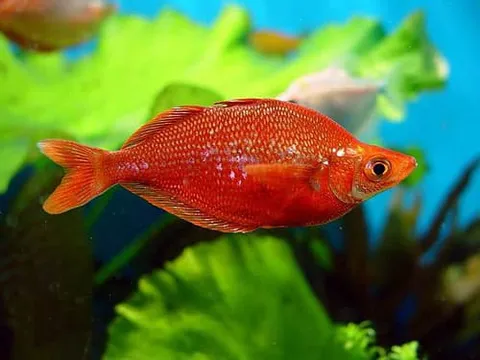
Glossolepis incisa
This fish is known by several common names. Most often, it is called the Red Rainbowfish or Glossolepis incisa. Its scientific name is Glossolepis incisa, and it belongs to the family Melanotaeniidae, or Rainbowfishes.
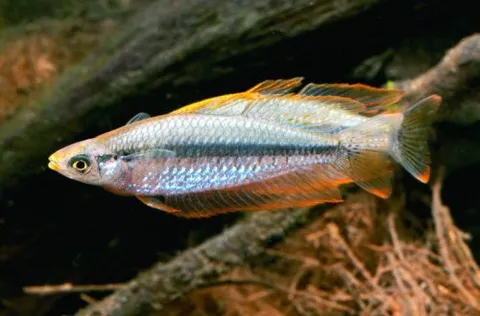
Melanotaenia gracilis
The Slender Rainbowfish, also known as Melanotaenia gracilis, belongs to the family Melanotaeniidae. This fish is an excellent choice for beginner aquarists due to its hardiness and ease of care, while its attractive…
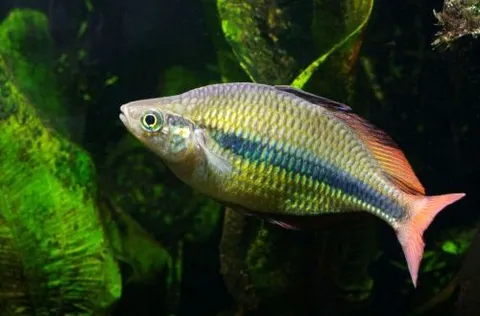
Melanotaenia herbertaxelrodi
Melanotaenia herbertaxelrodi, also known as Axelrod's Rainbowfish, belongs to the family Melanotaeniidae. This beautiful and undemanding fish is an excellent choice for a freshwater community aquarium, as it is easy to…
Melanotaenia australis
Melanotaenia australis, also known as the Western Rainbowfish, belongs to the family Melanotaeniidae. This fish is an excellent choice for beginner aquarists due to its unpretentiousness, ease of care and breeding, and…