Temperature24 – 30 °C
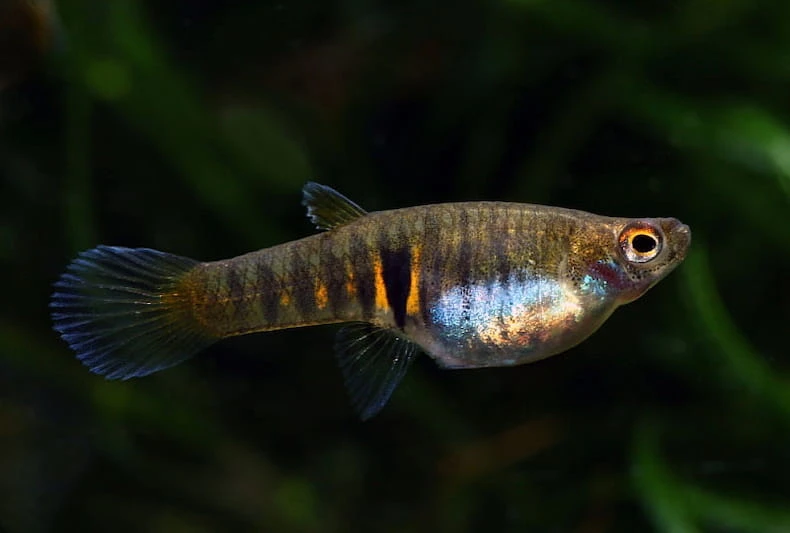
The scientific name Neoheterandria elegans refers to the family Poeciliidae, known as the Tiger Teddy or Neoheterandria. This miniature, shy, and graceful fish does not require complex care, making it an excellent choice for beginner aquarists. Despite this, it is not commonly found in general sale; sometimes it can be found in specialized pet stores or from breeders.
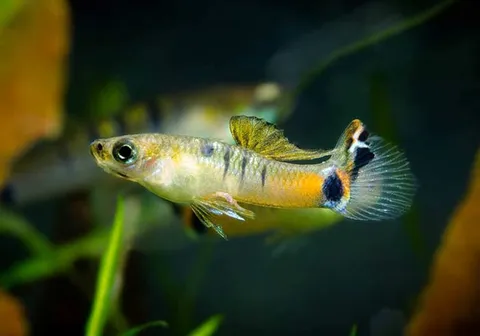
Fish of this species are among the smallest freshwater livebearers. Adults grow to only 2.5 cm in length. Males appear more slender and slightly smaller than females, which have a more rounded abdomen. The main body coloration is in shades of grey, with noticeable vertical dark stripes alternating with orange. It is these stripes that earned the Tiger Teddy its name.
The species is endemic to the Río Atrato drainage in north-western Colombia. The Atrato is an independent river flowing into the Gulf of Urabá, not a tributary of the Magdalena. The species is known from the departments of Chocó and Antioquia; the type locality is the Río Truandó, a tributary of the lower Atrato. The exact distribution range remains uncertain, as conducting scientific research in areas controlled by Colombian rebel groups poses a danger.
This peaceful species is preferably kept in a small group. Great care should be taken when selecting tank mates, as any larger fish can pose a serious threat to such tiny fish. Co-habitation with Dwarf Rasbora, Hengel's Rasbora, and other similarly sized species is acceptable.
Keeping these miniature fish does not require significant expense. An aquarium of just three liters will be sufficient for a single pair, but Neoheterandria will feel more comfortable in a tank of 10 liters or more. The aquarium decor should preferably include numerous floating and rooted plants, as well as shelters in the form of snags and tree roots. Any substrate suitable for the chosen plants can be used. Water parameters for GH and pH can vary within a fairly wide range, however, the filter should not create a strong current, as the Teddy prefers weak water flows. Other necessary equipment includes a heater and a lighting system. Additional aeration is installed at the discretion of the aquarist.
This unpretentious and omnivorous fish readily accepts various types of dry foods, such as flakes and granules. However, its natural diet in the wild includes various crustaceans, such as Artemia and Daphnia. Therefore, for optimal nutrition, it is recommended to combine live and dry foods in roughly equal proportions. Feeding should be done two to three times a day, providing an amount of food that the fish can consume within 5 minutes.
Unlike most livebearing species, Neoheterandria has a unique method of reproduction. Fry at different stages can develop simultaneously within the female's body. This happens because fertilization may have occurred at different times, so the appearance of offspring does not happen all at once but is spread over a week or even longer. Provided with adequate nutrition and proper water quality, spawning can occur year-round. The main difficulty is that fry, only 2–3 mm long, are unable to consume even micro-food; the only solution is feeding with infusoria. The fish grow very quickly and reach sexual maturity by the third month.
Health problems usually arise only under unfavorable conditions, such as polluted water or poor-quality food. In other cases, the risk of disease remains low.
When choosing a Tiger Teddy in a store, pay attention to the overall activity of the fish and the cleanliness of their skin. Healthy individuals should be active, without visible damage, growths, ulcers, or signs of emaciation. As the species is extremely small, it is important to ensure there are no fin or spinal deformities, which can be a result of inbreeding or poor keeping conditions. Adult fish should have a clear stripe pattern and vibrant coloration characteristic of the species. — Avoid purchasing fish from tanks where dead or visibly sick tank mates are present. — Check that the fish actively respond to feeding, as refusal to eat may indicate stress or hidden diseases. — Note that due to the miniature size of these fish, their transportation requires special care: use a sufficient amount of water to minimize the risk of overheating or a sharp deterioration in water quality in the bag.
The essentials: size, tank volume, water parameters and care
An adult reaches 2.5 cm in length. Plan the tank around the maximum size: the fish quickly outgrows a cramped setup.
The recommended volume is 10 L. A smaller tank speeds up nitrate build-up and raises stress levels.
Temperature 24–30 °C, pH 7–8, hardness 5–25 dGH. Stability matters more than exact values: sudden swings are harder on the fish than a small deviation from the ideal.
Around 3 years when kept properly. Lifespan depends directly on tank volume, water quality and a varied diet.
Temperament: peaceful (regular). Keep this in mind when choosing tank mates.
Recommended setup: schooling (usually from 5–6 individuals and more). Ignoring this is a common cause of stress and disease.
Diet type: small / appropriate size / pieces. Feed small portions that are finished within a couple of minutes — overfeeding does more harm than underfeeding.
The scientific name of the species is Neoheterandria elegans, family Poeciliidae.
The water suits 113 of 208 plants in the catalogue — the easiest ones are shown first.
African Onion PlantAfzelius's AnubiasAmazon FrogbitAmazon SwordAnacharisAnubiasArrowhead CryptDwarf CloverDwarf CloverDwarf HygrophilaDwarf SagittariaDwarf ValGuppy GrassHornwortJava MossMoneywortMud SwordNair's LagenandraNarrow Leaf AnacharisNarrow-leaf CloverStringy MossTaiwan MossTape GrassUssuri Watermilfoil
Matched by family, categories and overlapping keeping conditions
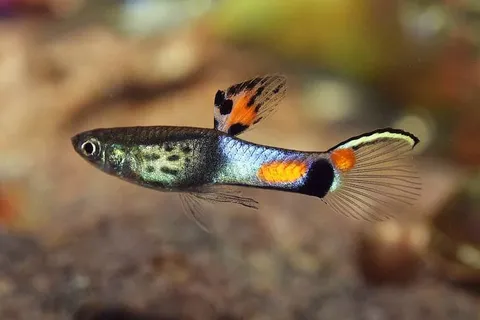
Poecilia wingei
Endler's Guppy, scientifically known as Poecilia wingei, belongs to the family Poeciliidae. This vibrant and colorful fish is easy to keep and breed, making it an excellent choice for beginners in the aquarium hobby.…
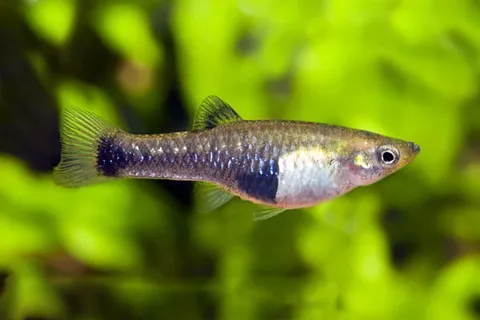
Limia melanogaster
Limia melanogaster, known as the Blackbelly Limia, belongs to the family Poeciliidae. These fish are characterized by their undemanding nature, successful breeding, and good compatibility with various tank mates. Such…
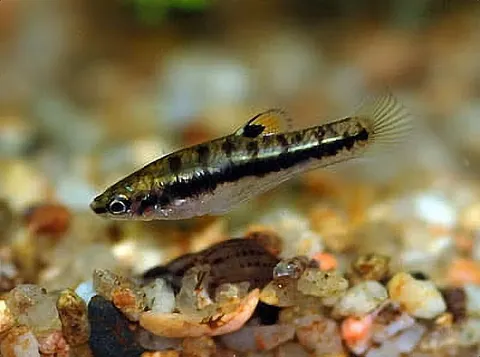
Heterandria formosa
Formosa, scientifically known as Heterandria formosa, belongs to the family Poeciliidae. This fish is striking for its miniature size and grace, reaching a modest 3 cm in length. In addition to its size, it is…
Micropoecilia branneri
The scientific name Micropoecilia branneri belongs to the species Branner's Micropoecilia, which is part of the Poeciliidae family. This fish originates from South America, where it can be found widely in various…