Temperature18 – 24 °C
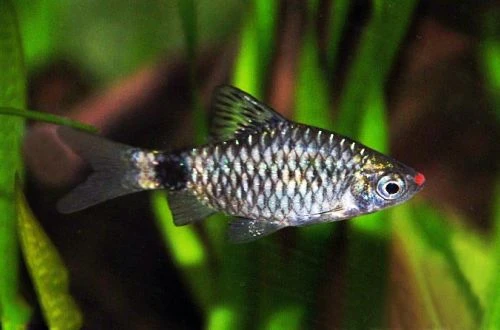
The Tulip Barb, scientifically named Pethia erythromycter, is a member of the Cyprinidae family. This fish first became available for sale in 2006. It is important to note that keeping it requires a certain level of experience from the aquarist, so it is not recommended for beginner hobbyists.
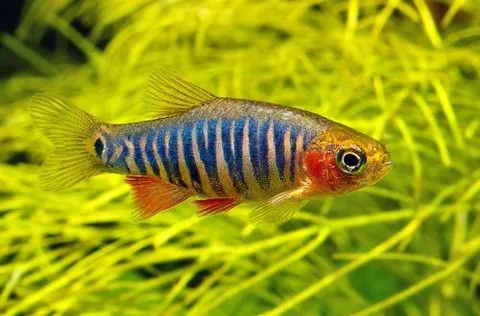
Adults of this species reach approximately 3 cm in length. Their coloration is silvery, complemented by a dark stripe at the base of the tail. A distinctive feature of males is the red pigmentation around the mouth, and during the breeding season, their body acquires a rich "steel" hue, which distinguishes them from females.
The natural habitat of this species is located in Southeast Asia, specifically in Northern Myanmar. Here, the fish is found in the upper basin of the Irrawaddy River and in the vicinity of Lake Indawgyi. These areas are characterized by clean flowing water, soft substrates where clay is mixed with fallen vegetation, and dense thickets of aquatic plants.
This fish can be described as conditionally peaceful. Despite its miniature size, it can create problems for slow-moving fish with long, flowing fins, as the Tulip Barb tends to nip at them. Therefore, for cohabitation, it is recommended to select active fish of a similar size. Within this species, relations between males are characterized by rather aggressive competition for the females' attention. The level of hostility can be reduced by providing a large aquarium volume, keeping a school of more than 20 individuals, or ensuring that there are at least 4 females per male.
Despite the modest size of the Tulip Barb, a small school of these fish requires an aquarium of at least 100 liters for comfortable existence. This requirement is due to their behavioral characteristics, which will be discussed further. When decorating the aquarium, it is recommended to use an abundance of aquatic plants, as well as various shelters such as driftwood, branches, or decorative elements (for example, sunken ships or castles). It is desirable to create subdued lighting. Comfortable keeping conditions require rather narrow ranges of hydrochemical parameters and temperature. In addition, the fish are extremely sensitive to water purity and tolerate even minimal pollution poorly. In addition to an effective filtration system, essential elements of aquarium care include weekly water changes of at least 30% of the volume with fresh water, systematic removal of organic waste (such as uneaten food and excrement), regular equipment maintenance, and constant monitoring and maintenance of stable pH, dGH, and oxidizability levels.
This species is unpretentious in its diet and will accept most popular aquarium fish foods that are appropriate in size. It is important to remember that the fish's coloration and the possibility of obtaining healthy offspring directly depend on the composition and quality of the food. Therefore, it is recommended to choose products from reputable and authoritative manufacturers.
Under favorable conditions, spawning can occur directly in the community tank. Females lay eggs in the water column, after which the males fertilize them. The incubation period lasts from 24 to 36 hours, and within a couple of days, the hatched fry begin to swim freely. In the first days, their diet should consist of microscopic food, such as infusoria; as they grow, Artemia nauplii or specialized powdered foods can form the basis of their diet. It is important to note that parental care is absent in this species; moreover, adults will readily feed on their offspring if given the opportunity. To protect the offspring from predation by other fish, it is recommended to prepare a separate tank with identical water conditions in advance — a spawning aquarium, where the eggs are then transferred after spawning is complete. Typically, such an aquarium is equipped with a simple air-driven sponge filter and a heater. A separate light source is usually not required, as ambient room light is often sufficient.
In a balanced aquarium ecosystem, closely matching the requirements of this species, diseases are extremely rare. Illnesses often arise due to deteriorating habitat quality, contact with already sick fish, or physical injuries.
When choosing a Tulip Barb, pay attention to the activity of the fish in the aquarium: healthy individuals are constantly moving and show curiosity. Avoid purchasing fish with damaged fins, film on the body, signs of emaciation, or an unnaturally bloated abdomen. In the store, it is important to assess the keeping conditions — the water should be clear, without a strong odor, and the stocking density should not be excessive. — choose individuals with clean scales and bright coloration characteristic of their species — ensure that the fish actively respond to food and do not hide in corners — prefer sellers who keep barbs in spacious aquariums with shelters, which reduces stress levels in the individuals Since this species is prone to intraspecific aggression, it is recommended to acquire a group of 10–20 individuals at once. This will allow the fish to adapt more quickly to new conditions and reduce the risk of injury during the establishment of hierarchy in the aquarium.
The essentials: size, tank volume, water parameters and care
An adult reaches 3–3.5 cm in length. Plan the tank around the maximum size: the fish quickly outgrows a cramped setup.
The recommended volume is 100 L. A smaller tank speeds up nitrate build-up and raises stress levels.
Temperature 18–24 °C, pH 7–7.5, hardness 1–12 dGH. Stability matters more than exact values: sudden swings are harder on the fish than a small deviation from the ideal.
Around 5 years when kept properly. Lifespan depends directly on tank volume, water quality and a varied diet.
Temperament: semi-peaceful (including aggression during spawning / intraspecific conflicts). Keep this in mind when choosing tank mates.
Recommended setup: large group (10+ individuals). Ignoring this is a common cause of stress and disease.
Diet type: small / appropriate size / pieces. Feed small portions that are finished within a couple of minutes — overfeeding does more harm than underfeeding.
The scientific name of the species is Pethia erythromycter, family Cyprinids (Cyprinidae). It also appears in the literature as: Puntius erythromycter.
The water suits 113 of 208 plants in the catalogue — the easiest ones are shown first.
African Onion PlantAfzelius's AnubiasAmazon FrogbitAmazon SwordAnacharisAnubiasArrowhead CryptAsian WatermossDwarf CloverDwarf CloverDwarf HygrophilaDwarf SagittariaDwarf ValGuppy GrassHornwortJava MossMoneywortMud SwordNarrow Leaf AnacharisNarrow-leaf CloverStringy MossTaiwan MossTape GrassUssuri Watermilfoil
Matched by family, categories and overlapping keeping conditions
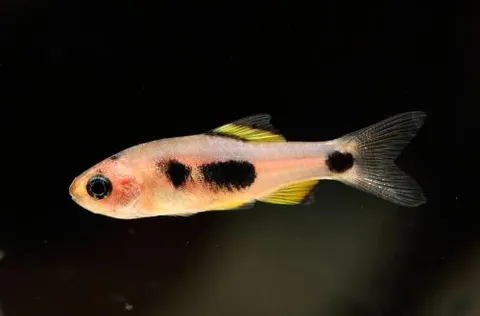
Enteromius hulstaerti
Enteromius hulstaerti, known as the Butterfly Barb or Moth Barb, belongs to the family Cyprinidae. This fish attracts attention with its beauty and does not cause much trouble in maintenance, but it is not often found…
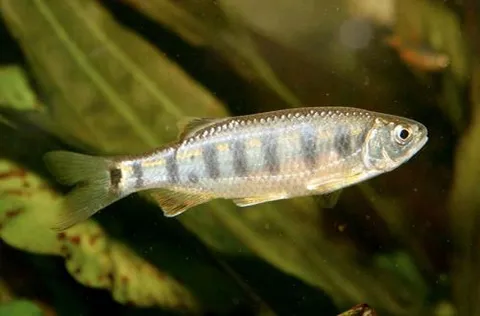
Opsarius dogarsinghi
The fish, known by the scientific name Opsarius dogarsinghi, or Dogarsingh's Baril, belongs to the Carp family (Cyprinidae). It received its name in honour of Sardar Dogar Singh, State Overseer of Manipur, India, who…
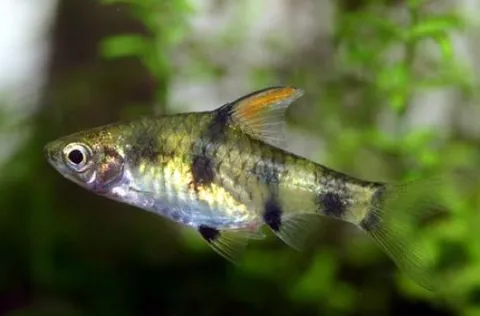
Pethia canius
Pethia canius, scientifically known as Pethia canius, belongs to the family Cyprinidae. The genus name Pethia is the Sinhalese collective name for small cyprinids, while the specific name “canius” appears to follow a…
Danio erythromicron
The Emerald Danio, known to the scientific community as Danio erythromicron, belongs to the family Cyprinidae. Previously, it was mistakenly called the Emerald Microrasbora or Microrasbora erythromicron. However,…