Temperature24 – 27 °C
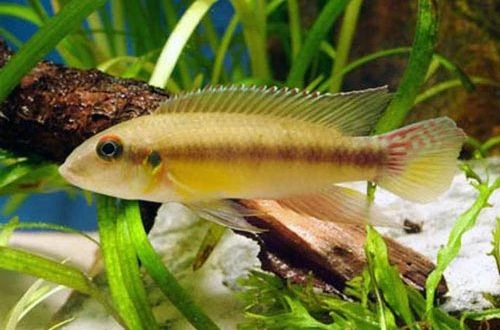
The cichlid with the scientific name Wallaceochromis humilis, also known as the Yellow-bellied Parrot Cichlid, Yellow-bellied Kribensis, or Yellow Kribensis, belongs to the family Cichlidae. It is a beautiful and vibrant fish, though it possesses a willful character. It can coexist peacefully with other species, but selecting suitable tankmates from its own kind requires special attention. Its keeping conditions are not difficult, even for beginners in aquaristics.
Adults of this fish can reach 12–13 cm in length. Their body is elongated and appears streamlined. The coloration of the upper body is a dark olive-green hue, which smoothly transitions to a lighter belly. Males differ from females by having more elongated and pointed dorsal and anal fins; dark vertical stripes are visible on their bodies, and their belly has a yellowish tone. Females are generally smaller and have more modest coloration; their main distinguishing feature is a pink belly.
The natural habitat of these fish is in West Africa, in the territories of modern Sierra Leone, Liberia, and Guinea. They inhabit small rivers and their tributaries. Since the region is characterized by a hilly landscape, the rivers here are abundant with rapids, but the current generally remains calm, and the water is saturated with dissolved oxygen.
These cichlids are calm towards other fish species. They get along well with many aquarium inhabitants capable of existing in similar conditions. However, given their relatively small size, it is advisable to avoid keeping them with large or aggressive fish. Relationships within the species are much more complex: Yellow-bellied Kribensis form pairs from a young age, and these unions can last for a long time. In a small aquarium (e.g., 110 L), a male and female will be extremely aggressive towards other members of their species, perceiving them as competitors for their territory. Moreover, if a male or female has been kept alone and has never formed a pair, introducing another Kribensis is highly undesirable, as the weaker individual will likely perish.
For a single pair of these fish, an aquarium of at least 110 L is recommended. For decor, it is preferable to use a substrate of sand or fine gravel, and to provide many shelters. These can include driftwood, various decorative elements mimicking grottoes, crevices, or caves, as well as simple ceramic pots laid on their side. The presence of live plants is not a mandatory condition. Lighting should be kept subdued. The operation of the filtration system and other equipment should not create a strong internal current, as the Yellow Kribensis tolerates fast water flow poorly. In addition, these fish are sensitive to the level of dissolved oxygen, so additional aeration of the aquarium will be very beneficial.
The diet of these fish can include all types of dry foods. It is important that the food composition provides both proteins and plant-based components. For dietary variety, live and frozen foods are suitable, as well as finely chopped pieces of vegetables such as peeled spinach or peas, and other similar additives.
In general, the breeding process for these fish does not present significant difficulties, but the main challenge is selecting a suitable pair. There are two main approaches. The first option is to acquire about a dozen young fish, among which at least one pair will almost certainly form as they mature, though the remaining individuals will subsequently need to be rehomed. The second approach involves purchasing an already established pair. The stimulus for the start of the spawning period is achieved by setting the following water parameters: pH in the range of 5.5–6.5, hardness dGH 5–10, and temperature 23–26°C. After a short courtship period, the pair chooses a place for spawning, usually a cave or another suitable shelter. The female secludes herself there for several days, laying eggs and guarding the clutch until the fry emerge. During this time, the male remains outside, providing external protection. Upon leaving the shelter, the female joins the offspring, who remain with their parents for several more weeks. Throughout this period, the adults continue to protect the fry. In case of danger, the fry can find refuge in the mouth of one parent, while the other fends off the potential threat.
The main cause of most diseases in these fish is unsuitable keeping conditions and poor-quality nutrition. If initial symptoms are observed, it is first necessary to check water parameters and the concentration of dangerous substances such as ammonia, nitrites, and nitrates. If the indicators deviate from the norm, they should be brought back into order, and only then should treatment begin.
When selecting individuals, attention should be paid to the fish's activity and the cleanliness of their skin. Healthy specimens should be curious, show no visible injuries, ulcers, or signs of emaciation. Avoid fish with sunken bellies or unnaturally bloated abdomens, as well as those that constantly hide in the corner of the aquarium and appear apathetic. In retail outlets, the species is often represented by young individuals, in whom sexual differences may be poorly expressed. Since forming a harmonious pair in this species is difficult, it is recommended to acquire a group of six or more young fish for natural partner selection. Buying a single pair at random carries the risk of incompatibility, which can lead to aggression and the death of the weaker partner. If you are forced to choose a pair from a general aquarium, prioritize the largest male and the brightest female.
The essentials: size, tank volume, water parameters and care
An adult reaches 13 cm in length. Plan the tank around the maximum size: the fish quickly outgrows a cramped setup.
The recommended volume is 110 L. A smaller tank speeds up nitrate build-up and raises stress levels.
Temperature 24–27 °C, pH 5.5–8, hardness 5–12 dGH. Stability matters more than exact values: sudden swings are harder on the fish than a small deviation from the ideal.
Around 5 years when kept properly. Lifespan depends directly on tank volume, water quality and a varied diet.
Temperament: semi-peaceful (including aggression during spawning / intraspecific conflicts). Keep this in mind when choosing tank mates.
Recommended setup: pair (male/female). Ignoring this is a common cause of stress and disease.
Diet type: any (universal). Feed small portions that are finished within a couple of minutes — overfeeding does more harm than underfeeding.
The scientific name of the species is Wallaceochromis humilis, family Cichlids (Cichlidae). It also appears in the literature as: Pelmatochromis humilis, Wallaceochromis humilis.
The water suits 197 of 208 plants in the catalogue — the easiest ones are shown first.
Afzelius's AnubiasAnacharisAnubiasBrazilian PennywortDwarf CloverDwarf CloverDwarf HygrophilaDwarf SagittariaDwarf ValGuppy GrassHornwortJava FernJava MossMoneywortMud SwordNair's LagenandraNarrow Leaf AnacharisNarrow-leaf CloverStringy MossSüsswassertangTaiwan MossTape GrassTemple PlantUssuri Watermilfoil
Matched by family, categories and overlapping keeping conditions
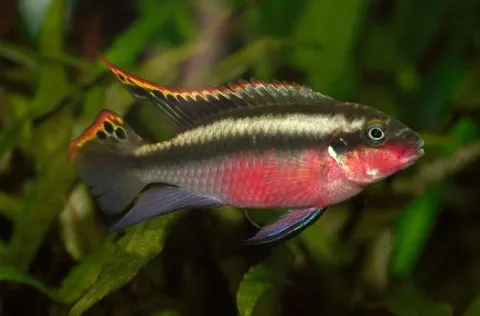
Pelvicachromis pulcher
Pelvicachromis pulcher, also known as Kribensis, belongs to the Cichlidae family, and its scientific name is Pelvicachromis pulcher. Due to its vibrant coloration, it is often called the Aquarium Parrot Cichlid. Among…
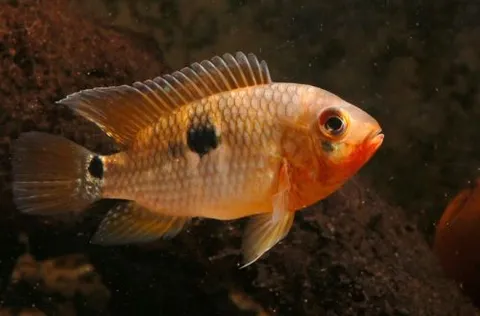
Aequidens tetramerus
Aequidens tetramerus, known scientifically as Aequidens tetramerus, belongs to the famous family Cichlidae. This is a rather large fish, attracting attention with its bright coloration. Many aquarists appreciate it for…
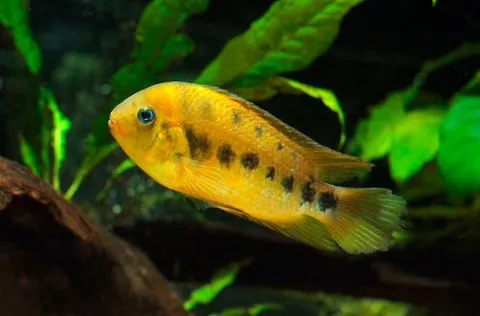
Amatitlania nanolutea
Amatitlania nanolutea, also known as the Yellow Cryptoheros or Yellow Cichlid, belongs to the family Cichlidae. Previously, the species was classified as Cryptoheros nanoluteus. This fish is distinguished by its vibrant…
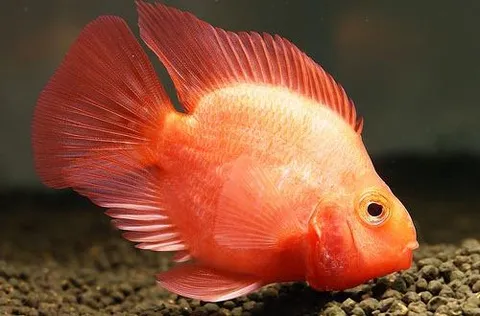
Amphilophus citrinellus × Vieja melanurus
The Blood Parrot Cichlid, known in English-speaking circles as the "Blood Parrot," is an artificially bred form resulting from the cross-breeding of several Central American cichlid species. Its unusual appearance is…