Temperature21 – 28 °C
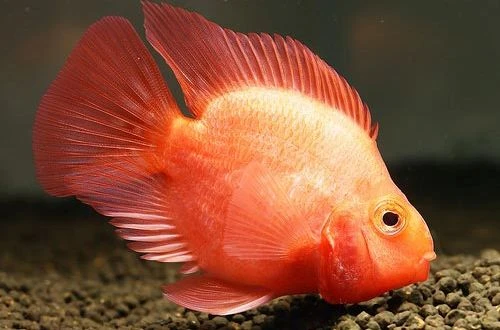
The Blood Parrot Cichlid, known in English-speaking circles as the "Blood Parrot," is an artificially bred form resulting from the cross-breeding of several Central American cichlid species. Its unusual appearance is characterized by a powerful head and a small mouth, which indeed resembles a parrot's beak in shape.
The Blood Parrot Cichlid's body is distinguished by its rounded, massive shape, with a prominent head and a small mouth. Its structure is similar to a parrot's beak. Sometimes, in some individuals, the mouth may not close completely or may have difficulty doing so, which is one of the costs of selective breeding. Other such peculiarities include a certain clumsiness, as the massive body hinders graceful movements; however, this can also be perceived as an additional attractive feature of the species. The coloration of these fish typically ranges from yellow and orange to red, but other shades such as purple, gray, or pink are sometimes seen. The broad fins are usually colored to match the body.
This species does not occur in natural conditions; it was created artificially in 1986 through the sequential cross-breeding of various Central American cichlids.
These fish are distinguished by their peaceful and sociable nature, sometimes showing a certain shyness. They prefer to be in the company of their own kind, forming small groups. Coexistence with other peaceful fish of similar size is possible. It is important to avoid introducing overly active or aggressive species into the aquarium.
These fish are not demanding regarding keeping conditions and can adapt to a wide range of water parameters, however, some peculiarities of their structure dictate adherence to a few simple rules. Strong water movement should be avoided in the aquarium, allowing only a very weak current. Since the Blood Parrot Cichlid produces a lot of waste, a high-performance filtration system is mandatory; weekly gravel cleaning with a siphon, combined with a roughly 20% water change, is also necessary. The lighting system should be set to moderate or subdued light. Other recommended equipment includes a heater and an aeration system. In terms of aquarium decor, it is preferable to combine open areas with hiding places created from driftwood and dense plant thickets. Any substrate can be used, preferably dark, to create a contrast with the fish's coloration and emphasize its beauty.
The Blood Parrot Cichlid's diet can include all types of dry commercial foods and products with a high protein content. The presence of protein supplements in the diet helps to enhance coloration and is considered desirable rather than strictly mandatory. It is recommended to choose specialized foods developed with the Blood Parrot Cichlid's specific needs in mind, which will save the aquarist the hassle of additional food preparation. It is important to remember that the fish may not eat all the food, so any leftovers should be removed to prevent water pollution.
Determining the sex of these fish is quite difficult. If a male/female pair forms, spawning occurs frequently, but the eggs usually remain infertile. Breeding Blood Parrot Cichlids in home aquariums is an extremely rare phenomenon, requiring deep professional knowledge in the selective breeding of this species.
The Blood Parrot Cichlid is susceptible to many diseases typical of other tropical fish. Health problems usually arise from deteriorating keeping conditions, water pollution by waste products, or contact with infected individuals. Sometimes, swim bladder disorders are observed, causing the fish to swim head-down; this can be related to digestive upset due to poor quality or unbalanced food. Treatment includes changing the diet, switching to specialized foods for the Blood Parrot Cichlid.
When choosing a Blood Parrot Cichlid, preference should be given to individuals with natural coloration, as artificially colored or "tattooed" specimens often have weakened immune systems and are prone to diseases due to exposure to chemicals. A healthy fish should be active, swim confidently, and have clean scales without damage, ulcers, or unnatural film. Avoid buying individuals with signs of lethargy, dull color, bloated abdomen, or deformed fins, as this may indicate chronic diseases or the effects of stress. It is also recommended to ask the seller about the fish's age and keeping conditions to ensure there will be no problems with adaptation to new water parameters.
The essentials: size, tank volume, water parameters and care
An adult reaches 20 cm in length. Plan the tank around the maximum size: the fish quickly outgrows a cramped setup.
The recommended volume is 120 L. A smaller tank speeds up nitrate build-up and raises stress levels.
Temperature 21–28 °C, pH 6.5–8, hardness 2–25 dGH. Stability matters more than exact values: sudden swings are harder on the fish than a small deviation from the ideal.
Around 10 years when kept properly. Lifespan depends directly on tank volume, water quality and a varied diet.
Temperament: semi-peaceful (including aggression during spawning / intraspecific conflicts). Keep this in mind when choosing tank mates.
Recommended setup: mixed (solitary / pair / group). Ignoring this is a common cause of stress and disease.
Diet type: any (universal). Feed small portions that are finished within a couple of minutes — overfeeding does more harm than underfeeding.
The scientific name of the species is Amphilophus citrinellus × Vieja melanurus, family Cichlids (Cichlidae).
The water suits 197 of 208 plants in the catalogue — the easiest ones are shown first.
Afzelius's AnubiasAnacharisAnubiasBrazilian PennywortDwarf CloverDwarf CloverDwarf HygrophilaDwarf SagittariaDwarf ValGuppy GrassHornwortJava FernJava MossMoneywortMud SwordNair's LagenandraNarrow Leaf AnacharisNarrow-leaf CloverStringy MossSüsswassertangTaiwan MossTape GrassTemple PlantUssuri Watermilfoil
Matched by family, categories and overlapping keeping conditions
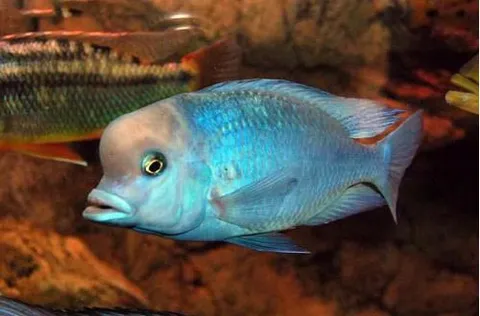
Cyrtocara moorii
Cyrtocara moorii, also known as the Blue Dolphin Cichlid, belongs to the Cichlidae family. The fish gets its name from its distinctive head shape: the presence of a nuchal hump and an elongated mouth give it a…
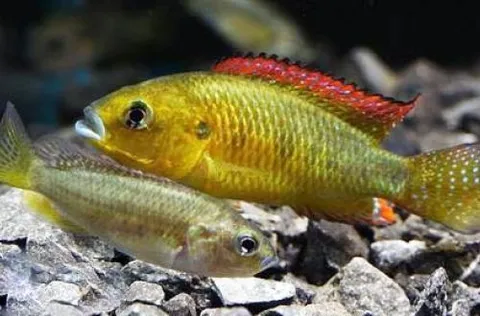
Pseudocrenilabrus philander
Haplochromis philander, known to scientists as Pseudocrenilabrus philander, belongs to the Cichlidae family. This fish is outwardly attractive but has a wayward character; males show belligerence towards each other and…
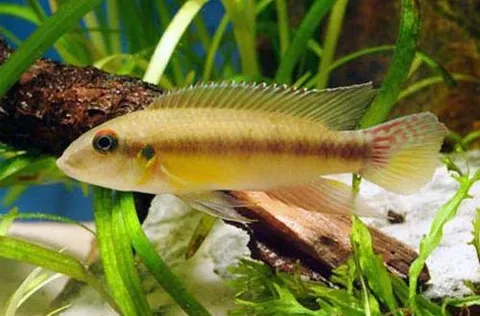
Wallaceochromis humilis
The cichlid with the scientific name Wallaceochromis humilis, also known as the Yellow-bellied Parrot Cichlid, Yellow-bellied Kribensis, or Yellow Kribensis, belongs to the family Cichlidae. It is a beautiful and…
Rubricatochromis lifalili
The Red Chromide, or "Red Jewel Cichlid," scientifically known as Rubricatochromis lifalili, is a member of the Cichlidae family. This is a beautiful and vibrant fish, whose keeping and breeding do not present…