Temperature5 – 25 °C
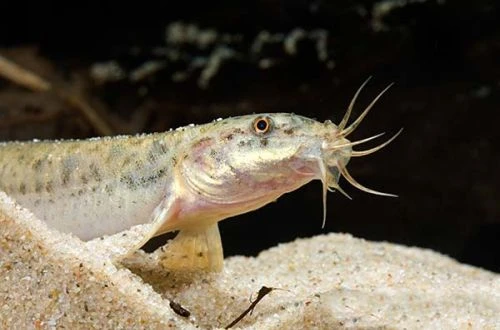
Misgurnus anguillicaudatus, known as the Amur Weather Loach, belongs to the family Cobitidae. This fish is most often known to anglers, as it is actively used as bait, although the species is generally quite common. It is less common in aquaristics. This species is undemanding to keep and is excellent for aquariums with coldwater (non-tropical) inhabitants.
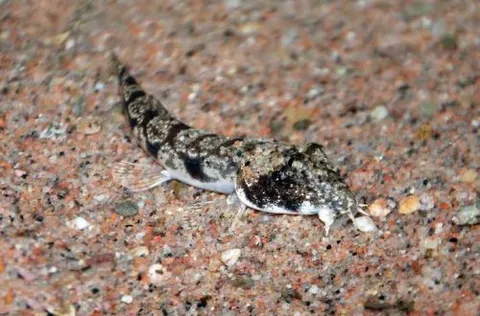
Adults can reach a body length of 28 cm. The fish has an elongated, snake-like body. The main coloration is sandy, adorned with dark speckles arranged in rows. Near the mouth on the head are four pairs of sensitive barbels. The fins are short, and the tail is translucent.
Initially, the habitats of the Amur Weather Loach included regions of the Far East, such as Sakhalin, Eastern Siberia, as well as North and South Korea, Japan, China, and Northern Vietnam. Today, due to artificial propagation, this species has colonized new territories and is found in Australia, North America (Canada and the USA). It prefers to inhabit shallow areas of rivers and streams with slow currents, lakes, swamps, and flooded rice fields. Most often, it can be found in bodies of water with dense riparian vegetation and soft sandy bottom sediments.
This species coexists peacefully with other fish of comparable size that also prefer cool water. Various selective forms of Goldfish can be excellent tankmates for them. The loach is peaceful both with conspecifics and other species, but it may prey on eggs, fry and very small fishes — choose larger tankmates.
For a group of 3–4 Amur Weather Loaches, an aquarium of at least 200 liters is recommended. The width of the tank is more important than its depth. A soft sandy substrate is an essential element of the setup; the Amur Weather Loach will occasionally burrow into it, leaving only its head exposed. Rocky or gravel substrates should be avoided. Aquatic plants, driftwood, and other natural or artificial elements that can provide hiding places can be used as decor. Live plants, due to their tendency for active digging, should preferably be planted in separate pots. This species is characterized by its unpretentiousness and hardiness, its ability to adapt to a wide range of conditions, which makes its keeping quite simple. It is important to remember that this is a coldwater fish, so prolonged keeping in warm water should be avoided. An unheated aquarium with soft lighting is perfectly suitable for the Amur Weather Loach.
In their natural environment, Amur Weather Loaches feed on various small invertebrates, such as insect larvae, small crustaceans, and worms. In aquarium conditions, it is preferable to offer them live or frozen foods, such as bloodworms, brine shrimp, or small earthworms. As a supplement or alternative, dry sinking foods, such as flakes or granules with a high protein content, can be used.
Reproduction of the Amur Weather Loach is rarely observed in artificial conditions. To stimulate spawning for commercial purposes, hormonal preparations are administered.
The Amur Weather Loach is highly resilient, but when kept in suboptimal conditions, especially with elevated water temperatures, its immune system is significantly weakened, making the fish susceptible to various infections. Due to its sensitivity to a number of common aquarium medications, it is recommended to treat sick individuals in a separate quarantine tank. Key factors for disease prevention: — maintaining water temperature within a moderate range, as overheating promotes the development of pathogens; — using a soft sandy substrate to prevent mechanical damage to the delicate barbels and skin; — ensuring high water quality and regular filtration to prevent the accumulation of organic waste.
When purchasing, choose active, mobile individuals with clean skin, free of visible damage, ulcers, film, or spots. It is important to carefully examine the mouth area: in a healthy fish, the barbels should be intact, without signs of erosion or deformation, which indicates proper keeping conditions at the store. What to pay attention to: — absence of an unnaturally bloated or, conversely, severely sunken abdomen; — clear and transparent eyes, absence of cloudiness or hemorrhages; — reaction to external stimuli — a healthy fish should show caution and try to hide, rather than appearing apathetic or exhausted.
The essentials: size, tank volume, water parameters and care
An adult reaches 20–30 cm in length. Plan the tank around the maximum size: the fish quickly outgrows a cramped setup.
The recommended volume is 200 L. A smaller tank speeds up nitrate build-up and raises stress levels.
Temperature 5–25 °C, pH 6–8, hardness 1–12 dGH. Stability matters more than exact values: sudden swings are harder on the fish than a small deviation from the ideal.
Around 10 years when kept properly. Lifespan depends directly on tank volume, water quality and a varied diet.
Temperament: semi-peaceful (dangerous to smaller ones). Not a predatory species, but small fish that fit in its mouth will eventually be eaten.
Recommended setup: both solitary and in group (flexible). Ignoring this is a common cause of stress and disease.
Diet type: sinking (any). Feed small portions that are finished within a couple of minutes — overfeeding does more harm than underfeeding.
The scientific name of the species is Misgurnus anguillicaudatus, family Cobitidae (Loaches). It also appears in the literature as: Cobitichthys dichachrous, Cobitichthys enalios, Cobitichthys polynema.
The water suits 32 of 208 plants in the catalogue — the easiest ones are shown first.
African Water FernAmazon FrogbitAnubiasAsian WatermossBlue BuceBuceChristmas MossDwarf African FernFloating CrystalwortFloating Water SpriteGiant VallisneriaGlobefruit LudwigiaGreater DuckweedJapanese RushJava FernJava MossJungle ValLittle StarPelliaSchismatoglottisStringy MossSüsswassertangTaiwan MossWater Spangles
This fish digs through the substrate and pulls rooted plants out.
African Onion PlantAfzelius's AnubiasAmazon SwordAnacharisArrowhead CryptBalansa Water TrumpetBanana PlantBarth's SwordBeckett's Water TrumpetBladderwort CarpetBog MossBoivin's AponogetonBolivian Chain SwordBrazilian PennywortBroad-leaf Water SpriteBrookweedBrown's LimnophilaCardinal PlantCaribbean MintCarolina Micro SwordCognac AmmanniaCongo AnubiasCreeping JennyCreeping RushCreeping SpotflowerCreeping StaurogyneCrinkled AponogetonCupheaCutleaf WatermilfoilCylindricfruit LudwigiaDark SwordDelta ArrowheadDense MayacaDitch StonecropDwarf AmbuliaDwarf Baby TearsDwarf CloverDwarf CloverDwarf HairgrassDwarf Hygrophila
Matched by family, categories and overlapping keeping conditions
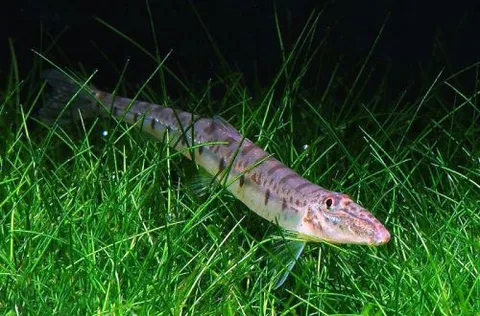
Acantopsis dialuzona
Belonging to the family Cobitidae, the Horseface Loach (Acantopsis dialuzona) is a peaceful and calm aquarium fish. It can be successfully kept together with many species of tropical fish. Its keeping conditions do not…
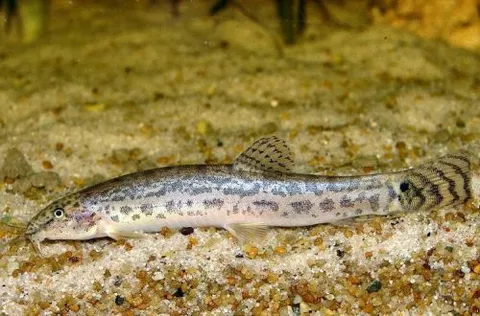
Lepidocephalichthys berdmorei
The scientific name Lepidocephalichthys berdmorei, or Burmese Loach, belongs to the family Cobitidae. This name refers to Burma, the modern state of Myanmar in Southeast Asia, where this species originates. The fish is…
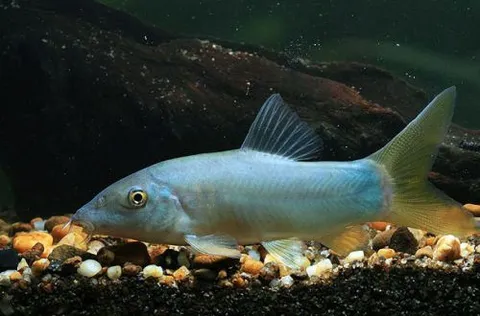
Yasuhikotakia modesta
The Modesta Loach, or Blue Botia (scientific name Yasuhikotakia modesta), belongs to the family Botiidae and is also known as the Red-tailed Botia. This peaceful fish reaches a medium size and is easy to care for,…
Canthophrys gongota
The Gongota Loach, scientifically known as Canthophrys gongota, belongs to the family Cobitidae, or true loaches. This species inhabits natural waters of Nepal, northern India, and Bangladesh, where it populates the…