Temperature23 – 28 °C
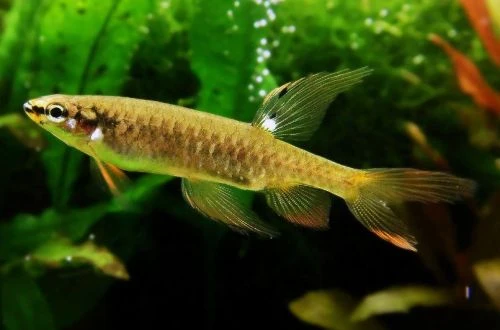
Arnold's Copeina, or Pyrrhulina (scientific name — Copella arnoldi), is a member of the family Lebiasinidae. This graceful fish is unique for its amazing method of raising fry, which has been featured in several BBC and National Geographic wildlife documentaries. Its name pays tribute to two researchers: naturalist Edward Drinker Cope, who first scientifically described the species, and J. Paul Arnold, who collected specimens in the wild for the British Museum.
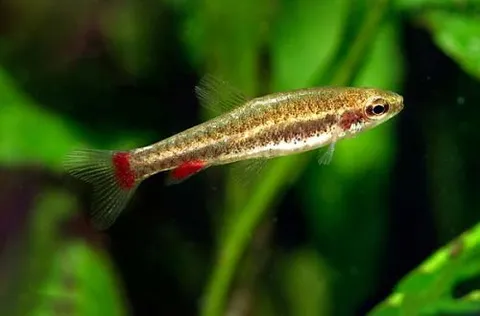
The fish's body is moderately elongated, with large scales and not very deep. Males are distinguished by a more slender build, greater length, and larger fins compared to females. The coloration varies from brownish to golden, with males usually having brighter colors. The pattern and shades may vary slightly depending on the individual's origin.
This species is widespread in the lower Amazon River basin (South America), covering territories in Brazil, Suriname, and Guyana. Its habitat includes small streams and tributaries, as well as areas of flooded undergrowth in tropical forests during high water levels. The fish prefer areas with abundant low coastal vegetation.
This rather peaceful schooling fish is known for males often engaging in duels, which, fortunately, usually do not cause serious harm. Such competition serves the purpose of vying for the females' attention; during this, males display the brightest and most vibrant colors. Interestingly, in a harem setup (where one male has several females), he may become dull and inconspicuous. The species coexists perfectly with most peaceful aquarium inhabitants, but it is absolutely unacceptable to keep it with large or aggressive fish.
A spacious aquarium of at least 120 L will be required for keeping them. It is important to provide abundant vegetation, arranged in groups, and to create shelters from roots and tree branches. Floating plants are welcome, but avoid completely covering the water surface. Any dark substrate with the addition of pre-dried tree leaves at the bottom will work as a substrate. The leaves will give the water a slight brownish tint, which corresponds to the fish's natural habitat. If breeding is planned, a closed paludarium, filled to ¾ of its volume, with plants hanging close to the water surface, is necessary (reasons will be explained below). Arnold's Copeina is very sensitive to the hydrochemical composition of the water and tolerates fluctuations in pH and dH parameters poorly. Soft acidic or slightly acidic water is considered optimal. Weekly, 15–20% of the water volume must be renewed during gravel vacuuming. It is advisable to prepare the water using special reagents that alter its composition. These reagents can be purchased in pet stores or online along with test kits (usually in the form of litmus strips). The minimum aquarium equipment set includes a filtration system, a heater, as well as lighting and aeration systems.
In natural conditions, their diet consists of small invertebrates and other zooplankton collected from the water surface. When kept in an aquarium, the fish readily accept any dry floating food. However, it is important to ensure that it contains protein supplements; otherwise, meat-based feeding is mandatory. Grindal worms, Artemia, nauplii, or Drosophila fruit flies are excellent live food options.
The fish exhibits an unusually interesting way of protecting its eggs. The eggs are laid on plant leaves that hang over the water surface. During courtship, the male repeatedly jumps out of the water, choosing a suitable leaf. Then he invites the female, and they perform a paired jump together. Clinging to the surface of the leaf with their pelvic fins, they can remain in this position for up to 10 seconds. During this time, the female attaches the eggs, and the male fertilizes them. Approximately 10–12 eggs are attached with each such paired jump. The procedure is repeated until the female lays about 100–200 eggs. After this, the female leaves the spawning site and no longer participates in caring for the offspring. The male, however, remains nearby and periodically splashes water with his fins and tail, moistening the eggs. This process takes 36 to 72 hours until the fry emerge, which fall into the water along with the splashes. Sometimes the male cares for several females and is forced to maintain several egg clutches on different leaves, constantly moving from one to another. After the offspring hatch, the parental instinct fades. The young should be caught and transferred to a separate tank with similar water conditions. Due to the specifics of breeding, the presence of emergent plants with leaves hanging no more than 10 cm above the water is mandatory. It is not necessary to use live plants; artificial ones are acceptable.
The main cause of health problems in Pyrrhulina is improper keeping conditions. Such conditions weaken the fish's immune system, making it more susceptible to various diseases.
When choosing individuals in a store, pay attention to their activity and the integrity of their fins. Healthy fish should school, actively move in the upper layers of the water, and show no signs of apathy or emaciation. Avoid specimens with damaged scales, film on the body, or unnaturally clamped fins, as these may indicate infectious diseases or stress from improper transportation conditions. Since this species is prone to jumping out of the water, when purchasing, make sure that the seller's aquarium has a lid or cover glass. Acquire a group of 8–10 individuals, as fish kept alone become timid and lose their characteristic coloration. Ask the seller about the fish's current diet: preference should be given to those already accustomed to quality frozen or dry foods, supplemented with live components.
The essentials: size, tank volume, water parameters and care
An adult reaches 5–6 cm in length. Plan the tank around the maximum size: the fish quickly outgrows a cramped setup.
The recommended volume is 150 L. A smaller tank speeds up nitrate build-up and raises stress levels.
Temperature 23–28 °C, pH 5–7.5, hardness 5–12 dGH. Stability matters more than exact values: sudden swings are harder on the fish than a small deviation from the ideal.
Around 3 years when kept properly. Lifespan depends directly on tank volume, water quality and a varied diet.
Temperament: peaceful (regular). Keep this in mind when choosing tank mates.
Recommended setup: schooling (usually from 5–6 individuals and more). Ignoring this is a common cause of stress and disease.
Diet type: any (universal). Feed small portions that are finished within a couple of minutes — overfeeding does more harm than underfeeding.
The scientific name of the species is Copella arnoldi, family Lebiasinidae. It also appears in the literature as: Copeina arnoldi.
The water suits 198 of 208 plants in the catalogue — the easiest ones are shown first.
Afzelius's AnubiasAnacharisAnubiasBrazilian PennywortDwarf CloverDwarf CloverDwarf HygrophilaDwarf SagittariaDwarf ValGuppy GrassHornwortJava FernJava MossMoneywortMud SwordNair's LagenandraNarrow Leaf AnacharisNarrow-leaf CloverStringy MossSüsswassertangTaiwan MossTape GrassTemple PlantUssuri Watermilfoil
Matched by family, categories and overlapping keeping conditions
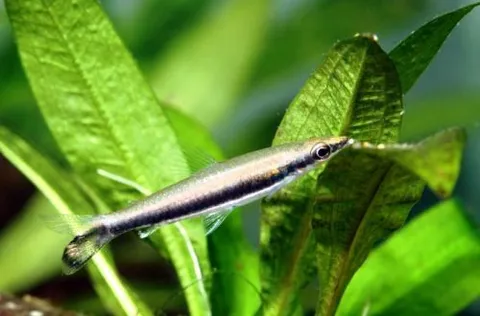
Nannostomus unifasciatus
Nannostomus unifasciatus, also known as the One-lined Pencilfish, belongs to the family Lebiasinidae. This popular aquarium fish is notable for its unusual oblique swimming style, which distinguishes it from other…
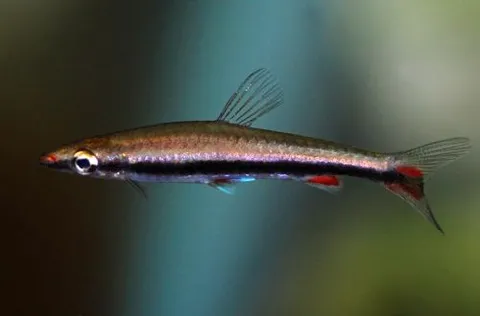
Nannostomus harrisoni
Nannostomus harrisoni, also known as the Black-striped Nannostomus, belongs to the family Lebiasinidae. This species is named after James Harrison, a scientist who actively assisted in the Indiana University and…
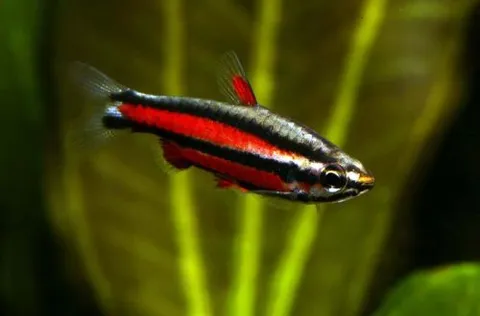
Nannostomus rubrocaudatus
Nannostomus rubrocaudatus, known as the Ruby Nannostomus, belongs to the family Lebiasinidae. This picturesque fish has gained widespread popularity among hobby aquarists due to its vibrant coloration and relatively…
Nannostomus anduzei
Nannostomus anduzei, known scientifically as Nannostomus anduzei, belongs to the family Lebiasinidae. The fish was named in honor of the Venezuelan biologist and explorer Pablo Anduze, who first provided a detailed…