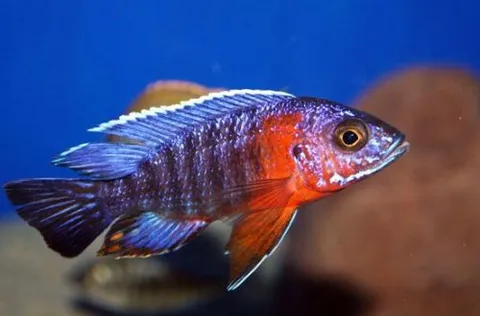
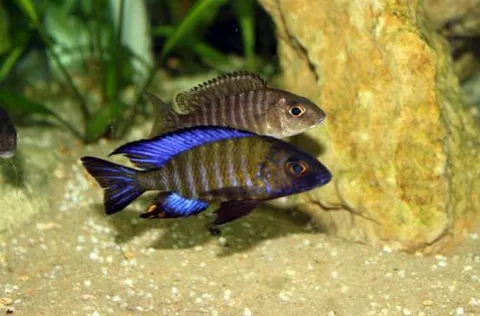
For a group of 3-4 fish, the optimal aquarium volume starts from 100 liters. The decor should preferably include rock formations and fine-grained sandy substrate. It is important that the substrate does not contain large or abrasive particles that could get stuck in or damage the fish's mouth during its characteristic feeding method. Rooted plants are generally not recommended, as the fish can quickly uproot them. A key task in caring for Aulonocara maylandi is maintaining stable water parameters, including suitable hydrochemical indicators and temperature. Essential aquarium maintenance procedures include: regular weekly water changes of 30–50% of the volume, removal of organic waste, monitoring equipment operation, and monitoring key water parameters (pH, dGH). It is equally important to regularly test the water for dangerous concentrations of nitrogen cycle products (ammonia, nitrites, nitrates). An effective filtration system plays a significant role in maintaining biological balance. When choosing a filter, it should be able to handle heavy pollution, especially if water intake occurs in the bottom layer. This is due to the fish's feeding habits: when they sift sand, a cloud of suspended matter is formed, which inevitably enters the filtration system.