Temperature24 – 28 °C
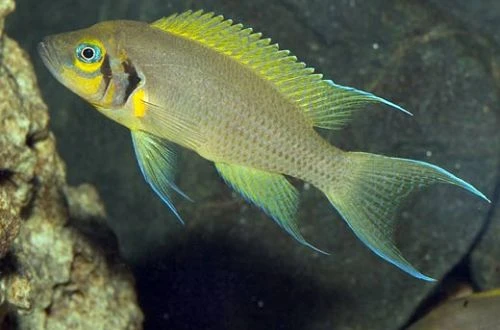
Neolamprologus pulcher, more commonly known as the "Princess of Burundi" cichlid or fairy cichlid, belongs to the family Cichlidae. This fish gets its name from its discovery location – the lake shore belonging to the state of Burundi. Thanks to its relatively undemanding care and breeding, it is rightfully considered one of the most popular cichlids inhabiting Lake Tanganyika. In spacious aquariums, it can coexist peacefully with other species.
Adults grow to 7–9 cm in length. Sexual dimorphism is weakly expressed, but males are usually larger than females and have more elongated tips on their dorsal and caudal fins. The coloration is predominantly grey, with yellowish hues, which are especially noticeable on the head and fins. The edges of the fins usually have a bluish tint.
This fish is endemic to Lake Tanganyika, one of the largest bodies of water on the African continent. It is widespread, preferring coastal areas with rocky, stony bottoms.
This cichlid species is territorial. During the spawning period, males show particular aggression towards each other and other aquarium inhabitants, perceiving them as a threat to their offspring. In small aquariums, it is recommended to keep only representatives of this species, for example, one male and several females. With sufficient space (150 liters or more), two or more males with females, as well as other fish species inhabiting Lake Tanganyika, can coexist in one aquarium.
For keeping a pair of "Princess of Burundi" cichlids, an aquarium of 50–60 liters is sufficient. However, if breeding or cohabitation with other species is planned, the tank volume should be increased. An aquarium of 150 liters or more is considered optimal. The aquarium setup is quite simple: the base consists of sand substrate and piles of stones and rocks, from which crevices, grottoes, and caves are formed – this mimics the natural environment of Lake Tanganyika. The use of live or artificial plants is not mandatory. Successful long-term keeping of this fish requires maintaining stable water conditions within acceptable temperature and hydrochemical values. For this, the aquarium should be equipped with an effective filtration system and regularly maintained, including weekly water changes of 15–20% of the volume with fresh water, systematic removal of organic waste (uneaten food, feces), preventive maintenance of equipment, and control over the concentration of nitrogen cycle products (ammonia, nitrites, nitrates).
The diet of these fish should primarily consist of live or frozen foods, such as Artemia, bloodworms, Daphnia, and other similar organisms. Dry foods, including flakes and granules with vegetable additives, are recommended as an additional source of vitamins and trace elements.
Breeding this species is quite simple. The fish exhibit amazing parental care, which other group members can also join. The male and female form a stable pair that can last a long time. Since this species chooses its partner independently, you need to either acquire an already formed pair or create conditions for its formation. For this, a group of 6 or more young fish is usually purchased. As they mature, at least one pair should form among them. As mentioned earlier, in a small aquarium, it is better to remove any extra males. With the onset of the breeding season, the fish find a suitable cave for spawning. The female lays up to 200 eggs, attaching them to the wall or ceiling inside the cave, and stays near the clutch. The male guards the surrounding territory during this time. The incubation period lasts 2–3 days, after which the fry develop for about another week before starting to swim independently. From this moment, they can be fed Artemia nauplii or other foods intended for aquarium fish fry. The parents continue to protect the offspring for some time, and other females may also show care. The grown generation becomes part of the group, but young males may need to be removed upon reaching sexual maturity.
The main cause of diseases often lies in the keeping conditions: if they go beyond acceptable limits, immunity decreases, making the fish vulnerable to various infections inevitably present in the environment. At the first suspicion of illness, it is important first of all to check the water parameters and ensure there are no dangerous concentrations of nitrogen cycle products. Often, restoring normal, suitable conditions promotes recovery. However, in some cases, medication may be required.
When purchasing, choose active fish with clean fins and no body damage. Avoid individuals with signs of emaciation, sunken bellies, film or spots on scales, or fish that constantly hide in a corner and show no interest in food. In the store, the fish should exhibit their natural territorial activity or calm schooling behavior. It is recommended to acquire juveniles in a group of 6 or more individuals so that the fish can later form a stable pair independently, as forced pairing of adults often leads to conflicts.
The essentials: size, tank volume, water parameters and care
An adult reaches 7–9 cm in length. Plan the tank around the maximum size: the fish quickly outgrows a cramped setup.
The recommended volume is 150 L. A smaller tank speeds up nitrate build-up and raises stress levels.
Temperature 24–28 °C, pH 8–9, hardness 8–26 dGH. Stability matters more than exact values: sudden swings are harder on the fish than a small deviation from the ideal.
Around 8 years when kept properly. Lifespan depends directly on tank volume, water quality and a varied diet.
Temperament: semi-peaceful (including aggression during spawning / intraspecific conflicts). Keep this in mind when choosing tank mates.
Recommended setup: harem (1 male and several females). Ignoring this is a common cause of stress and disease.
Diet type: high protein (predominantly meat). Feed small portions that are finished within a couple of minutes — overfeeding does more harm than underfeeding.
The scientific name of the species is Neolamprologus pulcher, family Cichlids (Cichlidae). It also appears in the literature as: Lamprologus pulcher, Lamprologus savoryi.
The water suits 70 of 208 plants in the catalogue — the easiest ones are shown first.
Amazon SwordAnacharisArrowhead CryptAsian WatermossBalansa Water TrumpetBarth's SwordBlue BuceBoivin's AponogetonCreeping JennyCrinkled AponogetonDitch StonecropDwarf CloverDwarf CloverDwarf HairgrassEelgrassFeathered LimnophilaGuppy GrassHornwortMoneywortMud SwordNair's LagenandraNarrow Leaf AnacharisNarrow-leaf CloverUssuri Watermilfoil
Matched by family, categories and overlapping keeping conditions
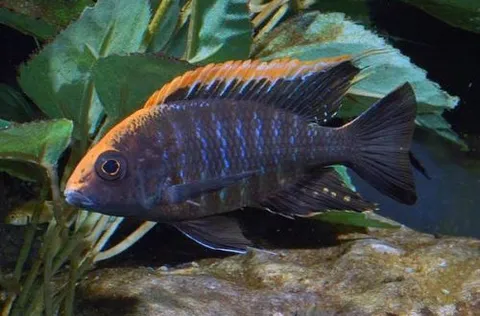
Aulonocara maylandi
Aulonocara maylandi, known as Mayland's Aulonocara, is a representative of the Cichlidae family, typical of Malawian cichlids. This species is relatively easy to keep and breed, demonstrating good compatibility with…
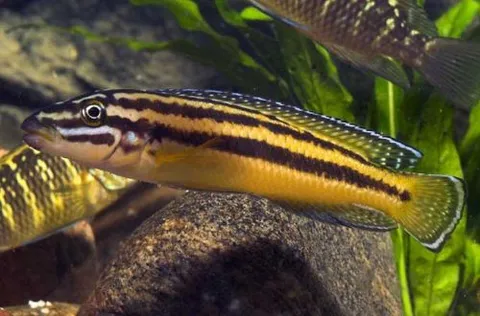
Julidochromis regani
Julidochromis regani, with the scientific name Julidochromis regani, belongs to the family Cichlidae. This cichlid is quite popular among aquarists. Like many members of its family, it can show aggression towards…
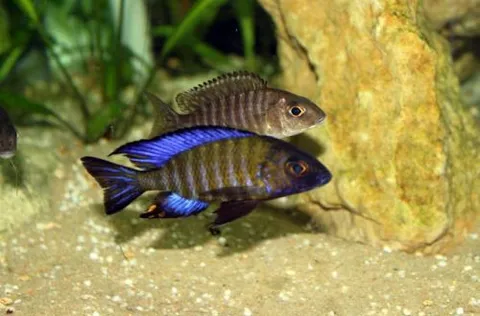
Aulonocara ethelwynnae
Aulonocara ethelwynnae, or Northern Aulonocara, is a representative of the Cichlidae family. These individuals, characteristic of cichlids from the great African lakes, are quite easy to keep and breed provided they…
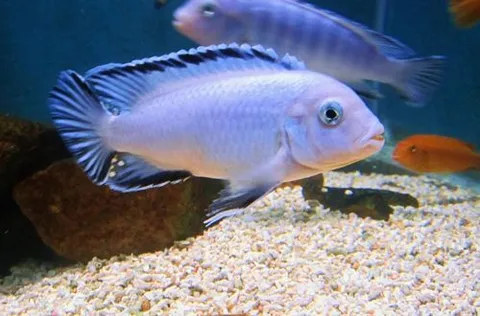
Chindongo socolofi
The fish known as Pseudotropheus socolofi or Blue Pindani is officially named Chindongo socolofi and belongs to the extensive Cichlidae family. Before the classification revision in 2016, its common name was…