Temperature22 – 26 °C
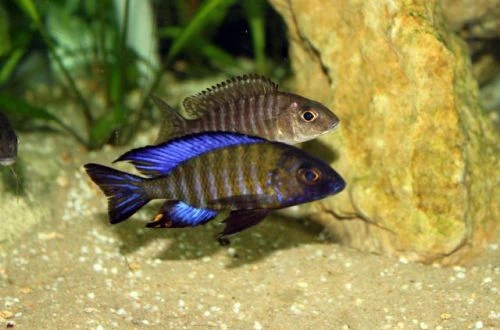
Aulonocara ethelwynnae, or Northern Aulonocara, is a representative of the Cichlidae family. These individuals, characteristic of cichlids from the great African lakes, are quite easy to keep and breed provided they have a spacious aquarium. However, it is worth remembering that their compatibility with conspecifics and other fish species is limited.
These fish reach 9–11 cm in length. Their coloration is dark gray with almost imperceptible vertical light stripes. Males are generally larger than females, and their stripes may have bluish hues. The fins and caudal part of males are blue, while females are less brightly colored.
This species is endemic and found exclusively in Africa's Lake Malawi, predominantly along its northwestern coast. The fish choose to inhabit so-called intermediate zones, where rocky shores gradually give way to sandy bottoms, and numerous rock formations are scattered throughout the area. Adult males tend to be solitary, forming their territories on the bottom at a depth of 6–7 meters. Immature males and females, on the other hand, prefer to stay in groups in shallower areas where the depth does not exceed 3 meters.
Adult males exhibit territoriality and aggression towards each other, as well as towards fish with similar coloration. Generally, these fish have a peaceful disposition and coexist well with less active species. Females are always peaceful. It is recommended to keep Aulonocara ethelwynnae in a group consisting of one male and 4–5 females. Due to their excessive activity, Mbuna cichlids are undesirable as tank mates.
For a group of 4–6 individuals, the minimum aquarium volume should be no less than 200 liters. The aquarium decor should be minimalist, including a sandy substrate and compositions of large stones and rock formations. It is important to consider that large abrasive substrate particles can get stuck in the fish's mouth or damage their gills. In their natural habitat, aquatic plants are extremely rare for these fish, so their presence in the aquarium would be superfluous. Furthermore, the feeding habits of Northern Aulonocara do not allow for the use of rooted plants, as they will be quickly dug up. Maintaining stable water conditions with optimal hydrochemical parameters is a key aspect of their care. To achieve this, a properly selected and efficient filtration system is crucial. In addition to water purification, the filter must effectively cope with constant sand clogging, which rises in "clouds" during fish feeding. A combined system is often used: the first filter performs mechanical cleaning, retaining sand and pumping water into a sump; then, from the sump, water enters the second filter for further stages of cleaning, from where it returns to the aquarium.
Their diet consists of algae and small organisms filtered from the sand at the bottom. In aquarium conditions, it is necessary to offer sinking foods with vegetable components, such as dry flakes, pellets, as well as frozen artemia, daphnia, and small pieces of bloodworms. It is recommended to feed the fish small portions 3–4 times a day.
Successful breeding is only possible in a spacious aquarium of 400–500 liters or more, equipped with shelters such as crevices and grottoes. During the breeding season, the male becomes extremely persistent in his courtship. If the females are not ready to spawn, they have to hide in shelters. The females' peace is also ensured when they are in a group of 4 or more individuals, as the male's attention will be distributed among several females in this case. If a female is ready, she accepts the male's courtship and lays several dozen eggs on a flat surface, such as a stone. Immediately after fertilization, the female takes the eggs into her mouth, where the entire incubation period takes place. This strategy of offspring protection, characteristic of all Lake Malawi cichlids, is an evolutionary response to a highly competitive habitat. The male does not participate in parental care and immediately seeks the next partner. The female carries the clutch for about 4 weeks. During this period, she is easily distinguished by the characteristic "chewing" movement of her mouth, with which she pumps water through the eggs, ensuring their necessary gas exchange. Throughout this time, the female refuses to eat.
The main cause of diseases often lies in the keeping conditions: if they go beyond acceptable limits, immunity decreases, making the fish vulnerable to various infections inevitably present in the environment. At the first suspicion of illness, it is important first of all to check the water parameters and ensure there are no dangerous concentrations of nitrogen cycle products. Often, restoring normal, suitable conditions promotes recovery. However, in some cases, medication may be required.
When selecting individuals, attention should be paid to the fish's activity and the cleanliness of their skin: the absence of spots, ulcers, fin damage, and film is a key sign of health. Avoid purchasing fish with sunken bellies, which may indicate emaciation or the presence of internal parasites. In the store, fish should show interest in their surroundings, rather than staying isolated in a corner or near the water surface. — give preference to individuals with bright coloration appropriate for their sex and age — avoid specimens with unnaturally bloated bellies or spinal deformities — clarify the fish's origin, as due to the widespread distribution of hybrids and selective forms, it is difficult to guarantee species purity.
The essentials: size, tank volume, water parameters and care
An adult reaches 9–11 cm in length. Plan the tank around the maximum size: the fish quickly outgrows a cramped setup.
The recommended volume is 200 L. A smaller tank speeds up nitrate build-up and raises stress levels.
Temperature 22–26 °C, pH 7.4–9, hardness 10–25 dGH. Stability matters more than exact values: sudden swings are harder on the fish than a small deviation from the ideal.
Around 10 years when kept properly. Lifespan depends directly on tank volume, water quality and a varied diet.
Temperament: semi-peaceful (including aggression during spawning / intraspecific conflicts). Keep this in mind when choosing tank mates.
Recommended setup: harem (1 male and several females). Ignoring this is a common cause of stress and disease.
Diet type: high protein (predominantly meat). Feed small portions that are finished within a couple of minutes — overfeeding does more harm than underfeeding.
The scientific name of the species is Aulonocara ethelwynnae, family Cichlids (Cichlidae). It also appears in the literature as: Aulonocara ethlewynnae.
The water suits 114 of 208 plants in the catalogue — the easiest ones are shown first.
African Onion PlantAfzelius's AnubiasAmazon FrogbitAmazon SwordAnacharisAnubiasArrowhead CryptDwarf CloverDwarf CloverDwarf HygrophilaDwarf SagittariaDwarf ValGuppy GrassHornwortJava MossMoneywortMud SwordNair's LagenandraNarrow Leaf AnacharisNarrow-leaf CloverStringy MossTaiwan MossTape GrassUssuri Watermilfoil
Matched by family, categories and overlapping keeping conditions
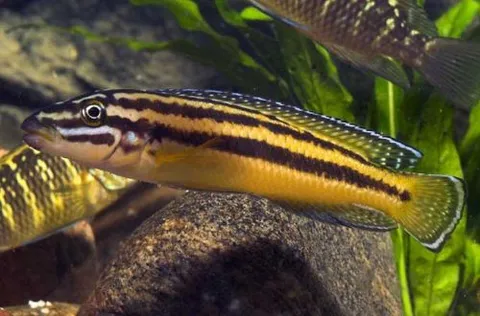
Julidochromis regani
Julidochromis regani, with the scientific name Julidochromis regani, belongs to the family Cichlidae. This cichlid is quite popular among aquarists. Like many members of its family, it can show aggression towards…
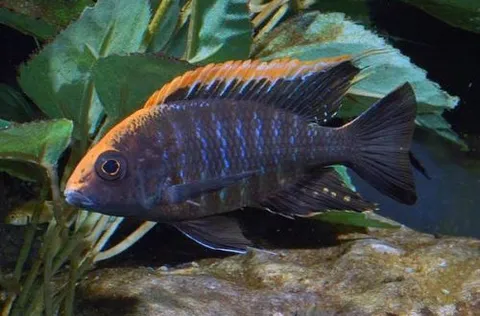
Aulonocara maylandi
Aulonocara maylandi, known as Mayland's Aulonocara, is a representative of the Cichlidae family, typical of Malawian cichlids. This species is relatively easy to keep and breed, demonstrating good compatibility with…
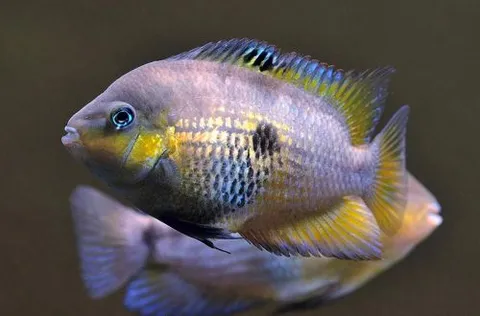
Amatitlania myrnae
The Peaceful Cichlid, also known by its scientific name Amatitlania myrnae, belongs to the family Cichlidae. It was previously referred to as Cryptoheros myrnae. Despite its name, this fish can be quite energetic,…
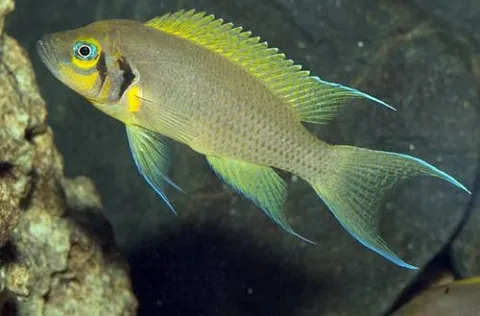
Neolamprologus pulcher
Neolamprologus pulcher, more commonly known as the "Princess of Burundi" cichlid or fairy cichlid, belongs to the family Cichlidae. This fish gets its name from its discovery location – the lake shore belonging to the…