Cichlids (Cichlidae)

Azure Cichlid

Apistogramma panduro

Apistogramma panduro, also known as the Azure or Blue Cichlid, belongs to the family Cichlidae. This South American cichlid is considered relatively undemanding in care and is well compatible with other freshwater species. However, it should be noted that intraspecific relationships can be quite complex, as will be discussed below.

Tank
from 54 L (14 gal), 60 L (16 gal) recommended
Temperature
22 – 29 °C (72 – 84 °F)
Size in aquarium
5 – 7 cm (2 – 2.8 in)
Acidity
pH 4–6.5
Natural rangeRange on the map
  • Loreto Region
  • Peru

Tank conditions

Plan the tank stocking
Temperature
22 – 29 °C (72 – 84 °F)
Water pH
Acidic (4) – Neutral (6.5)
Water dH
Very soft (2) – Medium hardness (8)
Water salinity
no salt (freshwater)
Size in aquarium
5 – 7 cm (2 – 2.8 in)
Lifespan
3 years
Temperament
Peaceful (regular)
Toward small fish
not a predator
Required aquarium volume
from 54 L (14 gal), 60 L (16 gal) recommended
Lighting
dimmed
Substrate
sandy (regular, light)
Water flow
weak
Swimming level
near the bottom
Feeding
High protein predominantly meat
Keeping
Harem 1 male and several females
Jumping
low
  • Lifespan. A lifespan to expect under good care, not a measured value: it depends heavily on tank volume, water quality and diet — and for selectively bred forms, on their origin as well.
  • Toward small fish. Based on the Predators category in the catalog or the temperament in the species parameters. “A risk to small fish” means the species is not a predator by habit, yet will swallow any fish that fits in its mouth.
  • Required aquarium volume. The 54 L minimum corresponds to a tank footprint of 60×30 см, для пары. The recommended 60 L is for the group size given under keeping mode.

Care and keeping

Description

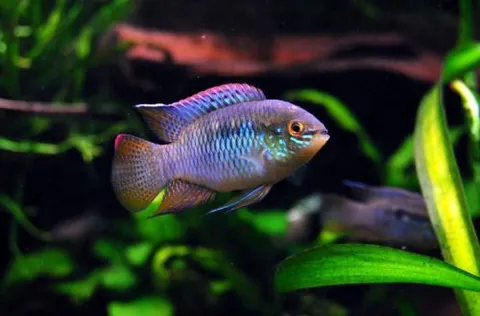
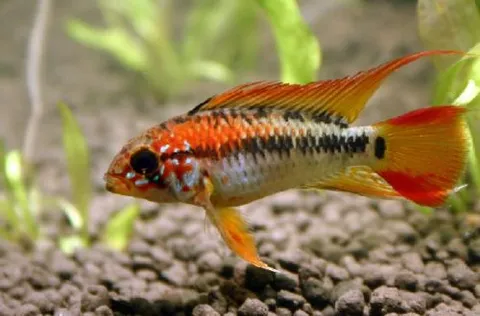
Adults reach a length of 5 to 7 cm, with males being noticeably larger. Their coloration is predominantly blue, and the tips of their fins have a yellow tint. The caudal fin is edged with a red stripe. Females are not only smaller but also have a different body pattern and color: bright black markings are visible on a pale yellow background. One of these is located in the middle of the body, and the other runs diagonally across the head.

Habitat

Its homeland is the Loreto region in northeastern Peru, South America. Apistogramma panduro inhabits the upper reaches of the Amazon River basin, preferring numerous rivers and streams flowing through humid tropical forests. The riverbed in these areas is often strewn with branches, tree roots, and fallen leaves. As they decompose, these organic substances release tannic acids, giving the water a characteristic brownish tint.

Behavior and Compatibility

Males can display aggression towards their conspecifics, especially during spawning. In small aquariums, it is recommended to keep a group of one male and several females. Often, a male and female form a stable monogamous pair that lasts for a long time. They are calm towards representatives of other species, coexisting well with non-aggressive fish of comparable size.

Care and Maintenance

For one or two fish, an aquarium of 50–60 liters will be optimal. Although the decor can be arbitrary, the Azure Cichlid will look most natural in conditions that mimic its natural waters. If possible, use a sand substrate, several snags, and dense thickets of live or artificial plants. Lighting should be subdued. If breeding is planned, it is important to provide hiding places — caves, grottoes, or use ordinary ceramic pots lying on their side, and hollow PVC pipe fragments about 4–5 cm in diameter. Adding dry leaves from certain trees, such as beech, oak, or Indian almond, will give the decor a natural look and help bring the water's chemical composition closer to that characteristic of their natural environment. Decomposing leaves gradually release tannins, coloring the water a characteristic brown. For successful and long-term keeping of these fish, the aquarist must perform regular aquarium maintenance, maintaining stable water parameters within acceptable hydrochemical values and preventing the accumulation of nitrogen cycle products — ammonia, nitrites, and nitrates.
Diet

In their natural habitat, they feed on small invertebrates. In aquarium conditions, their diet should also be rich in protein; live or frozen foods such as Artemia, Daphnia, or bloodworms are perfect for this. In addition, quality dry foods in the form of flakes or granules from well-known manufacturers can be an excellent supplement to their diet.

Breeding and Reproduction

Under favorable conditions, including suitable water chemistry and quality nutrition, these fish spawn regularly. The male is capable of fertilizing the eggs of several females but does not participate in the subsequent care of the offspring. Females lay eggs in shelters, as already mentioned: these can be specially designed caves or ordinary ceramic pots. Throughout the incubation period and for the first few weeks after the fry hatch, the female remains with them. During this period, it is advisable to temporarily remove the male due to his potential aggression.

Diseases

The main cause of diseases often lies in the keeping conditions: if they go beyond acceptable limits, immunity decreases, making the fish vulnerable to various infections inevitably present in the environment. At the first suspicion of illness, it is important first of all to check the water parameters and ensure there are no dangerous concentrations of nitrogen cycle products. Often, restoring normal, suitable conditions promotes recovery. However, in some cases, medication may be required.

How to choose

When selecting individuals, attention should be paid to their activity and the cleanliness of their skin. Healthy Apistogrammas should show curiosity, have bright coloration, clean fins without signs of erosion or plaque, and a plump body without a sunken belly. Avoid fish with signs of lethargy, rapid breathing, or scale damage, as they may be carriers of infections. It is recommended to acquire specimens bred in captivity, as they are better adapted to aquarium conditions than wild individuals, which require specific water parameters and more complex care.

Compatibility

There are no pair reviews for this species yet — check tankmates in the matcher.

All tankmates

Plants and this fish

Matching water does not mean the plant will stay intact.

Frequently asked questions

The essentials: size, tank volume, water parameters and care

How big does Azure Cichlid get?

An adult reaches 5–7 cm in length. Plan the tank around the maximum size: the fish quickly outgrows a cramped setup.

What size aquarium does Azure Cichlid need?

The recommended volume is 60 L. A smaller tank speeds up nitrate build-up and raises stress levels.

What water parameters does Azure Cichlid need?

Temperature 22–29 °C, pH 4–6.5, hardness 2–8 dGH. Stability matters more than exact values: sudden swings are harder on the fish than a small deviation from the ideal.

How long does Azure Cichlid live?

Around 3 years when kept properly. Lifespan depends directly on tank volume, water quality and a varied diet.

Is Azure Cichlid aggressive?

Temperament: peaceful (regular). Keep this in mind when choosing tank mates.

How many Azure Cichlid should be kept together?

Recommended setup: harem (1 male and several females). Ignoring this is a common cause of stress and disease.

What does Azure Cichlid eat?

Diet type: high protein (predominantly meat). Feed small portions that are finished within a couple of minutes — overfeeding does more harm than underfeeding.

What is the scientific name of Azure Cichlid?

The scientific name of the species is Apistogramma panduro, family Cichlids (Cichlidae).

Similar fishes

Matched by family, categories and overlapping keeping conditions

Norbert's Apistogramma

Norbert's Apistogramma

Apistogramma norberti

Cichlids (Cichlidae)

Norbert's Apistogramma (Apistogramma norberti), a representative of the Cichlidae family, is an attractive and rather undemanding aquarium fish. It coexists well with many freshwater species from South America. By…

Two-striped Apistogramma

Two-striped Apistogramma

Apistogramma bitaeniata

Cichlids (Cichlidae)

Apistogramma bitaeniata, also known as the Two-striped Apistogramma, from the Cichlidae family, is a brightly colored and quite active fish. Males of this species are known for their complex character, which requires a…

Curviceps Acara

Curviceps Acara

Laetacara curviceps

Cichlids (Cichlidae)

The Curviceps Acara, scientifically named Laetacara curviceps, belongs to the Cichlidae family. It is a peaceful and brightly colored fish, capable of becoming a beautiful adornment for many tropical aquariums. Its…

Fire-tailed Apistogramma

Fire-tailed Apistogramma

Apistogramma viejita

Cichlids (Cichlidae)

Apistogramma viejita, also known as the Fire-tailed Apistogramma, belongs to the Cichlidae family. This fish attracts attention with its bright coloration and calm temperament, allowing it to coexist well with many…

Other scientific names and conservation status

Categories
Cichlids
Conservation status
Least concernLC