Temperature23 – 28 °C
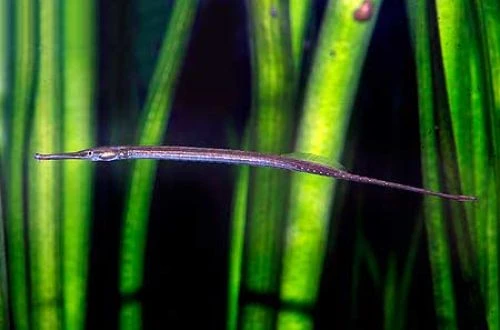
Microphis lineatus, known as the Banded Pipefish, belongs to the family Syngnathidae. This species inhabits the coastal tropical waters of the American continent. It can be found in fresh, brackish, and marine waters along the coastline, extending from the southern regions of the USA (Florida) and Mexico to Brazil, as well as throughout the extensive Caribbean basin. A characteristic habitat for these fish is dense thickets of Sargassum seaweed.
Adults of this fish can grow up to 20 cm in length. A distinctive feature of the Banded Pipefish is its unusually elongated and slender body, making it resemble a delicate twig. The fish's back has a brownish hue, while its belly is white. Red dots are visible along the entire body, arranged in a dotted pattern. Red spots also adorn the head. This body shape and coloration serve as reliable camouflage, helping the fish effectively hide among Sargassum seaweed. Although the Banded Pipefish is a marine fish, it reproduces in the brackish waters of estuaries or even in freshwaters further upstream. Due to this characteristic, it is suitable for keeping in brackish aquariums.
The species is widely distributed in the western Atlantic Ocean, from the coast of New Jersey in the USA to São Paulo in Brazil, including the Caribbean Sea and the Gulf of Mexico. It inhabits diverse conditions, including fresh, brackish, and marine waters. Adults are often found in rivers and estuaries, preferring areas with dense aquatic vegetation or thickets of Sargassum seaweed, which serve as their shelter.
This species is characterized by peaceful and calm behavior. It coexists well with its own kind and with other aquarium fish capable of adapting to brackish water. Examples of such tankmates include Monos, Archerfish, Spotted Scats, and others.
For a group of 3–4 Banded Pipefish, an aquarium with a volume of 250 to 300 liters is recommended. It is crucial to ensure a water salinity equivalent to approximately half that of seawater, which means dissolving at least 15 grams of marine salt per liter of water. The aquarium setup should include areas with dense aquatic vegetation, including floating plants. Artificial plants that mimic the shape and color of Sargassum seaweed can be an excellent solution. Maintaining stable water parameters and preventing the accumulation of organic matter is critically important. It is important to remember that brackish water has a high pH value, at which decomposition products of organic matter (including ammonia compounds) pose the greatest danger to aquarium inhabitants. The diet of these fish should consist exclusively of live foods; brine shrimp will be an excellent choice.
The diet of these fish consists exclusively of live foods, among which brine shrimp are an excellent choice. The Banded Pipefish has close kinship with seahorses, which is reflected in their similar reproductive strategy. In this group of fish, the responsibility for the offspring falls to the males.
The Banded Pipefish is a close relative of seahorses, and this kinship is evident in their similar reproductive strategy. In this group of fish, it is the males who take on the care of the offspring. When the spawning season arrives, pipefish move into the lower reaches of rivers to avoid marine predators. It is there that the reproduction process takes place. There, adult males receive fertilized eggs from females into a special pouch on their abdomen, where they incubate the offspring until the fry hatch.
These fish are extremely sensitive to water quality and the accumulation of organic compounds, making them susceptible to bacterial infections if keeping conditions are violated. The absence of scales increases the risk of injury and subsequent infection of the skin. Prevention includes maintaining stable environmental parameters, regular water changes, and eliminating stress factors. The species tolerates transportation and sudden changes in water chemistry poorly, which often provokes a weakening of the immune system.
When selecting specimens, attention should be paid to their activity and the integrity of their skin, which should be free of ulcers, spots, or damage. A healthy fish should exhibit exploratory behavior and not appear emaciated. It is important to ascertain what the specimen in the store is eating, as this species is a specialized predator that only consumes live foods and often refuses substitutes. The risk of mortality during adaptation is high, so it is recommended to purchase only outwardly active and well-fed fish.
The essentials: size, tank volume, water parameters and care
An adult reaches 20 cm in length. Plan the tank around the maximum size: the fish quickly outgrows a cramped setup.
The recommended volume is 250 L. A smaller tank speeds up nitrate build-up and raises stress levels.
Temperature 23–28 °C, pH 6–8, hardness 15–30 dGH. Stability matters more than exact values: sudden swings are harder on the fish than a small deviation from the ideal.
Around 5 years when kept properly. Lifespan depends directly on tank volume, water quality and a varied diet.
Temperament: peaceful (regular). Keep this in mind when choosing tank mates.
Recommended setup: small group (3–4 individuals). Ignoring this is a common cause of stress and disease.
Diet type: meat / protein (live, frozen, fresh). Feed small portions that are finished within a couple of minutes — overfeeding does more harm than underfeeding.
The scientific name of the species is Microphis lineatus, family Pipefishes (Syngnathidae). It also appears in the literature as: Doryichthys lineatus, Doryrhamphus sierra, Microphis brachyurus.
The water suits 197 of 208 plants in the catalogue — the easiest ones are shown first.
Afzelius's AnubiasAnacharisAnubiasBrazilian PennywortDwarf CloverDwarf CloverDwarf HygrophilaDwarf SagittariaDwarf ValGuppy GrassHornwortJava FernJava MossMoneywortMud SwordNair's LagenandraNarrow Leaf AnacharisNarrow-leaf CloverStringy MossSüsswassertangTaiwan MossTape GrassTemple PlantUssuri Watermilfoil
Matched by family, categories and overlapping keeping conditions
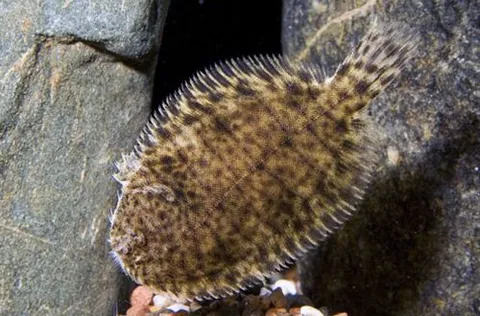
Brachirus panoides
Brachirus panoides, or the freshwater flounder, belongs to the family Soleidae. This species stands out with its unique appearance, which is hard to confuse with others. Although caring for this fish is considered…
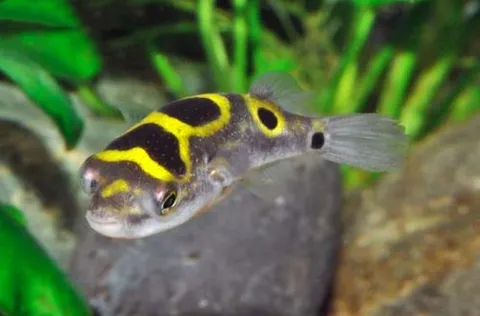
Dichotomyctere ocellatus
The Figure Eight Puffer, scientifically known as Dichotomyctere ocellatus, belongs to the family Tetraodontidae. These fish have earned a reputation as charming creatures due to their large, expressive eyes and…
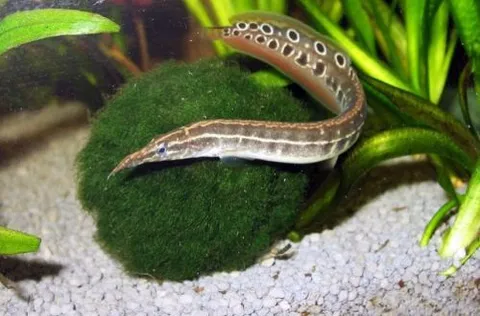
Macrognathus aculeatus
The Spiny Eel, also known as the Spotted Spiny Eel (scientific name Macrognathus aculeatus), belongs to the family Mastacembelidae. This species has a reclusive nature, making it one of the least conspicuous inhabitants…
Colomesus psittacus
The Zebra Pufferfish, also known as the Parrot Pufferfish (scientific name Colomesus psittacus), belongs to the family Tetraodontidae. A distinctive feature of this fish is its ability to inflate itself when danger…