Temperature10 – 20 °C
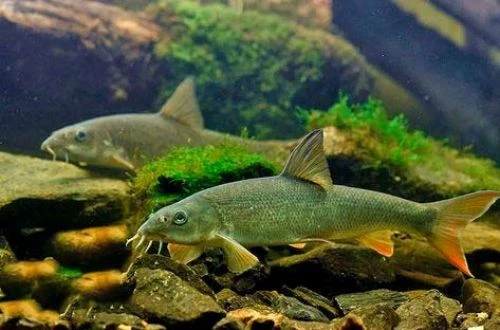
The fish known as Barbel (scientific name Barbus barbus) belongs to the carp family (Cyprinidae). Unlike many other barbs, which are common in the river systems of Southeast Asia, this species is native to Europe. Its range extends predominantly in the temperate climate zone, from France to Russian territories.
The largest recorded specimen reached approximately 120 cm in length. However, in most cases, the Barbel grows up to 85 cm and weighs up to 12 kg. From an aquarium keeping perspective, this fish does not have any particularly remarkable characteristics: it is too large for a typical home aquarium and has a rather unremarkable coloration. It primarily serves as a fishing target. Nevertheless, some enthusiasts keep Barbel in garden ponds.
The common Barbel inhabits rivers across Europe, from France to the Dnieper basin, including water bodies in the North, Baltic, and Black Sea basins. It prefers sections of rivers with fast currents, clear water, and a rocky or gravel bottom. Adult individuals stay in deeper areas, often in groups, while juveniles inhabit shallow coastal zones.
These fish are distinguished by their peaceful and calm disposition; they are comfortable in groups. They successfully coexist with most river inhabitants, as well as with hardy aquarium species such as some goldfish, Koi carp, medium-sized catfish, and a number of other inhabitants.
The tank for keeping them should be as large as possible, considering the rapid growth of these fish. To maintain their health for a long time, it is necessary to provide clean, oxygen-rich water. When decorating the aquarium, it is important to provide a soft sandy substrate, as the Barbel uses it to search for food. Large snags, dense thickets of robust plants, and other shelters will be a useful addition to the landscape. Since this fish originates from flowing waters, it is sensitive to the accumulation of organic waste. Therefore, it is necessary to equip the aquarium with a productive filtration system, regularly clean the substrate, and weekly replace a portion of the water with fresh water. The Barbel does not tolerate high temperatures; the most comfortable range for it is 10–20°C.
In its natural habitat, the Barbel feeds on small invertebrates such as crustaceans, worms, insects, and their larvae. In aquarium conditions, it is recommended to offer similar live foods. The fish can also be accustomed to alternative products, for example, feeds used in fish farms for Koi carp. According to their natural habits, they prefer to feed in dim light. Therefore, feeding is best done early in the morning, before the lights are turned on, and/or in the evening, before they are turned off.
Spawning occurs from late spring to early summer at water temperatures of 10–22°C. The fish migrate upstream to shallow areas with fast currents and a gravel substrate. The female lays portions of eggs in depressions dug in the substrate, which are fertilized by several males simultaneously. Barbel roe is poisonous and not suitable for consumption. There is no information about breeding in artificial conditions.
The species is susceptible to diseases typical of carp fish, including bacterial, fungal, and parasitic infections. It is sensitive to water quality and the accumulation of organic waste, which can provoke the development of skin parasites or bacterial fin rot. Prevention involves maintaining high water purity, powerful filtration, and regular partial water changes.
When purchasing, choose active individuals with clean scales, without visible damage, ulcers, or spots on the body. It is important to ensure there are no signs of emaciation or fin deformation. Since the species is large and demanding of flowing water, it is necessary to consider the risks associated with the rapid growth of the fish and the need to provide specific keeping conditions.
The essentials: size, tank volume, water parameters and care
An adult reaches 85 cm in length. Plan the tank around the maximum size: the fish quickly outgrows a cramped setup.
The recommended volume is 500 L. A smaller tank speeds up nitrate build-up and raises stress levels.
Temperature 10–20 °C, pH 6–8, hardness 8–18 dGH. Stability matters more than exact values: sudden swings are harder on the fish than a small deviation from the ideal.
Around 15 years when kept properly. Lifespan depends directly on tank volume, water quality and a varied diet.
Temperament: semi-peaceful (dangerous to smaller ones). Not a predatory species, but small fish that fit in its mouth will eventually be eaten.
Recommended setup: both solitary and in group (flexible). Ignoring this is a common cause of stress and disease.
Diet type: sinking (any). Feed small portions that are finished within a couple of minutes — overfeeding does more harm than underfeeding.
The scientific name of the species is Barbus barbus, family Cyprinids (Cyprinidae). It also appears in the literature as: Barbus communis, Barbus fluviatilis, Barbus mayori.
The water suits 179 of 208 plants in the catalogue — the easiest ones are shown first.
African Onion PlantAfzelius's AnubiasAnacharisAnubiasBrazilian PennywortDwarf CloverDwarf CloverDwarf HygrophilaDwarf SagittariaDwarf ValGuppy GrassHornwortJava FernJava MossMoneywortMud SwordNarrow Leaf AnacharisStringy MossSüsswassertangTaiwan MossTape GrassTemple PlantUssuri WatermilfoilWater Wisteria
Matched by family, categories and overlapping keeping conditions
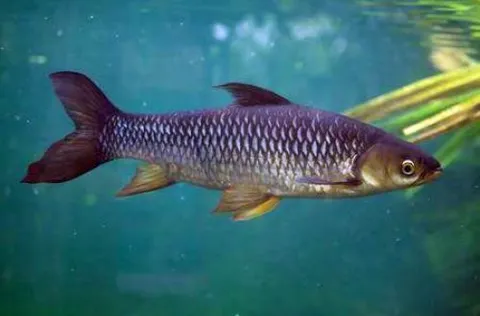
Leptobarbus hoevenii
The fish known as Hoven's Carp (Leptobarbus hoevenii) belongs to the family Cyprinidae. It is named after the zoologist Jan van der Hoeven (1801–1868). Due to its impressive size, this species is rarely found in amateur…
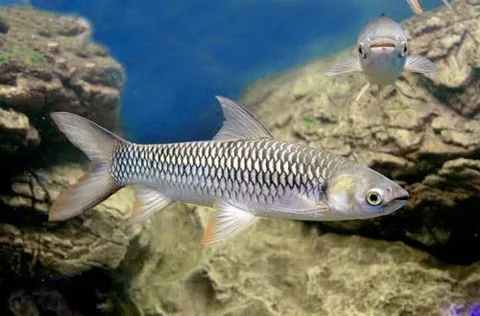
Leptobarbus rubripinna
The Red-Finned Leptobarbus, also known as the Sultan Fish, belongs to the family Cyprinidae and bears the scientific name Leptobarbus rubripinna. This is a hardy and undemanding species that exhibits a peaceful…
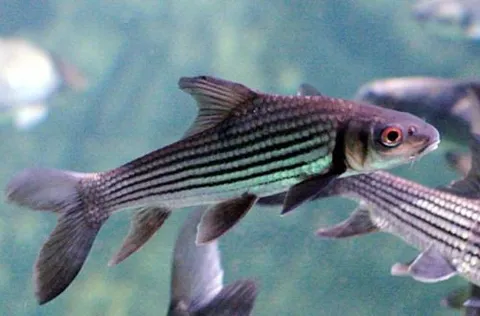
Probarbus jullieni
Jullien's Golden Carp, known by its scientific name Probarbus jullieni, belongs to the family Cyprinidae, or carps. Its natural habitat includes the extensive river systems of Southeast Asia, including the Mekong and…
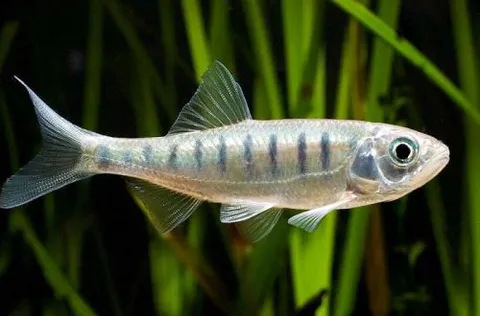
Opsarius barna
The Barna Barbel, scientifically known as Opsarius barna, belongs to the extensive carp family (Cyprinidae). Its name in Russian is a transcription of the Bengali word traditionally used by locals to refer to this…