Temperature20 – 26 °C
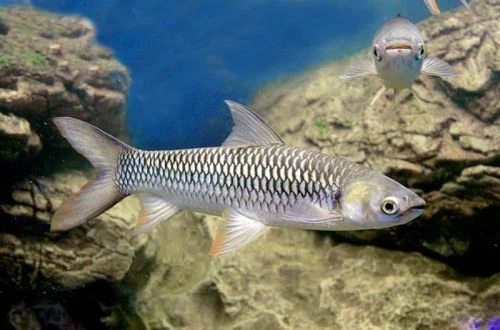
The Red-Finned Leptobarbus, also known as the Sultan Fish, belongs to the family Cyprinidae and bears the scientific name Leptobarbus rubripinna. This is a hardy and undemanding species that exhibits a peaceful temperament towards other aquarium inhabitants. However, it is important to consider the significant size of adult specimens, which can sometimes reach over one meter in length, a key characteristic for keeping this species.
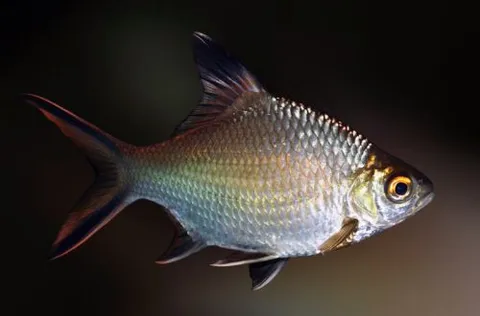
Under favorable conditions, this species can grow to one meter or even more. The scales are uniformly silvery, and the body is elongated, with a relatively short head. The pectoral, pelvic, anal, and caudal fins are distinguished by red markings, while the dorsal fin is high and translucent. Due to its characteristic body shape, the fish is sometimes called the “Cigar Red-Finned Shark.” It bears a resemblance to the closely related Hoven's Carp, and they are often sold under the same name.
The natural habitats of this species are found in Southeast Asia. This species prefers the lower and middle reaches of the Mekong River, one of the largest in the region, and also inhabits the Chao Phraya and Mae Klong river basins. Thus, its natural range covers vast territories in Laos, Thailand, Cambodia, and Vietnam. The Sultan Fish is found in both the main river channels and in lakes and artificial reservoirs. Juveniles typically stay in shallow waters, while adult fish prefer deeper areas. During the rainy season, they migrate to flooded areas of tropical forests to spawn.
This fish is distinguished by its peaceful and calm disposition, which allows it to be successfully kept with many large species of appropriate size. However, it will likely view smaller fish as a potential food source.
Given the potentially large size of adult specimens, keeping Leptobarbus rubripinna requires an aquarium of appropriate volume. For a single fish, the minimum tank volume should be 1000 liters. The choice of decor does not play a decisive role; however, if possible, it would be beneficial to recreate a riverbed environment using stones, large boulders, and large snags as substrate. The use of live plants is not recommended, as they will likely be eaten. Since the Sultan Fish originates from flowing waters, it is extremely sensitive to the accumulation of organic waste. Maintaining consistently high water quality is a key condition for its successful long-term keeping.
This species is omnivorous. In its natural environment, its diet includes plant matter, zooplankton, as well as various large aquatic and terrestrial invertebrates. Occasionally, it may also hunt small fish. In aquarium conditions, the Sultan Fish readily accepts most common dry foods in the form of pellets and tablets, as well as fresh vegetables such as peas, beans, and potato pieces. Aquatic plants, such as duckweed, as well as mussels and shrimp, can also be included in its diet.
This species does not breed in home aquariums. Commercial breeding of Leptobarbus rubripinna is carried out on large fish farms, where hormonal preparations are used to stimulate spawning.
This fish is hardy, and instances of disease are rare. The main causes of ailments are usually an unsuitable habitat or poor quality food. When kept in spacious aquariums and regularly fed fresh products, health problems generally do not arise.
The acquisition of this species requires particular caution due to its impressive size and specific keeping conditions. Choose only active specimens with clean scales, without visible damage, ulcers, or signs of emaciation. Avoid fish that stay near the surface, appear apathetic, or have an unnaturally bloated abdomen, as this may indicate internal organ problems or parasitic diseases. Keep in mind that pet stores often sell juveniles that look bright and attractive, but they grow rapidly and require enormous volumes of water. Before purchasing, ensure that you can provide the fish with an aquarium of at least 1000 liters, as in smaller tanks, the development of specimens slows down, leading to irreversible skeletal deformities. It is critically important to assess the filtration system's readiness for the high biological load created by these large fish.
The essentials: size, tank volume, water parameters and care
An adult reaches 80–100 cm in length. Plan the tank around the maximum size: the fish quickly outgrows a cramped setup.
The recommended volume is 1000 L. A smaller tank speeds up nitrate build-up and raises stress levels.
Temperature 20–26 °C, pH 6–8, hardness 2–15 dGH. Stability matters more than exact values: sudden swings are harder on the fish than a small deviation from the ideal.
Around 12 years when kept properly. Lifespan depends directly on tank volume, water quality and a varied diet.
Temperament: semi-peaceful (dangerous to smaller ones). Not a predatory species, but small fish that fit in its mouth will eventually be eaten.
Recommended setup: both solitary and in group (flexible). Ignoring this is a common cause of stress and disease.
Diet type: any (universal). Feed small portions that are finished within a couple of minutes — overfeeding does more harm than underfeeding.
The scientific name of the species is Leptobarbus rubripinna, family Cyprinids (Cyprinidae). It also appears in the literature as: Filirasbora rubripinna, Laptobarbus rubripinna.
The water suits 197 of 208 plants in the catalogue — the easiest ones are shown first.
Afzelius's AnubiasAnacharisAnubiasBrazilian PennywortDwarf CloverDwarf CloverDwarf HygrophilaDwarf SagittariaDwarf ValGuppy GrassHornwortJava FernJava MossMoneywortMud SwordNair's LagenandraNarrow Leaf AnacharisNarrow-leaf CloverStringy MossSüsswassertangTaiwan MossTape GrassTemple PlantUssuri Watermilfoil
Matched by family, categories and overlapping keeping conditions
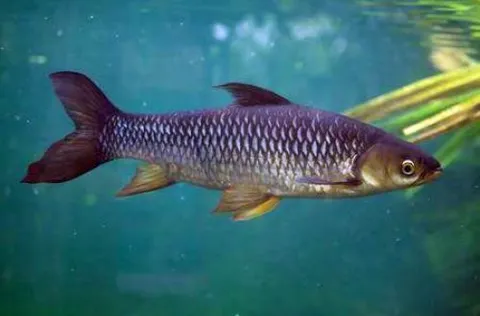
Leptobarbus hoevenii
The fish known as Hoven's Carp (Leptobarbus hoevenii) belongs to the family Cyprinidae. It is named after the zoologist Jan van der Hoeven (1801–1868). Due to its impressive size, this species is rarely found in amateur…
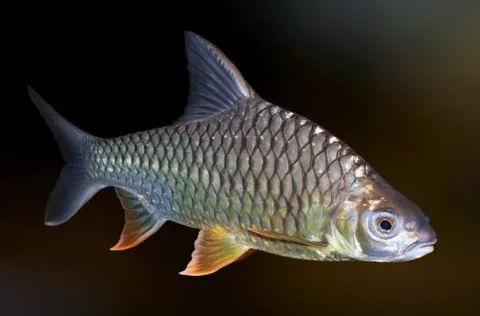
Hypsibarbus wetmorei
Hypsibarbus, or Lemonfin Barb (scientific name Hypsibarbus wetmorei), belongs to the Cyprinidae family. This active and large fish lives in schools. Although it is undemanding and quite easy to keep, the necessity of…
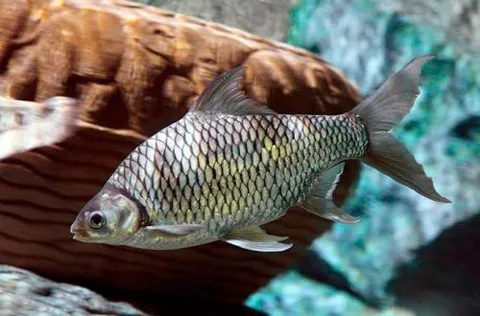
Barbonymus gonionotus
The Silver Barb, scientifically known as Barbonymus gonionotus, belongs to the Cyprinidae family. This fish is most commonly found in commercial fisheries and is not a typical inhabitant of home aquariums. Its…
Barbonymus schwanefeldii
Barbonymus schwanefeldii, known as the Tinfoil Barb and belonging to the Cyprinidae family, attracts attention with its impressive size and characteristic silvery coloration. These fish, which have a schooling nature,…