Temperature20 – 26 °C
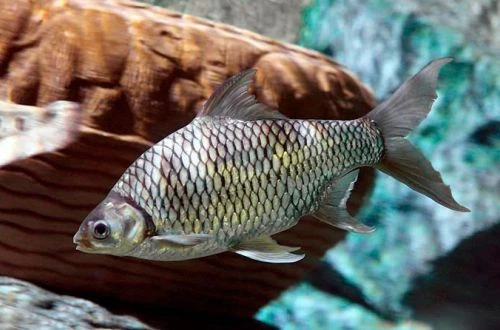
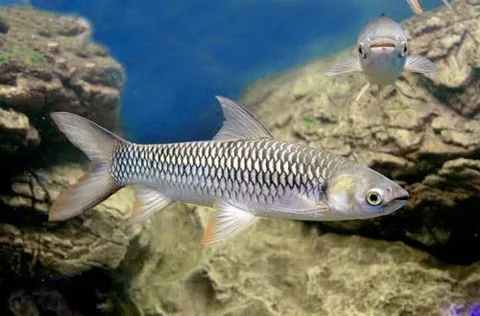
The Silver Barb, scientifically known as Barbonymus gonionotus, belongs to the Cyprinidae family. This fish is most commonly found in commercial fisheries and is not a typical inhabitant of home aquariums. Its characteristics include a rather impressive size, unpretentiousness in keeping, and a lack of aggression. The only drawback that can be noted is its not-so-expressive coloration.
Adults of this species reach a length of 25–30 cm. Their bodies are silvery-gray, and their fins are translucent. Sexual dimorphism in the Silver Barb is weakly expressed; males and females look very similar, with the only noticeable difference being in size — females are usually slightly larger.
The natural habitat of this fish covers vast territories of Southeast Asia, extending from Laos to peninsular Malaysia. Barbonymus gonionotus is found in all major river basins of the region, including the Mekong, Mae Klong, and Chao Phraya. Under normal conditions, it prefers river channels, but with the onset of the rainy season, it moves to flooded areas of tropical forests for spawning.
The Silver Barb is a peaceful species, however, due to its large size and high activity, it can exhibit aggression or disturb smaller and slower tank mates. In nature, fish live in large groups, so it is recommended to keep a shoal of 6 or more individuals in an aquarium. Solitary keeping often leads to timidity or, conversely, to unmotivated aggression towards other inhabitants. Compatible with similarly sized, stress-resistant species, such as large cichlids or other cyprinids.
For such a large fish, an aquarium of at least 700 liters is required. The Silver Barb feels good even in an empty tank, so the aquarium's decor is not critical. It is important to provide sufficient space for free swimming. Since large fish produce a lot of waste, maintaining high water quality requires a productive filtration system, preferably using external filters. In addition, regular standard aquarium maintenance is necessary: weekly partial water changes, removal of organic waste, checking equipment operation, and monitoring pH and dGH parameters. This peaceful fish is not aggressive, but its large size allows it to occasionally eat smaller tank mates. Therefore, compatible species should be of comparable size. Silver Barbs feel more comfortable in groups of 6 or more individuals; solitary keeping is not recommended for them.
This species is omnivorous. In natural conditions, their diet consists mainly of aquatic vegetation, as well as small crustaceans, insect larvae, and other zooplankton. In aquarium conditions, fish actively eat most popular foods enriched with plant components. They can completely switch to dry foods such as flakes, granules, or tablets, provided they are of high quality.
To date, there are no documented cases of successful breeding of Silver Barbs in home aquariums. This is due to their low popularity among aquarists, as well as the need to recreate specific conditions resembling river floods during the rainy season, which is quite difficult in a home environment. However, they are regularly cultivated on fish farms as a commercial fish, using hormonal injections to stimulate spawning.
In a balanced aquarium ecosystem that meets the needs of this species, diseases are rare. Most often, ailments are provoked by deteriorating environmental conditions, contact with already sick fish, or mechanical damage. If the fish shows clear signs of illness, medicinal treatment should be applied.
When choosing individuals, attention should be paid to their activity and the cleanliness of their skin. A healthy fish should show interest in food, have no visible damage, ulcers, or signs of parasite infestation. Since the species is often raised for commercial purposes, specimens not adapted to life in closed systems may be sold, so it is important to clarify the keeping conditions at the store. Avoid buying fish that look emaciated or show apathetic behavior.
The essentials: size, tank volume, water parameters and care
An adult reaches 25–30 cm in length. Plan the tank around the maximum size: the fish quickly outgrows a cramped setup.
The recommended volume is 700 L. A smaller tank speeds up nitrate build-up and raises stress levels.
Temperature 20–26 °C, pH 6–8, hardness 2–15 dGH. Stability matters more than exact values: sudden swings are harder on the fish than a small deviation from the ideal.
Around 12 years when kept properly. Lifespan depends directly on tank volume, water quality and a varied diet.
Temperament: semi-peaceful (dangerous to smaller ones). Not a predatory species, but small fish that fit in its mouth will eventually be eaten.
Recommended setup: medium group (6–8 individuals). Ignoring this is a common cause of stress and disease.
Diet type: any (universal). Feed small portions that are finished within a couple of minutes — overfeeding does more harm than underfeeding.
The scientific name of the species is Barbonymus gonionotus, family Cyprinids (Cyprinidae). It also appears in the literature as: Barbodes gonionotus, Barbodes jolamarki, Barbus gonionotus.
The water suits 197 of 208 plants in the catalogue — the easiest ones are shown first.
Afzelius's AnubiasAnacharisAnubiasBrazilian PennywortDwarf CloverDwarf CloverDwarf HygrophilaDwarf SagittariaDwarf ValGuppy GrassHornwortJava FernJava MossMoneywortMud SwordNair's LagenandraNarrow Leaf AnacharisNarrow-leaf CloverStringy MossSüsswassertangTaiwan MossTape GrassTemple PlantUssuri Watermilfoil
Matched by family, categories and overlapping keeping conditions
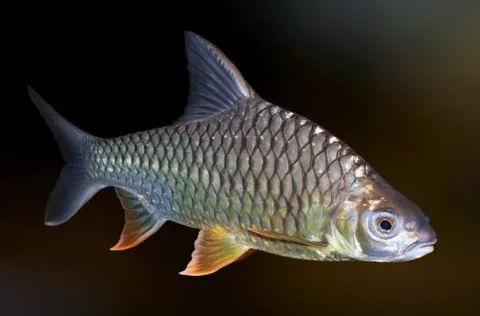
Hypsibarbus wetmorei
Hypsibarbus, or Lemonfin Barb (scientific name Hypsibarbus wetmorei), belongs to the Cyprinidae family. This active and large fish lives in schools. Although it is undemanding and quite easy to keep, the necessity of…
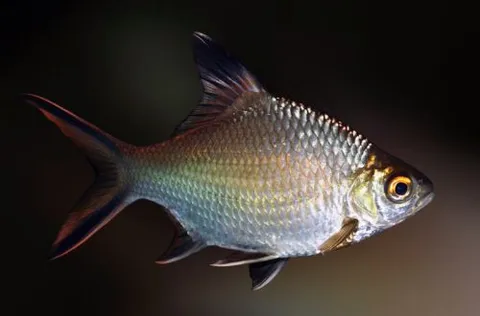
Barbonymus schwanefeldii
Barbonymus schwanefeldii, known as the Tinfoil Barb and belonging to the Cyprinidae family, attracts attention with its impressive size and characteristic silvery coloration. These fish, which have a schooling nature,…
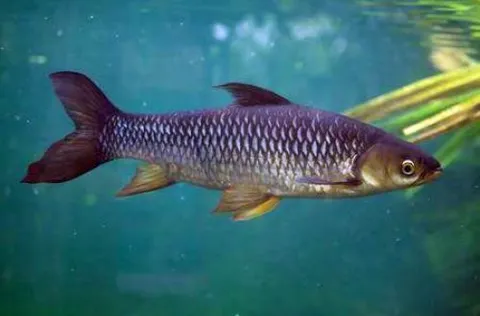
Leptobarbus hoevenii
The fish known as Hoven's Carp (Leptobarbus hoevenii) belongs to the family Cyprinidae. It is named after the zoologist Jan van der Hoeven (1801–1868). Due to its impressive size, this species is rarely found in amateur…
Leptobarbus rubripinna
The Red-Finned Leptobarbus, also known as the Sultan Fish, belongs to the family Cyprinidae and bears the scientific name Leptobarbus rubripinna. This is a hardy and undemanding species that exhibits a peaceful…