Temperature22 – 28 °C
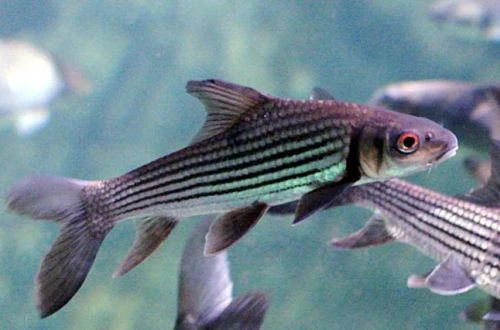
Jullien's Golden Carp, known by its scientific name Probarbus jullieni, belongs to the family Cyprinidae, or carps. Its natural habitat includes the extensive river systems of Southeast Asia, including the Mekong and Chao Phraya, which flow through Thailand, Laos, Vietnam, and Cambodia.
This freshwater fish is rightly considered a giant: adults reach an impressive length of 160–165 cm, and their weight can exceed 70 kg. The lifespan of these fish is also remarkable, capable of reaching 50 years. Their coloration consists of a gray background with five dark horizontal stripes that run from the head to the tail.
The species inhabits large river systems in Southeast Asia, including the Mekong, Chao Phraya, and Mae Klong river basins, flowing through Thailand, Laos, Cambodia, Vietnam, and Malaysia. In nature, it prefers the main river channels and areas with slow currents, where it stays over sandy or rocky bottoms. The fish can tolerate brackish water in river deltas and undertakes seasonal migrations upstream for spawning.
Jullien's Golden Carp adapts well to living both with members of its own species and with other large fish. It should be noted that smaller aquarium inhabitants can accidentally become their prey. This behavior is not a sign of aggression, but rather a natural feeding instinct characteristic of many large aquatic predators.
Creating optimal conditions for keeping this fish is only possible in very spacious tanks; at least 1000 liters of water are required per individual. Care will be minimal if the aquarium is equipped with the necessary equipment and connected to water supply and drainage systems. The aquarium decor can be anything. These fish are undemanding regarding water chemistry and can adapt to a wide range of hydrochemical parameters. An important exception is water temperature, which should not drop below 22°C.
In natural conditions, the diet of the Jullien's golden carp consists of mollusks, shrimp, and other invertebrates, as well as aquatic plants. In captivity, they successfully feed on popular dry foods used in commercial fish farms.
In natural conditions, spawning occurs in the winter months, from late December to February. Fish migrate to areas with sandy or gravel substrate and a strong water current of at least 1.3 meters per second. The eggs are yellowish and about 2 mm in diameter. At a water temperature of approximately 23°C, the incubation period is about 32 hours, after which larvae emerge. In aquarium conditions, breeding this species is practically impossible due to the enormous size of the parent fish.
Specific diseases exclusively characteristic of this species have not been identified in scientific literature. Like other members of the carp family, Jullien's golden carp is susceptible to standard infectious and invasive diseases that arise from improper keeping conditions, especially in overcrowded or insufficiently clean aquariums. The main risk factors are the accumulation of organic waste and sharp fluctuations in water parameters, which weaken the fish's immune system. The most likely problems include bacterial infections, fungal skin lesions, and parasitic diseases such as ichthyophthiriasis. Given the enormous size of adult specimens, disease prevention involves ensuring a powerful filtration system, regular water changes, and maintaining a stable temperature regime. When keeping young fish in aquariums, stressful factors should be avoided, as they can provoke outbreaks of latent infections. If signs of illness appear, such as changes in behavior, refusal to feed, or scale damage, an immediate check of water quality is recommended.
Acquiring this species involves high responsibility due to its enormous potential size, reaching 165 cm. In stores, young specimens are most often found, appearing as active, lively fish with clean fins and no body damage. It should be noted that the species is endangered, and its export from many countries in the region is legally restricted or prohibited. It is important for the buyer to ensure the legality of the fish's origin.
The essentials: size, tank volume, water parameters and care
An adult reaches 165 cm in length. Plan the tank around the maximum size: the fish quickly outgrows a cramped setup.
The recommended volume is 1000 L. A smaller tank speeds up nitrate build-up and raises stress levels.
Temperature 22–28 °C, pH 6–8, hardness 6–20 dGH. Stability matters more than exact values: sudden swings are harder on the fish than a small deviation from the ideal.
Around 50 years when kept properly. Lifespan depends directly on tank volume, water quality and a varied diet.
Temperament: semi-peaceful (dangerous to smaller ones). Not a predatory species, but small fish that fit in its mouth will eventually be eaten.
Recommended setup: mixed (solitary / pair / group). Ignoring this is a common cause of stress and disease.
Diet type: sinking (any). Feed small portions that are finished within a couple of minutes — overfeeding does more harm than underfeeding.
The scientific name of the species is Probarbus jullieni, family Cyprinids (Cyprinidae). It also appears in the literature as: Barbus pahangensis, Cyclocheilichthys jullieni.
The water suits 197 of 208 plants in the catalogue — the easiest ones are shown first.
Afzelius's AnubiasAnacharisAnubiasBrazilian PennywortDwarf CloverDwarf CloverDwarf HygrophilaDwarf SagittariaDwarf ValGuppy GrassHornwortJava FernJava MossMoneywortMud SwordNair's LagenandraNarrow Leaf AnacharisNarrow-leaf CloverStringy MossSüsswassertangTaiwan MossTape GrassTemple PlantUssuri Watermilfoil
Matched by family, categories and overlapping keeping conditions
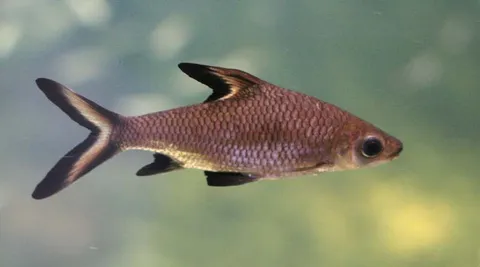
Balantiocheilos melanopterus
The Tricolor Shark, also known as the Bala Shark, bears the scientific name Balantiocheilos melanopterus and belongs to the family Cyprinidae. Its name is due to its external resemblance to predatory sharks, although in…
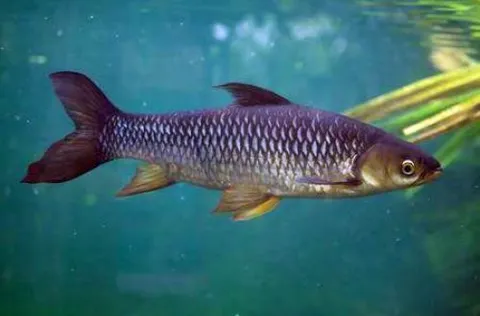
Leptobarbus hoevenii
The fish known as Hoven's Carp (Leptobarbus hoevenii) belongs to the family Cyprinidae. It is named after the zoologist Jan van der Hoeven (1801–1868). Due to its impressive size, this species is rarely found in amateur…
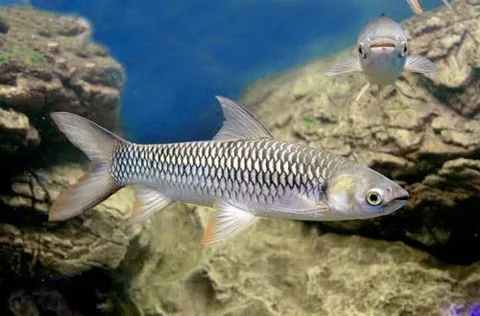
Leptobarbus rubripinna
The Red-Finned Leptobarbus, also known as the Sultan Fish, belongs to the family Cyprinidae and bears the scientific name Leptobarbus rubripinna. This is a hardy and undemanding species that exhibits a peaceful…
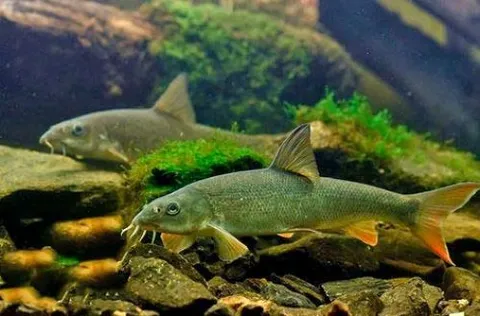
Barbus barbus
The fish known as Barbel (scientific name Barbus barbus) belongs to the carp family (Cyprinidae). Unlike many other barbs, which are common in the river systems of Southeast Asia, this species is native to Europe. Its…